
Azernews.Az

Saturday January 17 2026

Kazakhstan expands oil exports via BTC as Caspian energy routes gain strategic importance

17 January 2026 15:05 (UTC+04:00)
Kazakhstan expands oil exports via BTC as Caspian energy routes gain strategic importance
Qabil Ashirov
Qabil Ashirov
Read more

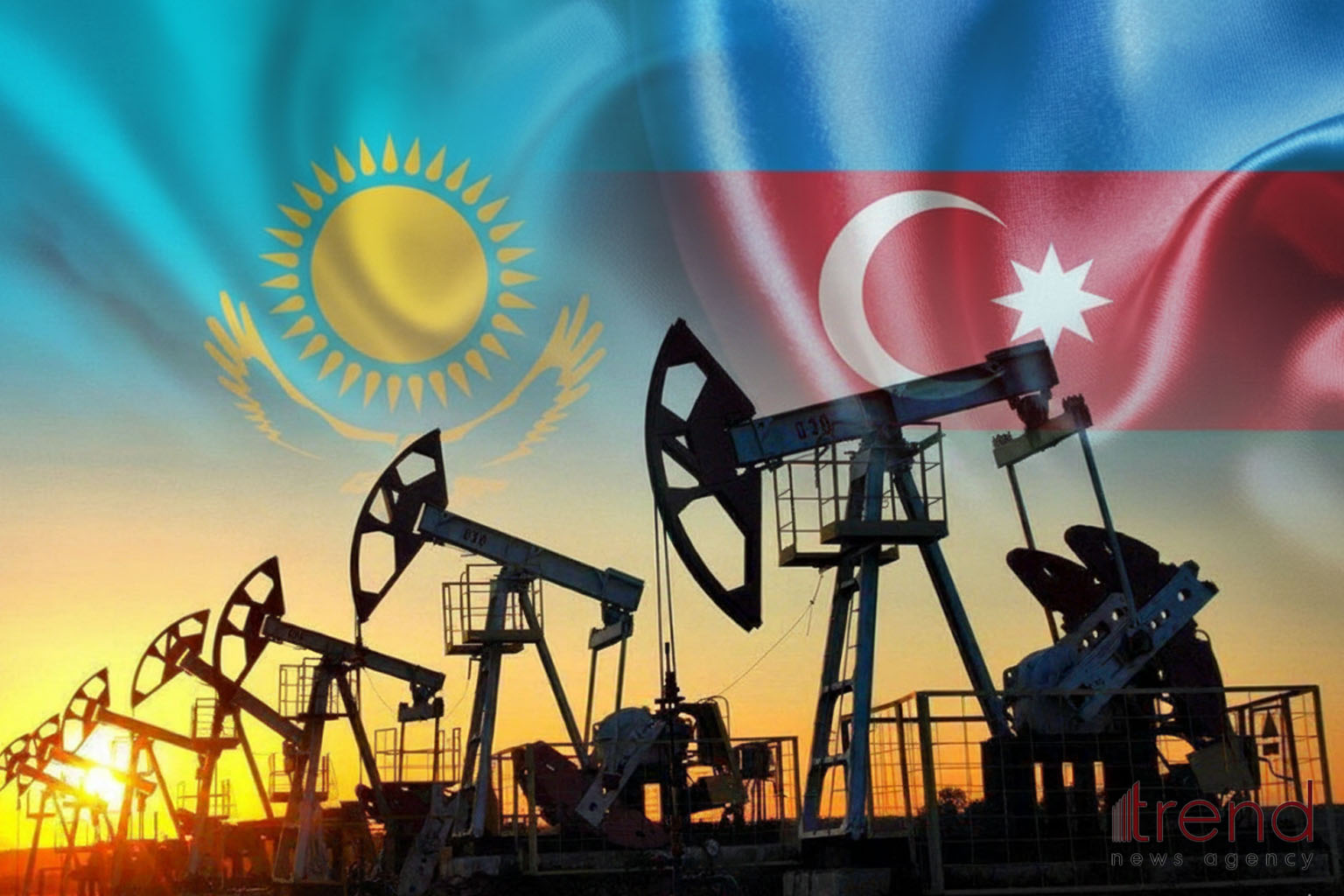
The dynamics of energy transportation in the Caspian region have been gradually acquiring new meaning in recent years. As volatility in global energy markets intensifies, one of the foremost priorities for both producer and transit countries has become the sustainability and flexibility of export routes. In this context, the growing volumes of Kazakh oil transported via the Baku–Tbilisi–Ceyhan (BTC) pipeline should be seen not merely as a logistical adjustment, but as a tangible outcome of regional energy cooperation. The expectation that 1.6 million tons of oil will be shipped from Kazakhstan’s Aktau port through BTC in 2026 is a concrete indicator of this evolving partnership.

In 2025, Kazakhstan exported 1.3 million tons of oil via BTC. The year-on-year increase demonstrates that decisions are being made in a deliberate, phased manner. This is not a haphazard reaction to market shocks, but rather a carefully calibrated adaptation to changing conditions, coupled with the efficient use of existing infrastructure. The shipments carried across the Caspian Sea from Aktau to Baku highlight the stability of the regional logistics chain, underscoring that cooperation is not theoretical but operational.

Recent disruptions in the Caspian Pipeline Consortium (CPC) system have once again brought the importance of diversification to the forefront. When bottlenecks emerged Kazakh companies responded pragmatically, ensuring continuity of energy flows. Roughly 300,000 tons of oil were redirected through the KazTransOil system toward Germany, China, BTC, Novorossiysk, and Ust-Luga. This demonstrated not only technical capacity but also institutional readiness to mobilize resources at the right time. In energy politics, timing is everything, and Kazakhstan’s ability to act swiftly has reinforced its credibility as a reliable supplier.

The BTC pipeline deserves special attention in this process. Operational for nearly two decades, it has played a crucial role in bringing Caspian oil to global markets via the Mediterranean. Kazakhstan’s increasing reliance on BTC validates the pipeline’s multi-functional character and regional significance. For producer countries, BTC offers a stable outlet; for transit countries, it provides a platform of dependable partnership. In a world where energy security is increasingly intertwined with geopolitics, such dual benefits are invaluable.

The risks are not abstract. In November 2025, an attack on CPC’s marine infrastructure at Novorossiysk disabled the VPU-2 remote loading unit, reminding stakeholders of the vulnerabilities inherent in energy logistics. In January 2026, drone strikes against tankers heading toward Black Sea terminals further underscored the fragility of maritime routes. Against this backdrop, activating alternative and already available corridors like BTC is not simply a matter of convenience—it is a necessity for maintaining balance in the energy supply chain. Redundancy, often overlooked in times of stability, becomes the lifeline during crises.

The continuation of redirection measures in January 2026, in light of CPC’s ongoing limitations, illustrates that strategic planning is being implemented consistently. This is not a short-term fix but a long-term resilience model. For energy markets, predictability is a rare and precious commodity. The ability of Kazakhstan and its partners to provide it through diversified routes enhances confidence among consumers and investors alike.

Azerbaijan’s role in this process extends far beyond that of a mere transit country. By facilitating shipments through BTC, Azerbaijan strengthens its position as a trustworthy partner in regional energy cooperation. The passage of Kazakh oil across Azerbaijani territory en route to global markets is a practical manifestation of a cooperation model built on mutual interests in the Caspian basin. This model does not only serve immediate logistical needs; it also contributes to the deepening of economic ties in the long run. Energy corridors, after all, are not just pipelines—they are arteries of regional integration.

The expectation of 1.6 million tons of Kazakh oil flowing through BTC in 2026 is therefore more than a statistic. It is a measure of how energy flows in the Caspian are being managed, how infrastructure is being utilized, and how coordination among partner countries is being elevated. It reflects the real-world outcomes of diversification strategies and the resilience of regional cooperation. In an era when energy politics is increasingly shaped by uncertainty, the BTC pipeline stands as a symbol of continuity and pragmatism.

Ultimately, Kazakhstan’s growing reliance on BTC is a reminder that energy cooperation in the Caspian is not a fleeting experiment but a durable, practical reality. It is a story of adaptation, foresight, and shared interests. And as global energy markets continue to grapple with volatility, the Caspian region’s ability to offer stability through diversified routes may well prove to be one of its most strategic contributions to the world.

Here we are to serve you with news right now. It does not cost much, but worth your attention.

Choose to support open, independent, quality journalism and subscribe on a monthly basis.

By subscribing to our online newspaper, you can have full digital access to all news, analysis, and much more.

Subscribe

You can also follow AzerNEWS on Twitter @AzerNewsAz or Facebook @AzerNewsNewspaper

Thank you!

Loading...
Latest See more