
US 25% tariff on Iran trade: Global shockwaves and limited direct risks for Azerbaijan

AzerNEWS Staff
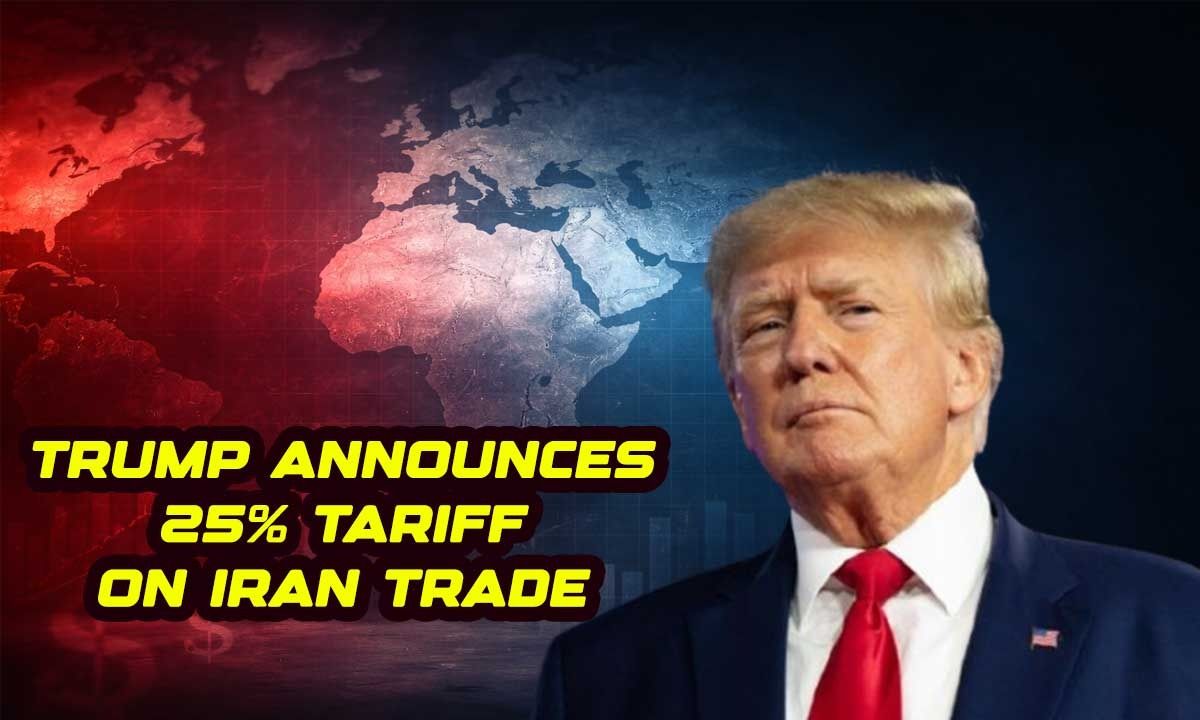
Read moreUS President Donald Trump’s recent announcement of a potential 25 per cent tariff on countries trading with Iran marks a new escalation in Washington’s pressure campaign against Tehran. Unlike traditional sanctions aimed directly at Iran, this proposal introduces a secondary tariff mechanism, targeting third countries and global supply chains. If implemented, analysts warn, the move could disrupt global trade flows, increase market volatility, and accelerate fragmentation of the world economy - while having a more limited but still notable impact on Azerbaijan.
To assess the broader implications, Azernews spoke with Dr Frank Musmar, a political analyst and expert in the Middle East, Turkiye and the Caucasus and Azerbaijani economist Khalid Karimli.
A shift from sanctions to global trade pressure
According to Musmar, the proposed tariff represents a strategic shift in US policy - from direct sanctions to coercive trade leverage.
“The 25 per cent tariff is designed to force countries to choose between access to the Iranian market and access to the much larger US economy,” he said. “This approach significantly expands the scope of pressure by embedding Iran-related sanctions directly into global trade relations.”
For Iran, the consequences could be severe. Years of sanctions have already left the economy grappling with high inflation, currency depreciation, and rising food prices. Additional trade barriers would further restrict access to foreign goods and hard currency, worsening shortages and social pressures. Key export sectors, particularly oil and metals, which provide vital government revenue, would face deeper isolation.
Regional trade and global market fallout
The policy would also place Iran’s main trading partners - China, India, Turkiye, the UAE, and Iraq - under intense pressure. These countries would be forced to reassess commercial ties with Iran or absorb higher costs in their US trade.
“Even if some trade is rerouted to bypass tariffs, supply chains would become more complex, expensive, and risky,” Musmar noted, warning that retaliatory measures could follow.
On a global scale, the tariff threat adds fuel to already fragile markets. By targeting entire trade networks rather than individual countries, the US risks amplifying volatility across manufacturing, automotive, and technology sectors, with higher costs passed on to consumers. Emerging economies may increasingly turn to alternative trade blocs and intra-group trade, accelerating a realignment of global commerce away from US-centred systems.
Energy markets: Oil prices and security risks
The energy sector could be among the most exposed. Iran, an OPEC member, remains a significant - if constrained - oil supplier.
Musmar explained that major buyers such as China and India, already purchasing Iranian oil at discounts, may be pushed to seek alternatives. This would reduce Iran’s export revenues while tightening global supply.
“Any reduction in Iranian output increases the geopolitical risk premium in oil markets,” he said. “At the same time, uncertainty over enforcement could drive price volatility.”
There are also security concerns. Rising economic pressure could heighten regional tensions and increase risks around the Strait of Hormuz, a critical chokepoint for global energy shipments. Even a limited disruption there could trigger immediate spikes in global oil prices.
Can major economies push back?
Opposition from major economies, particularly the European Union and China, could influence how far the policy goes. Musmar believes the EU has economic and legal tools at its disposal, including retaliatory tariffs and challenges to the extraterritorial nature of US measures. However, Washington has often justified such actions on national security grounds, limiting legal recourse.
“Even so,” he added, “the policy risks triggering a cycle of retaliation that would deepen trade conflicts and weaken global growth.”
Over time, such unilateral measures could erode confidence in institutions like the World Trade Organisation, IMF, and World Bank, while encouraging countries to develop alternative payment systems to reduce reliance on the US dollar.
Azerbaijan: Limited direct impact, strategic sensitivities
Azerbaijani economic expert Khalid Karimli stressed that the immediate impact on Azerbaijan would likely be limited.
“Azerbaijan’s trade with Iran accounts for only about 2–3 per cent of total imports,” he said. “We do not have large-scale exports to the US either, so the direct tariff effect would be minimal.”
However, Iran remains strategically important for Azerbaijan as a transit country, particularly in maintaining connectivity with Nakhchivan. Existing sanctions have already complicated financial transactions, with banks often refusing transfers linked to Iran.
“In practice, many of the restrictions that could affect Azerbaijan are already in place,” Karimli noted. “Money transfers are extremely difficult, and this creates ongoing challenges for entrepreneurs.”
He also expressed scepticism about the feasibility of implementing such a tariff on a global scale, recalling previous US proposals that were ultimately shelved due to international backlash.
“If applied broadly, it would increase inflation, disrupt commodity markets, and raise uncertainty worldwide,” he said. “That’s why I doubt it will be fully implemented.”
Long-term structural consequences
Both experts agree that the broader danger lies in the long-term structural impact. Expanding tariff-based pressure mechanisms could accelerate the fragmentation of the global trading system into politically aligned blocs, undermine multilateral institutions, and gradually weaken US economic leadership by encouraging alternatives to dollar-based trade.
For Azerbaijan, while the direct economic exposure remains limited, the country is not immune to the indirect effects of global market instability, higher energy price volatility, and disrupted regional logistics.
As Musmar concluded, “The more trade becomes a geopolitical weapon, the higher the cost for the global economy - and for smaller, open economies navigating between major powers.”
Image source: Munsif News
Here we are to serve you with news right now. It does not cost much, but worth your attention.
Choose to support open, independent, quality journalism and subscribe on a monthly basis.
By subscribing to our online newspaper, you can have full digital access to all news, analysis, and much more.
You can also follow AzerNEWS on Twitter @AzerNewsAz or Facebook @AzerNewsNewspaper
Thank you!