
Iran at crossroads: three scenarios for future of the Islamic Republic

Qabil Ashirov
Read moreThe regime that came to power in the aftermath of Iran’s 1979 Islamic Revolution has weathered countless challenges, such as wars, sanctions, internal unrest, and sustained international pressure. Time and again, both domestic and foreign opponents have declared that the Islamic Republic was nearing its end. Yet each time, the state survived: sometimes through brutal repression, sometimes by selectively ignoring dissent and allowing public anger to burn itself out.
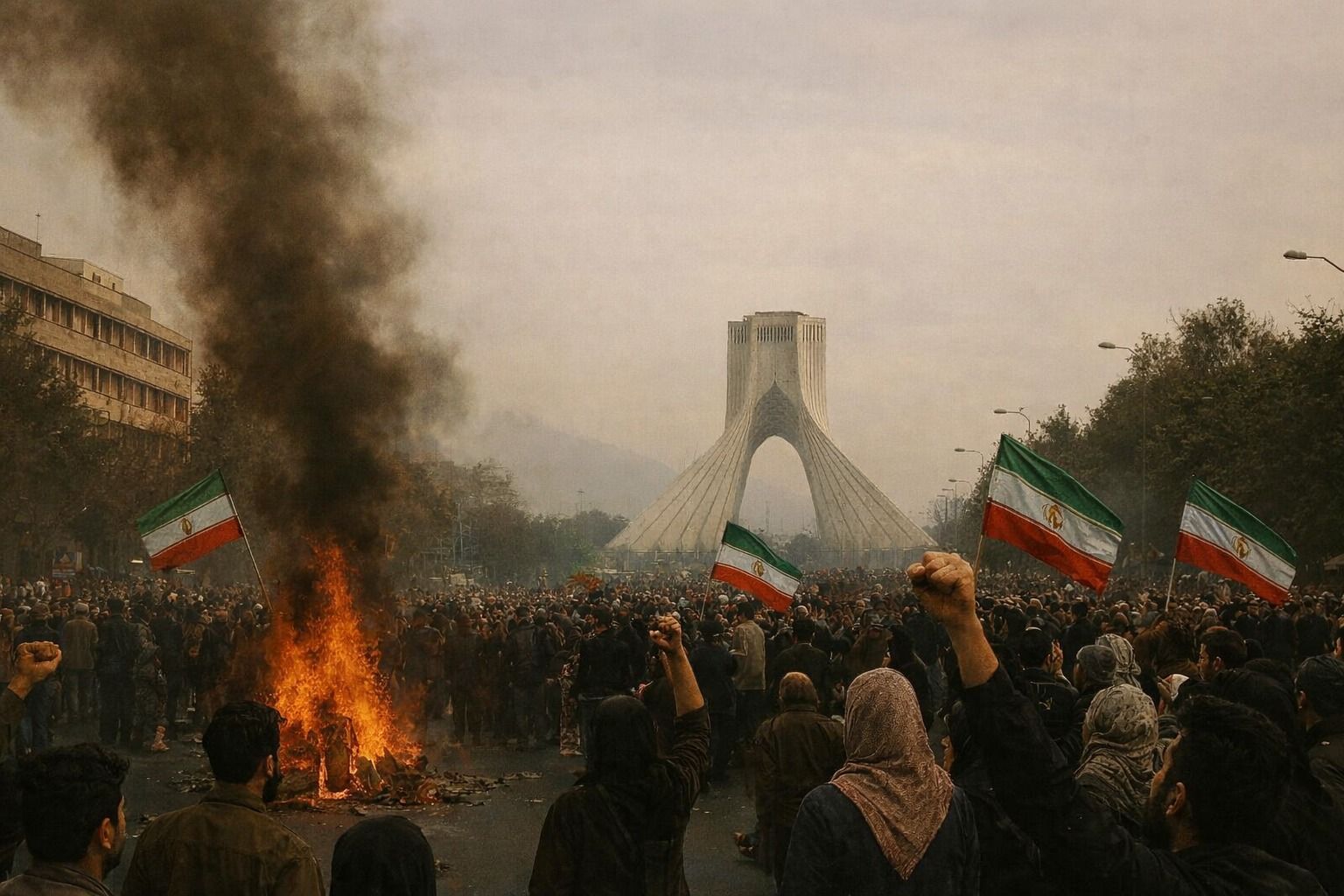
The protests that erupted in Tehran’s Grand Bazaar on December 28, 2025, however, feel different. They spread rapidly across the country, and according to various reports, more than 500 people have already lost their lives. Many observers argue that these demonstrations are more serious than any Iran has faced in recent decades. Frankly, they are not entirely wrong.
Since the Islamic Revolution, Iran has never been caught between a rock and a hard place quite like this. One of the most striking elements of the current unrest is the role of bazaar merchants. Historically, across much of the Muslim East, bazaar communities have served as a political barometer. Most of the time, they have remained loyal to ruling authorities and religious leadership, avoiding open confrontation. Yet history also shows that when bazaar merchants do join protests, regimes tend to retreat, or collapse altogether. The bazaar’s pivotal role in the 1979 Islamic Revolution is a case in point.
At the same time, Iran’s regional position has weakened dramatically. In 2024, several senior figures linked to Iran’s regional network were killed, and key proxy structures were dismantled following Israeli strikes. Military infrastructure was targeted, shattering the narrative that Iran’s forward defence strategy across the Middle East guaranteed security at home. For years, the leadership argued that economic hardship was the price of long-term protection and a brighter future. The recent confrontation made it painfully clear to many Iranians that those sacrifices may have been in vain.
Adding to this pressure, protesters appear to have learned from past movements, particularly the demonstrations that followed the death of Mahsa Amini. They have become more organised, more daring, and more symbolic in their actions. In recent days, demonstrators have reportedly displayed the bodies of those killed during protests in the streets. This evokes powerful historical parallels, including Azerbaijan’s experience after the January 20, 1990, massacre, when public funerals became a turning point and a final nail in the coffin of Soviet legitimacy.
The key question now is whether these protests can actually bring down the regime. Looking at recent developments in Iran and across the Middle East, three broad scenarios emerge.
The first scenario is continuity. Based on available information, the authorities have so far managed, however imperfectly, to retain control. Given the balance of power on the ground, it would be premature to claim that the regime is on the brink of collapse. As in the past, the protests may eventually subside or be forcibly silenced, allowing life in Iran to continue much as before.
The second scenario involves gradual secularisation rather than outright regime change. While Iran is governed through religious ideology, its population is arguably among the most secular in the Middle East. The protests following Mahsa Amini’s death forced the state, for the first time, to visibly retreat: enforcement of mandatory hijab rules was relaxed or quietly suspended. This marked a rare admission of weakness. If current or future demonstrations persist, clerics and religious institutions may slowly lose political influence, with power shifting, directly or indirectly, from the supreme religious leadership toward elected institutions, particularly the presidency.
The third and most alarming scenario is one that deeply concerns Iran’s neighbours, especially Azerbaijan. In this outcome, protests would escalate further, evolving into sustained violence and eventually civil war, resembling Syria’s trajectory. Some early warning signs are already visible. In Syria, harsh military crackdowns turned protests into armed conflict. In Iran, clashes with security forces have already claimed hundreds of lives, and even high-ranking officials, including Brigadier General Javad Keshavarz, have reportedly been killed.
Should Iran slide into such a scenario, the consequences would be severe for the entire region. For Azerbaijan, they could be existential. Figuratively speaking, Azerbaijan might survive a war with Iran, but it could not survive a war inside Iran.
Several factors make this risk especially acute. Iran is home to nearly 30 million ethnic Azerbaijanis, as well as close to a million Talysh people. Azerbaijan is the most secular state among Iran’s neighbours and, after Iran itself, the country with the largest Shiite population. Iran is also home to millions of Kurds, one of the most politically active groups in both Iran and Türkiye. History offers a telling precedent: during the late Soviet period, when Muslims were expelled from Armenia, Kurdish Muslims overwhelmingly chose Azerbaijan, not Iran, Iraq, or Türkiye, as their refuge, despite Azerbaijan’s weaker economy at the time.
All this suggests that any large-scale collapse or civil conflict in Iran could trigger refugee flows toward Azerbaijan that dwarf the country’s own population. The final and most sobering question, therefore, is this: could Azerbaijan’s economy, and society, absorb such a shock?
Here we are to serve you with news right now. It does not cost much, but worth your attention.
Choose to support open, independent, quality journalism and subscribe on a monthly basis.
By subscribing to our online newspaper, you can have full digital access to all news, analysis, and much more.
You can also follow AzerNEWS on Twitter @AzerNewsAz or Facebook @AzerNewsNewspaper
Thank you!