
From OSCE to UN agencies: Why Azerbaijan chose a different path

Qabil Ashirov
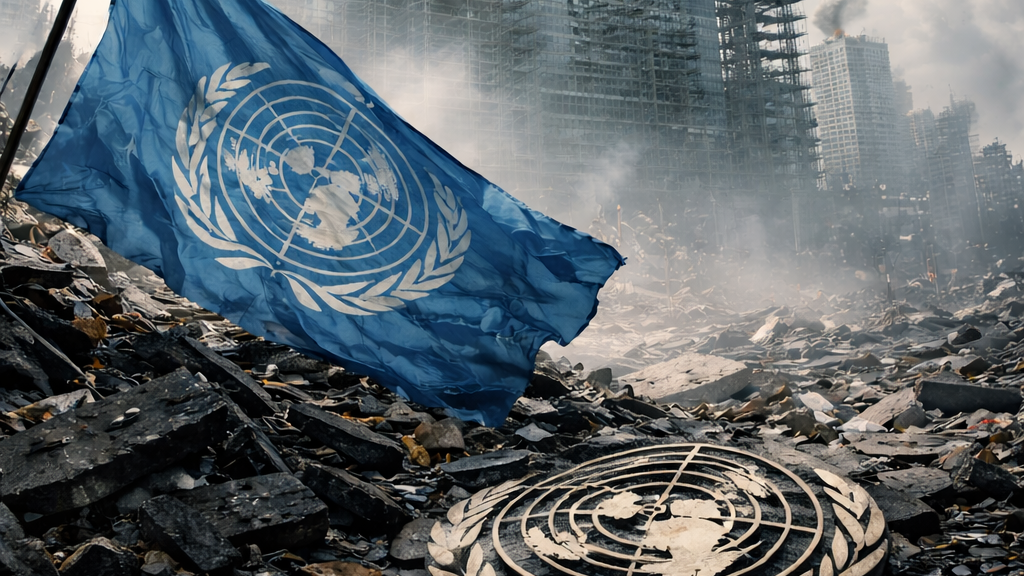
Read moreIn recent years, developments in the international system have cast serious doubt on the future of multilateral diplomacy. The US president’s announcement of suspending membership in dozens of international agencies has been portrayed by much of the Western media as Washington’s retreat from global commitments, even as a withdrawal from “global leadership.” Yet this interpretation misses the essence of what is happening. The real problem lies not in America’s behaviour, but in international institutions themselves, structures that have remained unchanged for decades, failed to adapt to contemporary challenges, and lost their effectiveness.
The United Nations system, created in the aftermath of World War II, was functional at a particular historical stage. Its primary mission was to prevent new wars, manage humanitarian crises, and provide a platform for dialogue among states. But the twenty-first century has brought a radically different set of challenges: regional conflicts, energy security, migration, climate change, and the rise of new power centres. Unfortunately, existing international organisations have proven incapable of responding swiftly and effectively. Instead, they have become entangled in bureaucratic mechanisms, eroding both their legitimacy and their influence.
Against this backdrop, the US decision to withdraw from the UN Population Fund and suspend cooperation with the Venice Commission of the Council of Europe is neither emotional nor populist. These moves represent a political judgment on outdated institutions. The Venice Commission, for years, issued “recommendations” to various states, including Azerbaijan, on elections and legal reforms. Yet these recommendations often ignored local realities and functioned less as legal advice than as instruments of political pressure. America’s departure from such a body underscores a broader truth: selective approaches cloaked in the language of international law are no longer seen as legitimate.
Azerbaijan’s position in this context is both noteworthy and logical. In 2025, Baku continued its principled course by ending cooperation with several ineffective international organisations. The closure of local offices of the UN High Commissioner for Refugees and UNDP was no coincidence. These institutions had long failed to deliver tangible results, limiting themselves to formal projects and reports. Azerbaijan made clear that activities lacking national relevance, efficiency, or neutrality have no place in its policy framework.
This approach is not new. Back in 2014–2015, Azerbaijan shut down the OSCE office in Baku for similar reasons. During the years of the Armenia–Azerbaijan conflict, the OSCE proved unable to establish an effective mediation mechanism. By preserving the status quo and refusing to give legal-political recognition to the occupation, the organisation undermined its own credibility in the region. At that time, Azerbaijan sent a clear message: the existence of international organisations must be measured by their utility, not by their name or status.
Today, similar tendencies are visible worldwide. States are reassessing their relationships with international institutions. That countries as different in scale and capacity as the United States and Azerbaijan are making parallel decisions is no coincidence. It is a symptom of systemic crisis. The so-called liberal international order no longer functions as it once did. Selective approaches, double standards, and politically motivated agendas have weakened it. Meanwhile, the growing influence of new power centres, such as China, India, Turkiye, and other rising states, has further diminished the relevance of old institutions.
It is important to stress, however, that multilateral diplomacy has not collapsed entirely. What has failed is its classical form: the idea that universal institutions can gather all states around a single table. In its place, regional alliances, bilateral agreements, and pragmatic multilateral formats are gaining ground. In energy security, new coalitions are emerging; in climate change, regional initiatives are proving more effective; in migration management, bilateral arrangements deliver more concrete results. The future of diplomacy will be more flexible, more targeted, and more results-oriented.
Ultimately, what we are witnessing is not the end of multilateral diplomacy, but the demise of its outdated model. The new world order demands mechanisms that are realistic, agile, and just. Institutions that fail to respect sovereignty, demonstrate effectiveness, or refrain from interfering in domestic affairs have no future. The steps taken by the United States and Azerbaijan show that the era of formal participation is over. The next phase will be defined by real outcomes, real responsibility, and real partnership. And that, in turn, will shape a new diplomatic philosophy, one that operates both globally and regionally, grounded in substance rather than symbolism.
Here we are to serve you with news right now. It does not cost much, but worth your attention.
Choose to support open, independent, quality journalism and subscribe on a monthly basis.
By subscribing to our online newspaper, you can have full digital access to all news, analysis, and much more.
You can also follow AzerNEWS on Twitter @AzerNewsAz or Facebook @AzerNewsNewspaper
Thank you!