
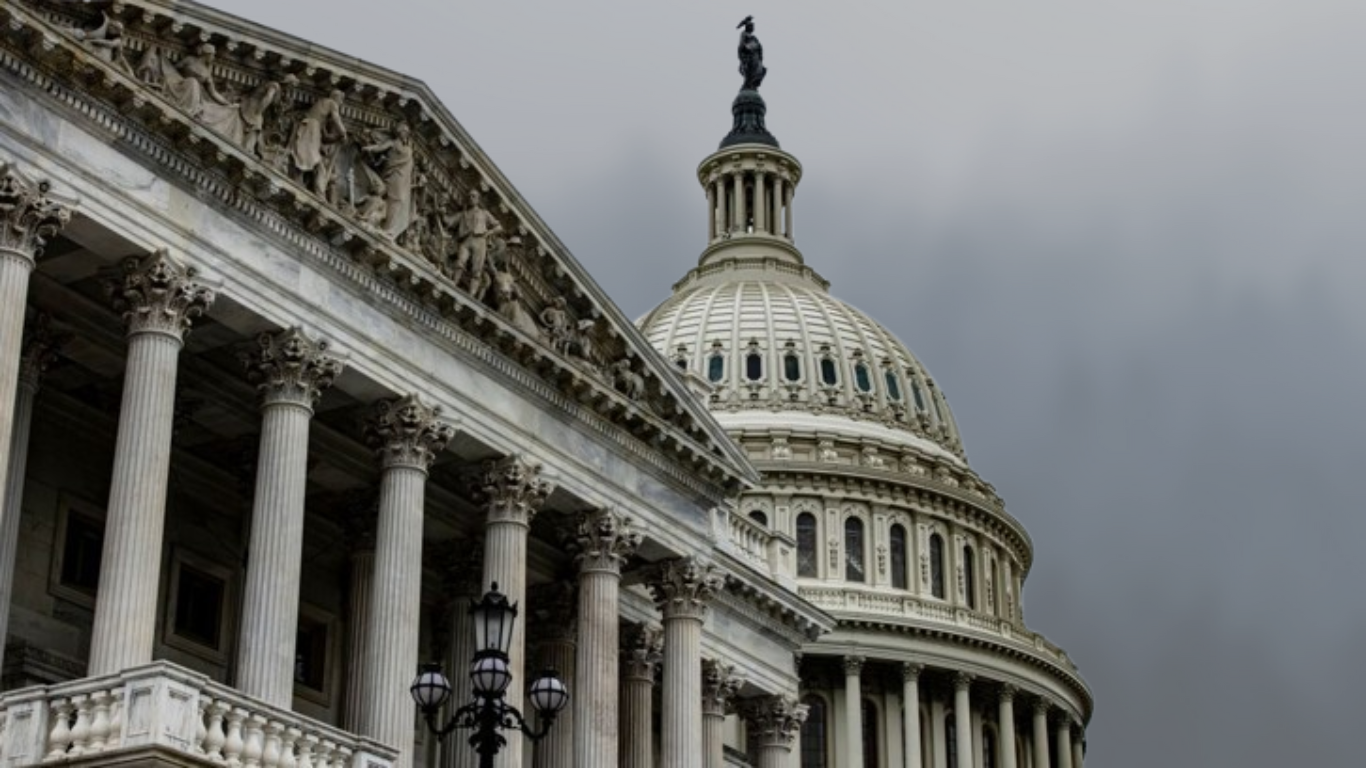
Capitol Hill’s selective morality: How Congress uses Section 907 as political leverage
Elnur Enveroglu
Read moreHistory does not always take the side of those who are right, nor does it consistently stand with the oppressed. At times, the victim is recast as the villain, while the aggressor cloaks itself in the language of grievance. This distortion is especially pronounced in regions where the geopolitical ambitions of great powers collide, and where conflicts are endlessly reshaped to suit shifting strategic narratives. The South Caucasus is one such arena, and the case of Azerbaijan, more precisely, the injustice it endured in the context of the Garabagh conflict, offers a stark illustration.
For more than three decades, this injustice was etched onto Azerbaijan’s political identity like a scar, reinforced by selective narratives and institutionalised bias. Yet through the assertion of its sovereign will and the full mobilisation of its national capacity, Azerbaijan ultimately broke free from this circle of injustice and made its rightful voice heard on the international stage. Even so, there remain actors who either resist the restoration of justice or lack the political will to acknowledge it.
This reality was underscored only days ago when President Ilham Aliyev, speaking in an interview with local television channels, addressed a range of pressing issues, including a particularly sensitive and long-standing one: Section 907 of the United States Freedom Support Act, adopted by the US Congress in 1992 and widely regarded in Baku as a punitive and discriminatory measure against Azerbaijan.
In his remarks, President Aliyev referred to Azerbaijan-US relations and noted that constructive discussions had taken place with Donald Trump, the 47th President of the United States, resulting in positive momentum towards the repeal of Section 907. At the same time, he drew attention to the conspicuous inertia of the US Congress, criticising its sluggishness and apparent indifference towards abolishing a provision that has long outlived both its political rationale and moral legitimacy.
The picture that emerges is one of institutional dissonance: a Congress seemingly unwilling to align itself with the stated position of the sitting President, or perhaps constrained by the lingering influence of Armenian lobby groups with which many lawmakers have cultivated close ties over decades. By preserving this amendment, such actors appear reluctant to disappoint old allies, even at the expense of fairness, credibility, and strategic coherence.
Commenting on the issue, Hungarian political analyst László Vasa highlighted the paradox at the heart of the US political system, namely, the growing disconnect between the White House and Capitol Hill. He characterised Congress’s silence as a move that undermines diplomatic engagement and erodes trust, warning that such contradictions do not merely stall progress but actively weaken the foundations of effective diplomacy.
"For more than thirty years, Section 907 of the Freedom Support Act has lingered in US policy toward Azerbaijan like a relic from another era. It was born in the emotional and chaotic aftermath of the early 1990s, when the South Caucasus was poorly understood in Washington, and moral shortcuts were politically convenient. Today, however, its continued existence has little to do with realities on the ground — and a great deal to do with how Congress actually works.
However, in recent years, Azerbaijan-US relations have entered a more pragmatic phase. The tone has improved. Dialogue has deepened. The tripartite meeting in Washington last year sent a clear signal that diplomacy, not punitive symbolism, is now the preferred path. President Donald Trump even went so far as to express openness to repealing Section 907 altogether: an acknowledgement, at the highest level, that the amendment no longer makes strategic sense. Yet Congress has done what it does best in such situations: nothing," he added.
The expert further described Congress’s indifference to the issue as an attempt to evade additional responsibility and political complications. He noted that divisions within Congress during the voting process can carry personal consequences for lawmakers, at times even damaging individual political careers. According to him, certain members of Congress with closer ties to the Armenian lobby have, on occasion, intensified their hostility towards colleagues who advocate for the repeal of this provision.
"Keeping Section 907 costs nothing. The choice, for many members of the United States Congress, is obvious. Armenian-American advocacy groups have also played a decisive role in freezing the issue in place. Over time, Section 907 has been transformed from a situational response into a moral symbol. Challenging it, even quietly, can invite criticism that few lawmakers are eager to face. Supporting repeal does not win elections. Opposing it does not either. But inaction avoids controversy, and in Congress, avoiding controversy is often the primary objective," he said.
Vasa László also observed that Section 907 functions as a strategic reserve lever in the hands of Congress. According to him, the provision is kept in abeyance as a tool that can be activated or restrained depending on changing presidential administrations, as well as the shifting diplomatic climate between Baku and Washington. In this sense, Section 907 serves less as a relic of past conflicts and more as a flexible instrument of political pressure, deployed in line with evolving geopolitical calculations rather than principled policy.
"There is also a certain convenience in keeping Section 907 on the books. Even though its practical impact has been largely neutralised through presidential waivers, it remains a ready-made talking point. Whenever tensions rise, or whenever Azerbaijan falls out of favour in Washington debates, the amendment can be dusted off and cited as evidence of congressional “concern.” It requires no new votes, no new bills, and no real engagement with the region. Symbolic leverage, in this context, is easier than real policy.
More broadly, Section 907 is a classic example of legislative inertia. Congress is very good at creating laws and remarkably bad at revisiting them. Outdated provisions accumulate over time, especially when removing them might be framed — fairly or not — as a retreat from principles. Few politicians are eager to spend political capital explaining why an old law no longer serves its purpose. It is far simpler to let it sit, untouched and unquestioned.
Some lawmakers also worry about precedent. If Section 907 is repealed, why not revisit other long-standing restrictions elsewhere? Why open the door to debates that could weaken Congress’s broader system of conditionality and sanctions? These concerns may be overstated, but they reinforce a deeply conservative instinct within the institution: better to preserve an imperfect tool than to risk losing leverage altogether."
Taken together, these considerations make it clear that the United States’ long-standing posture as a diplomatic partner sits uneasily with the pursuit of full justice. Rather than reinforcing fairness, this approach has generated contradictions that undermine credibility. As the Hungarian expert László aptly put it, “all of this shatters the United States’ standing as a reliable partner.”
"The result is a familiar Washington paradox. Everyone knows Section 907 is outdated. Many acknowledge it is unfair. Some even admit it undermines US credibility as an honest broker in the region. Yet it survives — not because it works, but because it fits neatly into congressional logic. It allows lawmakers to appear principled without acting, engaged without investing, and influential without responsibility.
Until repeal becomes politically safer than inaction, or until Azerbaijan moves higher on Congress’s list of priorities, Section 907 will likely remain where it is: a symbolic leftover from the past, quietly shaping perceptions while doing little to advance peace, stability, or genuine partnership in the South Caucasus."
Here we are to serve you with news right now. It does not cost much, but worth your attention.
Choose to support open, independent, quality journalism and subscribe on a monthly basis.
By subscribing to our online newspaper, you can have full digital access to all news, analysis, and much more.
You can also follow AzerNEWS on Twitter @AzerNewsAz or Facebook @AzerNewsNewspaper
Thank you!