
How diaspora politics in Washington distort justice in South Caucasus [OPINION]
![How diaspora politics in Washington distort justice in South Caucasus [OPINION]](https://www.azernews.az/media/2025/12/20/467675672567_1.png)
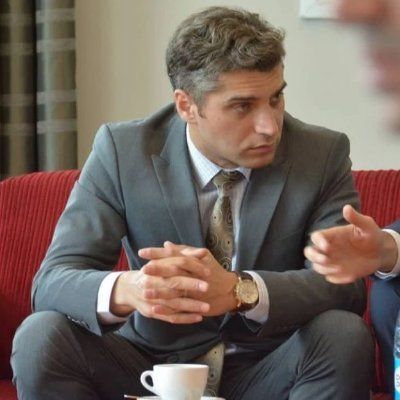
Elnur Enveroglu
Read moreThere is something strikingly familiar about the latest legislative initiative introduced by Representatives Gus Bilirakis and Frank Pallone. Once again, a pair of United States lawmakers has placed itself at the centre of a deeply polarised foreign conflict, not by promoting balance or legal clarity, but by recycling talking points carefully curated by the Armenian diaspora lobby in Washington. The Armenia Security Partnership Act is less a serious attempt at peace building than another exercise in political theatre, one that glosses over facts, disregards international law and openly seeks to shield individuals accused of serious crimes committed on Azerbaijani territory.
The issue of detainees sits at the heart of this controversy. Bilirakis and Pallone repeatedly refer to “Armenian prisoners and hostages,” a phrase designed to provoke emotional responses while avoiding legal scrutiny. Those currently detained in Azerbaijan are not civilians randomly seized, nor are they prisoners of war captured in conventional hostilities. Many are accused of participation in sabotage, armed attacks, illegal armed formations and acts that resulted in the deaths of Azerbaijani civilians and servicemen. These are matters under active judicial review, not political bargaining chips to be waved about in congressional press releases.
The attempt to recast alleged war criminals as innocent victims raises an uncomfortable question. What do we call lawmakers who knowingly advocate for individuals accused of murder, terrorism and crimes against humanity, simply because it aligns with the interests of a vocal and well-organised diaspora constituency? At what point does advocacy cross into complicity in disinformation?
Neither Bilirakis nor Pallone is new to this arena. Their political dossiers read like case studies in diaspora-driven foreign policy. Both lawmakers enjoy high ratings from Armenian lobby organisations, accolades that are not bestowed for independent thinking but for consistency in service. The Armenian National Committee of America has long operated a grading system that rewards loyalty and punishes deviation. In this environment, nuance is a liability and legal complexity is an inconvenience.
The Armenia Security Partnership Act reflects this logic. Azerbaijan is cast as a perpetual aggressor, Armenia as a blameless victim, and the intricate realities of decades-long conflict are reduced to slogans. The bill demands unconditional releases, recognition of so-called rights of return to territories internationally recognised as part of Azerbaijan, and the removal of presidential waiver authority under Section 907 of the FREEDOM Support Act. It does so without acknowledging that Section 907 itself was a politically motivated measure adopted in the early 1990s under intense lobbying pressure, not as a neutral instrument of international law.
What is conspicuously absent from the rhetoric of Bilirakis and Pallone is any reference to Azerbaijani victims. Hundreds of thousands of Azerbaijanis were displaced during the occupation of Garabagh and the surrounding districts. Civilians were killed by landmines laid long after ceasefires were declared. Cities and villages were razed, cemeteries desecrated, and mosques destroyed. Yet these realities rarely make it into congressional speeches because they do not fit the narrative demanded by the diaspora networks that fuel campaign donations and grassroots mobilisation.
The insistence on framing detainees as “hostages” is particularly revealing. Hostage taking is a specific crime under international law, involving the seizure of civilians to compel a third party to act. Azerbaijan’s courts are prosecuting individuals under domestic and international legal provisions for concrete acts committed on its territory. Whether those courts reach convictions or acquittals is a matter for judicial process, not for lawmakers thousands of kilometres away acting as defence attorneys by proxy.
By attempting to interfere in these proceedings, Bilirakis and Pallone undermine the very principles they claim to uphold. Sovereignty, rule of law and accountability cannot be selectively applied. If Azerbaijan is expected to respect international norms, then its right to prosecute crimes committed on its soil must also be respected. Demanding releases before trials conclude is not human rights advocacy; it is a form of political pressure aimed at obstructing justice.
The broader implications of this approach are damaging. Conditioning the United States policy entirely on one-sided narratives reduces Washington’s credibility as a mediator. It signals to regional actors that lobbying power matters more than legal facts. It also entrenches maximalist positions in Armenia, discouraging compromise by promising external protection regardless of behaviour.
Ultimately, the Armenia Security Partnership Act tells us more about American domestic politics than it does about the South Caucasus. It exposes how foreign policy can be captured by well organised interest groups and how some lawmakers are willing to defend the indefensible to maintain their standing within those networks. For Azerbaijan, the lesson is clear. Justice is not being challenged on legal grounds but on political ones.
If the United States Congress genuinely seeks peace and stability, it must move beyond diaspora-driven theatrics and engage with the full reality of the conflict. That means acknowledging crimes on all sides, respecting judicial processes and resisting the temptation to turn alleged war criminals into symbols. Until then, the actions of Gus Bilirakis and Frank Pallone will continue to look less like principled leadership and more like the same old service to the same old patrons.
Here we are to serve you with news right now. It does not cost much, but worth your attention.
Choose to support open, independent, quality journalism and subscribe on a monthly basis.
By subscribing to our online newspaper, you can have full digital access to all news, analysis, and much more.
You can also follow AzerNEWS on Twitter @AzerNewsAz or Facebook @AzerNewsNewspaper
Thank you!