
New free trade accord reached between India and New Zealand
By Alimat Aliyeva
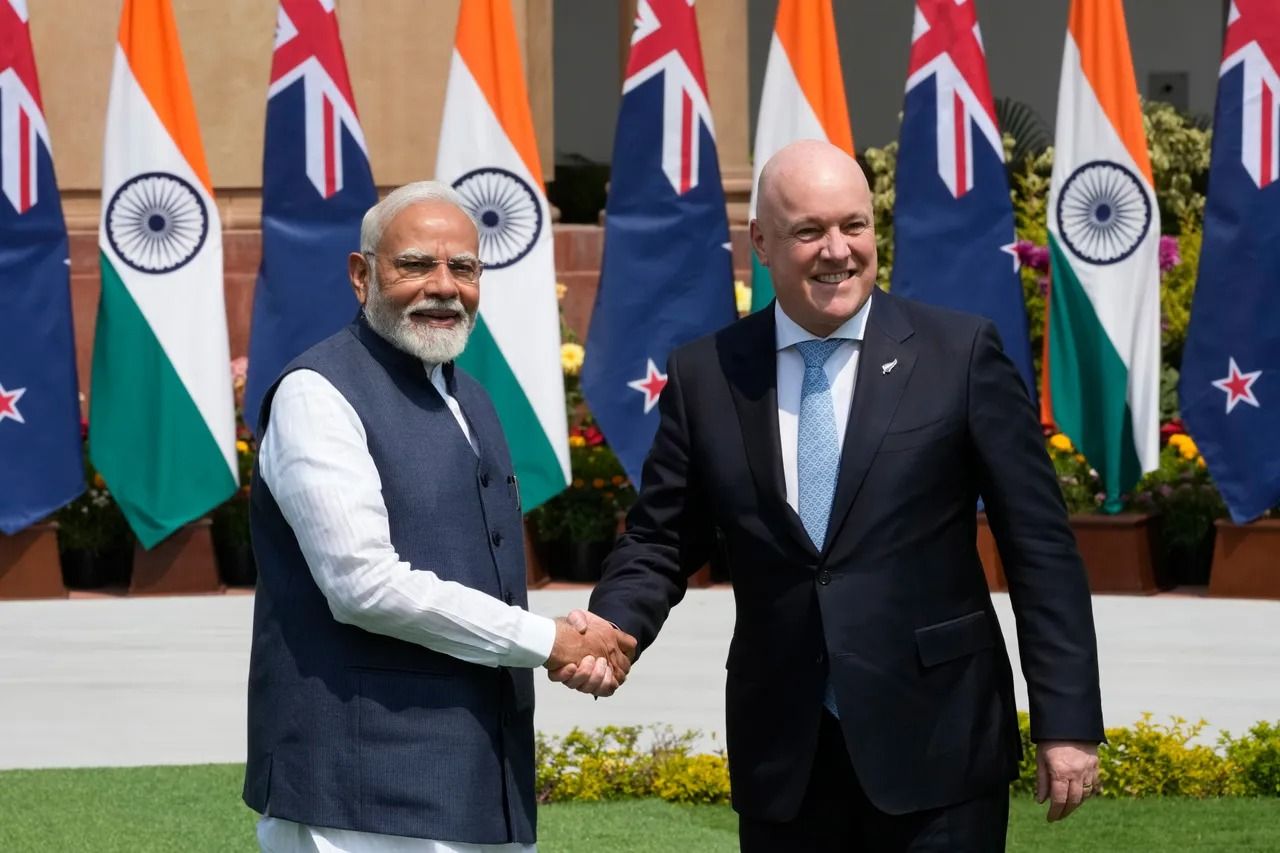
India and New Zealand have announced that they have reached a free trade agreement (FTA) expected to boost bilateral trade by hundreds of millions of dollars and deepen economic ties between the two countries, Azernews reports, citing foreign media.
New Delhi and Wellington confirmed the breakthrough on Monday, stating that the agreement is scheduled to be formally signed in the first quarter of next year, following a final legal review of the negotiated text.
The announcement comes at a time when governments worldwide are seeking to diversify their trade relationships amid uncertainty caused by sweeping U.S. tariffs introduced under President Donald Trump. These policies have accelerated a global push toward bilateral and regional trade deals as countries attempt to reduce exposure to protectionism.
Under the agreement, India will gain zero-duty access for all of its goods exports to New Zealand. In return, Wellington will receive duty concessions and market access for approximately 70% of India’s tariff lines, covering nearly 95% of New Zealand’s exports to India on a phased basis, according to officials.
New Zealand aims to significantly expand exports of dairy alternatives, fruit, wool, and wine to the Indian market, with strong growth also expected in horticulture, wood products, and sheep wool. On the Indian side, sectors set to benefit most from tariff-free access include textiles and apparel, engineering goods, leather and footwear, and marine products.
As part of the broader partnership, New Zealand has committed to investing $20 billion in India over the next 15 years, India’s Ministry of Commerce and Industry said. The agreement is also expected to ease access for skilled Indian professionals to New Zealand’s labor market, addressing workforce shortages in key sectors.
India has intensified efforts to diversify its export destinations as part of a wider strategy to protect its economy from global shocks. Prime Minister Narendra Modi underscored this approach earlier this month during trade talks with Russian President Vladimir Putin in New Delhi, alongside discussions on geopolitical tensions.
Despite expanding ties with multiple partners, India continues to pursue a careful balance between Eastern and Western economies. Commerce Minister Piyush Goyal reiterated on Monday that, in addition to the New Zealand deal, India is also working on trade agreements with the United States and Canada.
New Zealand Prime Minister Christopher Luxon said in a post on X that exports to India are projected to rise by $1.1 billion to $1.3 billion annually over the next two decades as a result of the agreement. “Boosting trade means more Kiwi jobs, higher wages, and greater opportunities for hard-working New Zealanders,” he said.
However, the deal has faced domestic criticism. New Zealand First, a right-wing populist party, warned that the agreement “gives too much away, especially on immigration,” according to a statement cited by The New Zealand Herald.
The agreement also touches on sensitive areas for India. In response, New Delhi excluded dairy imports—such as milk, cream, whey, yoghurt, and cheese—from the deal, along with several animal and agricultural products including goat meat, onions, and almonds.
India’s chief negotiator, Petal Dhillon, said the agreement will be signed once the legal review is completed, marking what both sides describe as a significant milestone in Indo-Pacific economic cooperation.
Here we are to serve you with news right now. It does not cost much, but worth your attention.
Choose to support open, independent, quality journalism and subscribe on a monthly basis.
By subscribing to our online newspaper, you can have full digital access to all news, analysis, and much more.
You can also follow AzerNEWS on Twitter @AzerNewsAz or Facebook @AzerNewsNewspaper
Thank you!