
Azerbaijan's oil strategy opened up extensive opportunities for implementation of all future plans: envoy
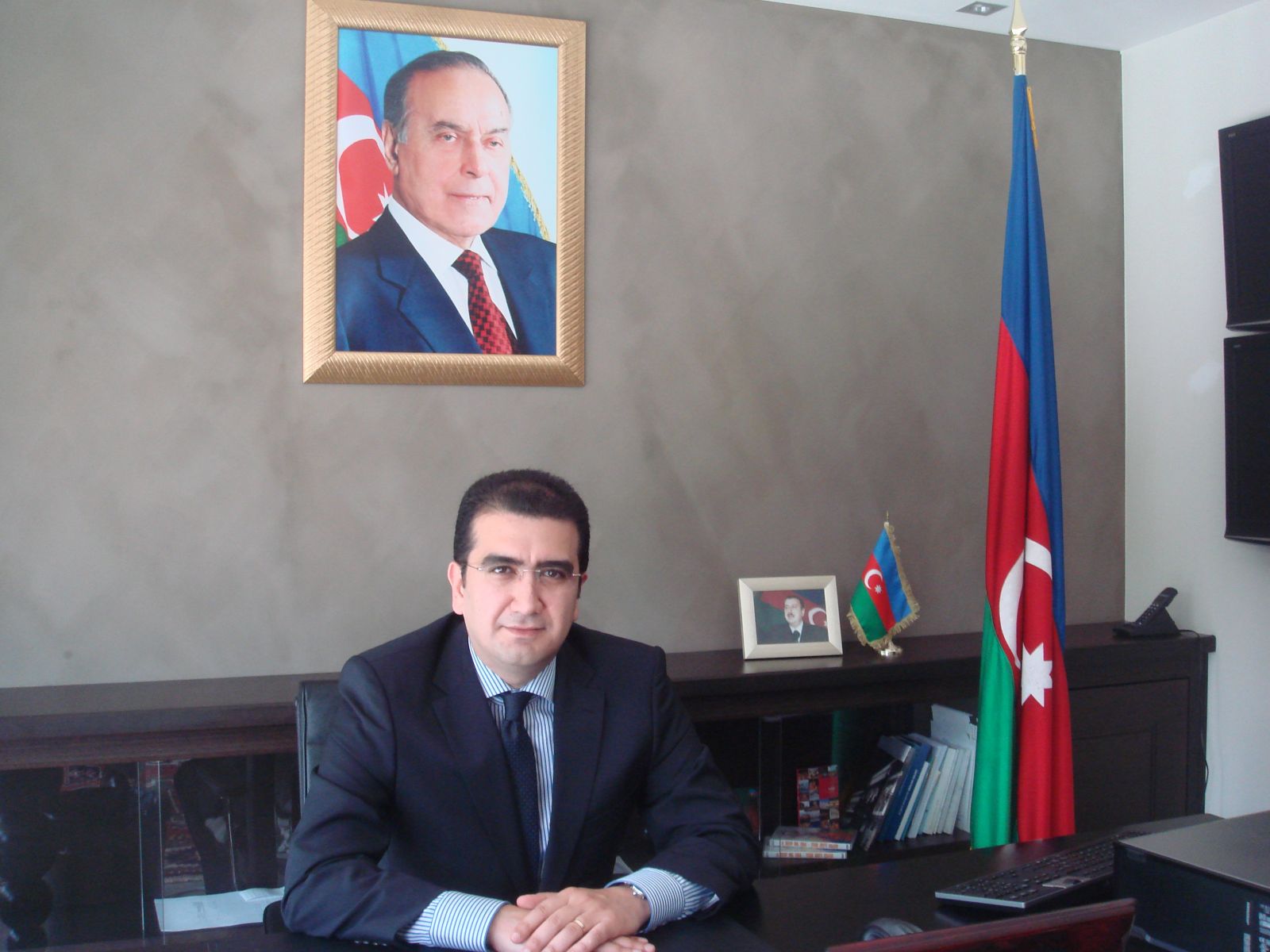
Swiss "Diva International" journal issued an interview with Azerbaijani Ambassador the International Organizations in Geneva Murad Najafbayli, the Azerbaijani mission in Geneva reported.
The following is the full text of the interview:
Q: Given your discretion, we would like to know something about the man behind the title. What is your background?
I have been employed as a diplomat for the Ministry of Foreign Affairs (MFA) of the Republic of Azerbaijan since 1994. Having worked in various departments and positions at the MFA, and succeeded through all existing levels of diplomatic service, in July 2001 I was appointed as counsellor to the Permanent Mission of the Republic of Azerbaijan to the United Nations Office and other international organizations in Geneva. For the first three years, I was chargé d'affaires a.i. In 2004, I became the Deputy/Acting Head of the Department of International Law and Treaties of the Azerbaijani Ministry of Foreign Affairs and in January 2005 I was appointed the Head of that same department. In January 2010, the President of the Republic of Azerbaijan awarded me the diplomatic rank of Ambassador Extraordinary and Plenipotentiary. From January 2010 until April 2012, I worked as Ambassador of Azerbaijan to the Swiss Confederation; during much of the same period, I was also Ambassador to Liechtenstein. Also since January 2010 and until the present, I am the Ambassador of Azerbaijan to the United Nations Office and other international organizations in Geneva.
Q: Your country has gone through tremendous changes since the restoration of its independence. What do you consider as the most important changes?
"The time frame since the restoration of our independence has been an important period of dynamic socio-economic development, a stage of democratic and modern state-building in Azerbaijan. Under the wise political guidance of our National Leader, Heydar Aliyev, we have made great strides in maintaining public and political stability, laying the foundations of the economy and securing strong popular support. Numerous state programmes outlining both the general directions of the country's development and the specific work to be done in all areas have been adopted and successfully implemented. These activities have had an important impact on the socio-economic development of the country, improving the well-being of the population and facilitating the solution of other problems facing our citizens. In this regard, I would particularly like to stress that this policy and vision of our National Leader are fully followed and pursued by the President of the Republic of Azerbaijan, H.E. Mr. Ilham Aliyev.
The launching of Azerbaijan's oil strategy has opened up extensive opportunities for the implementation of all our future plans. The commissioning of the Baku-Tbilisi-Ceyhan oil pipeline in 2006 and of the Baku-Tbilisi-Erzurum gas pipeline a little later, and the renewal and diversification of the Caspian hydrocarbon export infrastructure has ensured the direct supply of Azerbaijani oil and gas to global markets. These events have become landmarks not only of recent years but also for Azerbaijani independence in general."
We have tripled the size and diversified our economy, created a
modern social and economic infrastructure, while securing the
dynamic development of the non-oil sector. In 2003, our state
budget was US$1.5 billion, while in 2013 we have increased it to
US$25 billion. During the last decade Azerbaijan has made tangible
progress in terms of the Millennium Development Goals through
reducing poverty from 49% to less than 6% of the population and
creating more than 1 million new jobs, at the same time as tripling
its GDP so as to be ranked thirty-ninth among 148 countries in the
Global Competitiveness Index 2013‒2014 issued by the World Economic
Forum. Azerbaijan is currently the leading country of our region
from the standpoint of its economic potential, accounting for more
than 80% of the economy in the South Caucasus region. The world's
leading economic and financial institutions are currently giving a
positive assessment of Azerbaijan's successes, ranking the country
in leading positions in major international reports. While the
world's leading rating agencies, such as Fitch, Moody's and
Standard and Poor's, have downgraded the credit ratings of many
developed countries, our rating has been upgraded. Azerbaijan has
advanced into the category of countries with "high human
development" in a report by the United Nations Development
Programme. The "Global Competitiveness Report 2012-2013" of the
World Economic Forum rates Azerbaijan as forty-sixth country in the
world and first in the CIS.
The list of our recent achievements is quite extensive. It is
noteworthy to mention that, in 2011, Azerbaijan was elected as a
non-permanent member of the United Nations Security Council (UNSC)
for the first time in its history in the face of tough competition.
In May 2012 and in October 2013, our country presided over that
very organization. I think that this is the outcome of an
international assessment of our country's sustainable development
in the years since independence ‒‒ an indicator of the respect
Azerbaijan has earned globally and recognition of our contribution
to global security. Despite the fact that Azerbaijan will have
completed its membership of the UNSC in December 2013, these two
years have been an outstanding experience for Azerbaijani
diplomacy.
In 2012 Azerbaijan started the process of paying compensation for
the deposits left in the Soviet savings bank. It is worth
mentioning that Azerbaijan is the only country of the former USSR
to repay these deposits in such a short period of time and with a
high interest rate. Azerbaijan has also won Europe's top music
competition, the "Eurovision" song contest in 2011, while in the
following year we successfully hosted this competition in Baku,
thus demonstrating our great potential to the world for holding
this type of event. On 8 February 2013 Azerbaijan launched its
first artificial telecommunications satellite into orbit. This was
a very significant day ‒ a historic day ‒ and a major achievement
for our country. The results we have achieved show that Azerbaijan
is indeed developing rapidly and comprehensively today and that we
are already a member of the "space club". Two more satellites will
be launched in 2015 and 2016, which will create excellent
opportunities for the development of the space industry in
Azerbaijan. The development of new technologies, in particular the
ICT sector, has become a hallmark of Azerbaijan today and will
facilitate our successful development in the future.
In addition to that, the decision of the European Olympic Committee
to conduct the inaugural 2015 European Olympic Games in Azerbaijan
is not only a historic achievement and a huge success for our
country; it is also evidence of Azerbaijan's growing international
authority and recognition of our extensive infrastructure on the
part of the international community.
Q. Your Mission is very active within international
Geneva. What are your main centres of interest?
"Every year we take part in numerous sessions and meetings of the
international organizations based in Geneva and, when necessary,
provide our views and inputs to them. In that regard, I would like
particularly to mention the Human Rights Council and the Office of
the High Commissioner for Human Rights. Azerbaijan was one of the
founding members of the Human Rights Council. Within that body we
present our own initiatives and also support others through
co-sponsoring the resolutions of interest. In this body, we pay
special attention to the protection of cultural rights and
property, the promotion of inter-religious and inter-cultural
tolerance and understating, and the protection of internally
displaced persons. As a young and independent country, we see the
great opportunities here in Geneva for promoting the culture and
life of Azerbaijan within the international community.
International Geneva provides vast potential for making my country
known to an international audience. The relevance and importance of
the Geneva-based international organizations should also be
mentioned in that regard. This year our Permanent Mission was the
leading organizer for the event called the International Day of
Novruz held in the Palais des Nations. Furthermore, Azerbaijan
participated in May 2013 in the collective exhibition entitled "The
urban landscape in contemporary European painting" sponsored by the
Council of Europe and also held in the United Nations Office in
Geneva. In November 2013 we were involved in the UN Annual Bazaar
with our national stand and contributed to the charity fund for
children affected by the recent typhoon in the Philippines. In
April 2014, in cooperation with the International Dialogue for
Environmental Action campaign initiated by Mrs Leyla Aliyeva, the
Vice-President of the Heydar Aliyev Foundation, the Mission will
organize an exhibition at the United Nations Office in Geneva
entitled "Children`s Eyes on Earth: International Youth Photo
Exhibition". This will be a landmark event to raise awareness about
important environmental issues, as seen through eyes of the
children. The exhibition will display the photographs by children
all over the world on the themes "I Love Nature and I Fear
Pollution", sharing their experiences and helping promote an
understanding of some of the challenges facing our planet. Taking
this opportunity I would like to invite you and your staff, as well
as the wider audience of Diva International to attend the opening
ceremony and to visit the exhibition itself.
Q: Azerbaijan is already emerging as a donor country
in the international arena. What is the rationale behind the
foreign humanitarian assistance of your country and what are its
main directions?
The accomplishments that I mentioned above have enabled Azerbaijan
to become an emerging donor country and contribute to the
sustainable development efforts of countries in Africa, Asia and
Latin America. This is a totally new chapter in the history of
Azerbaijan and its activities on the international arena. The
Azerbaijan International Development Agency (AIDA) has already
carried out various assistance programmes in more than twenty
countries. The Heydar Aliyev Foundation has provided various
humanitarian and social programmes in its turn.
Furthermore, the Government of the Republic of Azerbaijan makes
voluntary annual contributions to the international organizations
based in Geneva, such as the Office of the High Commissioner for
Human Rights, the Office of the High Commissioner for Refugees, the
International Committee of the Red Cross, the UN Conference on
Trade and Development, International Telecommunication Union and
others. During the first years of independence we faced a great
deal of suffering as a result of armed aggression by the Republic
of Armenia, accompanied by the flow of more than 1 million
Azerbaijani internally displaced persons and refugees. During those
years we were considerably assisted by the United Nations and its
specialized agencies. If there had been no aid from the
international community at that time, a humanitarian disaster in
Azerbaijan would have been inevitable. However, today, thanks to
the growing economic potential and achievements of Azerbaijan,
problems faced by IDPs and refugees are fully addressed by our
Government. As an emerging donor country, we fully understand the
importance of international humanitarian assistance and our efforts
in that regard are an expression of our sincere gratitude towards
the international community.
As a donor country Azerbaijan also possesses considerable knowledge
and experience in the prevention of emergency situations and
disaster risk reduction. In that regard, we are fully aware of the
need to share this knowledge and experience with other needy
members of the international community.
Q: Azerbaijan is becoming major player in the energy
security of Europe. What is your assessment of the energy policy of
your country?
Over recent years, Azerbaijan managed to ensure its energy security
and eliminate its dependence on foreign energy sources. Currently,
Azerbaijan is a country contributing to the energy security of both
the region and Europe at large and an important player in the
global energy market. Azerbaijan's share of the gas market in
several European countries has increased to 40%. In addition to
substantial oil and gas reserves, Azerbaijan has a pivotal position
on the crossroads of Europe, Asia and the Middle East.
Geographically, Azerbaijan is uniquely situated to serve as a
regional transportation hub and to meet Europe's energy needs.
Energy exports and sustainable development offer ample
opportunities for international cooperation. Our landmark
Baku-Tbilisi-Ceyhan (Turkish port on the Mediterranean) pipeline
ships around a million barrels of oil per day to the Eastern
Mediterranean.
Having transformed itself from a gas-consuming to a gas-producing
country, Azerbaijan is increasing its contribution to European
energy security. The arrival of gas from Azerbaijan will further
diversify energy supplies for our European partners. The
multinational Shah Deniz consortium recently announced its
selection of the Trans-Adriatic Pipeline (TAP) to transport
Azerbaijani natural gas from the Trans-Anatolian pipeline (TANAP)
into Europe. These two new projects are pursued to increase gas
supplies to European markets. Moreover, by offering thousands of
new jobs and attracting large amounts of foreign direct
investments, TAP will also have a positive impact on the
socio-economic development of European countries. After the
implementation of the TANAP project, which was initiated by
Azerbaijan and is being realized jointly with Turkey, Azerbaijan's
role in the natural gas market of Europe will increase further.
This project is expected to become a major contributor to our
long-term development and will secure Azerbaijan's economic and
other interests for decades to come.
Q: How do you see future prosperity as a whole for
the South Caucasus?
"Pursuing peace with and among our neighbours, Azerbaijan seeks to
avoid further suffering brought about by the ongoing conflict with
Armenia, which has resulted in about 20% of Azerbaijan's territory
being occupied, followed by the ethnic cleansing of around 1
million indigenous Azerbaijani people from their native lands. It
is not a coincidence that four United Nations Security Council
(UNSC) resolutions clearly demanded the immediate, complete and
unconditional withdrawal of Armenian forces from all occupied
Azerbaijani territories. Unfortunately, the key UNSC demands have
still not been implemented, and the mediation efforts carried out
for more than twenty years within the framework of the Organization
for Security and Cooperation in Europe have not yet yielded any
results.
We are confident that for the purposes of lasting peace, security
and stability, there is no alternative other than to convince the
Republic of Armenia to put an end to the illegal occupation of the
internationally recognized territories of the Republic of
Azerbaijan through the concerted efforts of the international
community, to ensure that the inalienable rights of the Azerbaijani
internally displaced persons to return to their places of origin is
fully recognized and implemented.
Here we are to serve you with news right now. It does not cost much, but worth your attention.
Choose to support open, independent, quality journalism and subscribe on a monthly basis.
By subscribing to our online newspaper, you can have full digital access to all news, analysis, and much more.
You can also follow AzerNEWS on Twitter @AzerNewsAz or Facebook @AzerNewsNewspaper
Thank you!