
A man who could draw emotions…
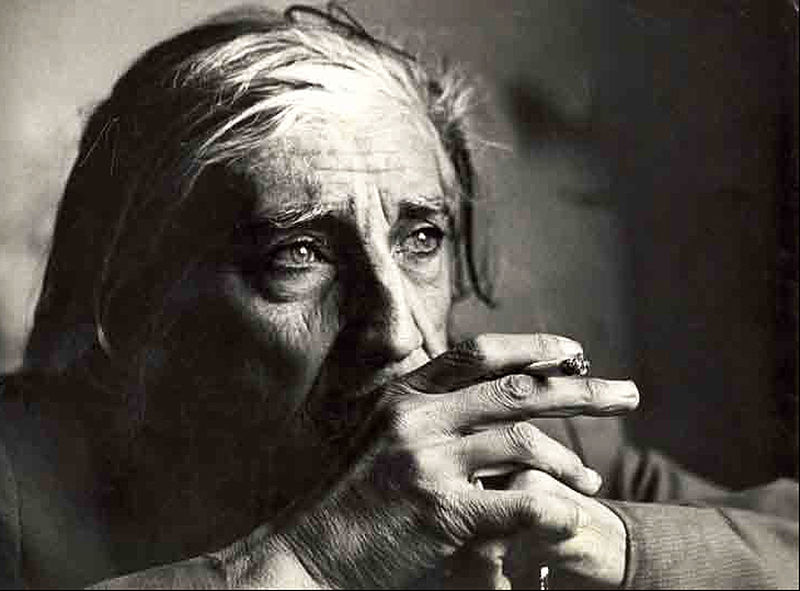
By Seymur Aliyev
He closed his eyes, being quite sentimental and emotional, 38 years ago. He left for eternity, leaving an indelible trace, without anyone to fill the void.
The founder of contemporary Azerbaijani landscape painting, Sattar Bahlulzadeh, was born in 1909 outside the capital of Azerbaijan, Baku. He was so unusual, so extraordinary. He made Azerbaijani paint art more colorful and more mysterious.
Bahlulzadeh, who was an in-born romantic capable of looking into the depth of being, getting through the tegument of commonness and finding there amazing inwardness. It is an unsurpassed contrast of emotions reflected in variable, rich colors. His works make a man unwittingly return to places that he depicts and ask himself: "How couldn't I notice it before?"
He was an ardent follower of impressionism throughout his life. He skillfully put on the canvas his impressions about the fast-changing world. He talked to his pictures by nicely decanting the colors. He was so fascinated with his own creations that he forgot about his private life. His life was a mixture of colors becoming so magic at the end of his brush. His colors become alive, sincerely thrilling the soul of all those who gazes at his fabulous canvases.
Sattar's legacy includes countless works that have been exhibited all over the world, including personal exhibitions in the U.S., Britain, Turkey and Russia. He also created around 30 sketch diaries that contain his reflections on life and art.
He could embody on a single canvas Oriental rhythms and characters, Tabriz miniatures, the rock carving legacy of Gobustan, national carpet weaving art with Russian plein-air landscape and the landscapes of French impressionists. His pictures are so real, with a fairy touch. Sattar saw something special in ordinary things and helped all those who admired his works and couldn't but gazed at this miracle to see this feature. And then, the canvas reveals in a man a different nature of being, which opens only to people like Sattar. The pictures are an incarnation of his suffering, memories and nostalgic melancholy caused by the inconstancy of this world.
The Amirjan village located near Baku on the Absheron Peninsula, where Sattar Bahlulzade was born in 1909, was known for its old and somewhat conservative traditions. It was not common to place boys in art schools. But talented Sattar painted so much and with such enthusiasm that his parents decided not to stop his creative efforts. In 1927 Sattar began attending the Azerbaijan College of Art where at that time taught the oldest artist Azym Azymzade, the patriarch of Azerbaijan caricature art whose famous drawings were spread around the entire East on pages of the popular satirical journal "Molla Nasreddin". In 1933 he was admitted to the Graphic Department of the Moscow Art Institute. After graduating from the institute Bahlulzade returned to Baku and turned to the battle genre which was very popular in the World War II period. His painting "Defense of the Buzz Fortress" covered one of the milestones in the military history of the Azerbaijani nation, calling on the fighters to struggle against the enemy.
Bahlulzade experimented in various genres of art, and his unique talent was expressed in landscape painting. At first, he used to paint nature realistically as he had been taught. But soon he developed his own style to express the emotions invoked in him. This new style was more surreal and cosmic. In fact, some of his paintings are reminiscent of photos of the earth taken from space. Using a combination of pastel colors and bold strokes, he made nature look more colorful and lively, and sometimes even more fantastic than it does in reality.
In the color palette of his works, Sattar rarely used dark colors and never black ones. His favorite colors were green and blue. Canvases of the artist are always full of light and limpid air. For example, "Pomegranates", created by Sattar is different than Toghrul Naimanbeyov's "Pomegranates". His canvas with pomegranates seems like tender, airy paradise fruits with a thin outline on a delicate blue background.
In the 1950s he created landscapes dedicated to the nature of Guba - "The bank of Gudyalchay", "The road to Giz- Banovsha", "The valley of Gudyalchay", "Green carpet". Guba ladscapes show that artist was a real landscape painter, who had a delicate feel of the beauty of nature. Other famous works by him are also amazing - "Skyway", "Morning", The Caspian evening", "Piti".
Sattar loved to travel around his motherland, Azerbaijan, to explore its beauty. Once he noted, "I don't need to go to Tahiti like Gauguin. The source of my real inspiration is my own country and people."
Here we are to serve you with news right now. It does not cost much, but worth your attention.
Choose to support open, independent, quality journalism and subscribe on a monthly basis.
By subscribing to our online newspaper, you can have full digital access to all news, analysis, and much more.
You can also follow AzerNEWS on Twitter @AzerNewsAz or Facebook @AzerNewsNewspaper
Thank you!