
Maryam Gafurova: Int'l Carpet Festival 2026 to strengthen cultural dialogue between countries

AzerNEWS Staff
Read moreFrom May 1 to 3, 2026, Baku will host the second International Carpet Forum, organized with the support of Azerkhalcha OJSC and the Icherisheher State Historical-Architectural Reserve Administration, and backed by the Ministry of Economy and AZPROMO (Export and Investment Promotion Agency), AzerNEWS reports.
The event will gather prominent international experts, designers, producers, researchers, exporters, and professionals from the creative carpet-weaving sector.
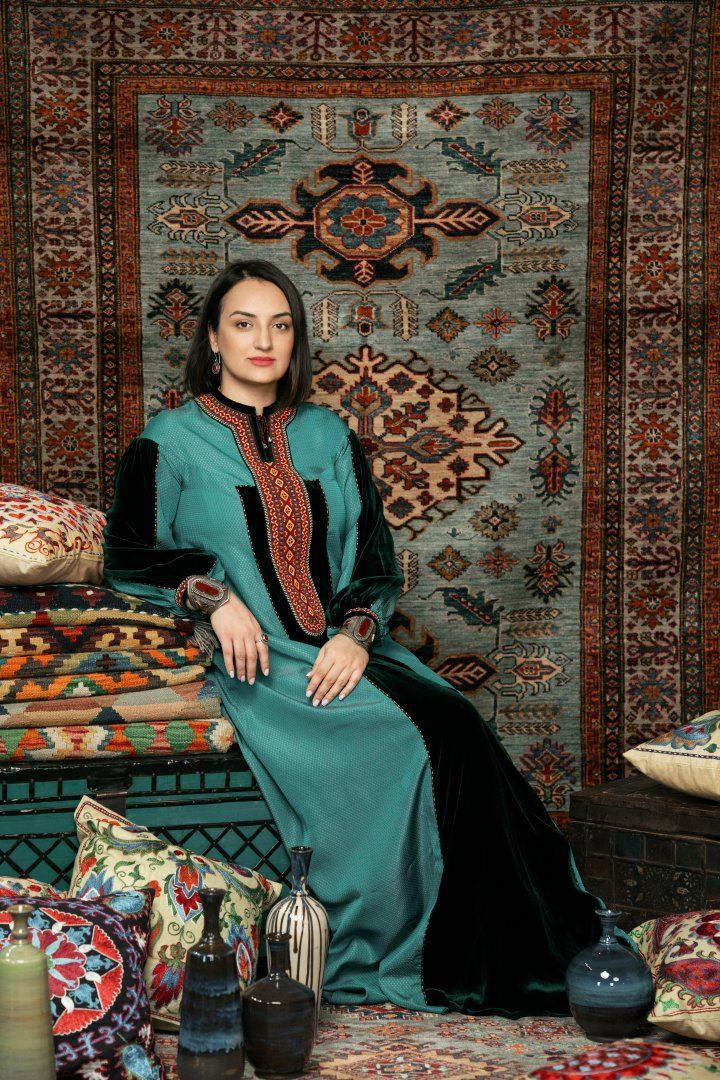
Ahead of the event, entrepreneur and founder of Tumar Carpets, a handmade carpet gallery with branches in Almaty and Astana, Maryam Gafurova shared her expectations for the forum in an interview with Trend Life.
Maryam Gafurova specializes in studying Turkmen tribal ornaments, their symbolism, and cultural significance. The gallery's collection includes thousands of unique items from Turkmenistan, Afghanistan, and India. With experience in various business fields and a master’s degree focused on marketing and cultural identity, Maryam saw the potential of promoting traditional carpet weaving through modern communication channels. Tumar Carpets is not only a gallery but also a blog with a six-year history, serving as a platform for popularizing traditional crafts. The project acts as a bridge between artisans and collectors seeking to bring authentic handmade pieces into their spaces.
"I see the second International Carpet Festival in Baku as a large-scale cultural event bringing together artisans, designers, and researchers from around the world. It is not just an exhibition, but a living platform where traditions meet modernity, and national carpet weaving schools exchange experience and ideas. We live in a time where there are no borders; the most important thing for me is the exchange of experience, and all doors are open to us. I expect this event to become not only a showcase of unique carpets and techniques, but also an important step in preserving and promoting this art at the international level," said Gafurova.
According to her, the festival will strengthen cultural dialogue between countries, allow artisans to present themselves, and help audiences gain a deeper understanding of the symbolism, history, and soul of carpet weaving as an art form.
"For me, this event is not only about traditions but also about inspiration, new connections, and the development of the craft in the modern world. A handmade carpet is not just an interior item. It is a carrier of culture, history, and identity. As gallery owners, our task is not limited to selling. We act as custodians and transmitters of heritage. We do not create demand—we create value," Gafurova emphasized.
When a carpet is presented correctly, it ceases to be mere "decor" and becomes a symbol of status, an element of cultural code, and part of an intellectual interior. It is through this perception that handmade carpets secure their place in the global premium market.
"In my opinion, the value of a carpet is formed not only through its appearance but also through an understanding of its history, symbolism, and craftsmanship. Working with carpets from Afghanistan, Turkmenistan, and India, we see that behind each piece there is not just design, but an entire cultural code. Ornaments often carry symbolic meanings—protection, prosperity, family values—and when this is revealed, the perception of the carpet becomes deeper.
Status value is formed through uniqueness and handcrafting. In a world of mass production, authenticity, time, and mastery become the new luxury. Cultural value is strengthened through proper presentation—through storytelling, festivals, and direct engagement with the craft. That is why it is important not just to show carpets, but to reveal their meaning," Gafurova said.
Storytelling and authentication are key tools that help reveal the true value of a carpet. Storytelling helps communicate to the audience that behind each carpet lies a story—its origin, the symbolism of its patterns, and the artisan’s work.
"Authentication strengthens this value: it is important to show that these are handmade pieces, produced in limited quantities, requiring from several months to up to a year and a half to create. It is precisely this understanding—of time, labor, and uniqueness—that changes perception and turns a carpet from a household item into an object of prestige, meaning, and cultural identity," she noted.
History and origin give a carpet its meaning: by understanding which region it comes from and what traditions stand behind it, a person begins to see it not just as a product, but as part of culture and heritage. Craftsmanship further enhances this value—it is handmade work requiring months, sometimes more than a year. Awareness of the time and skill invested creates respect and a sense of authenticity.
"Proper presentation brings all of this together through storytelling, visual context, and explanation of symbolism. It helps a person not just see a carpet, but understand it. It is important to develop carpet weaving culture among young people and set new trends. It is the younger generation that shapes future demand and attitudes toward such items.
For this, it is necessary to speak to the audience in a modern language—through design, social media, collaborations with brands and designers. A carpet should be perceived not only as tradition but also as a relevant element of style and self-expression. People always respond to a beautiful visual presentation, "added Maryam Gafurova.
Media partners of the event are Azernews.Az, Trend.Az, Day.Az and Milli.Az.
Here we are to serve you with news right now. It does not cost much, but worth your attention.
Choose to support open, independent, quality journalism and subscribe on a monthly basis.
By subscribing to our online newspaper, you can have full digital access to all news, analysis, and much more.
You can also follow AzerNEWS on Twitter @AzerNewsAz or Facebook @AzerNewsNewspaper
Thank you!