
Brussels risks undermining its own peace strategy in South Caucasus
Akbar Novruz
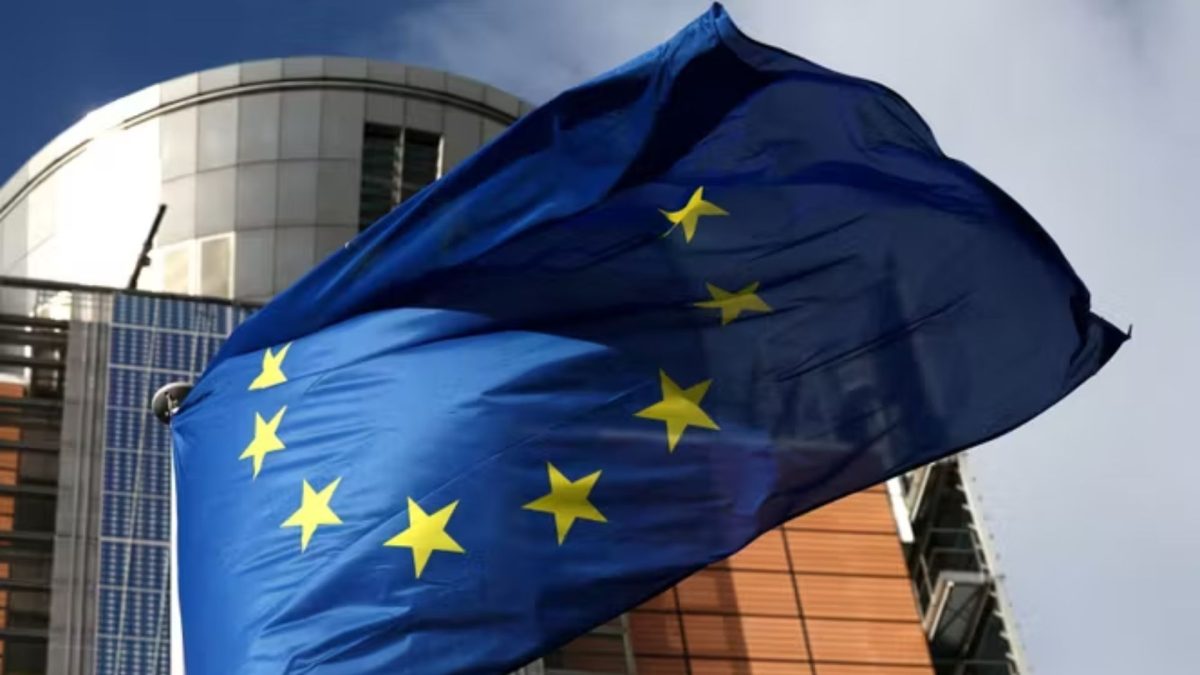
Read moreIn Brussels, the South Caucasus almost seems to exist in two versions all the time. One is a region moving towards peace, new transport links and closer European commercial ties. The other is a theatre of recrimination, sanctions demands and arguments over a conflict whose territorial outcome has already changed. Two draft European Parliament reports, published on November 16, reveal how awkwardly these visions coexist.
A committee on foreign affairs has individual recommendations regarding its relations with Azerbaijan and Armenia. Dan Barna and Miriam Lexmann drew them up, respectively. Neither of them has been adopted as the stance of the Parliament.
The Transparency Register of the European Parliament shows that Barna met with the Mission of Armenia to the EU on November 6 and the Azerbaijani émigré organisation ASIMKOM on November 6 and 12. This needs examination. Has the rapporteur properly tested alternative explanations to include Azerbaijan’s claims on sovereignty, security and the peace process?
On the other hand, there were meetings with experts on energy issues, academics, a Caspian Institute and the Mission of America. A meeting does not equal collusion, of course. Allegations that the document was written on behalf of Armenian lobbies, or that the émigré activists work for foreign intelligence services, need more than just a list of meetings. The more relevant critique relates to the criteria for turning testimony into policy.
The message Parliament wishes to send could not be clearer, honestly. As late as October 8, it voted 492 to 23 to condemn detention in Azerbaijan and demand that preparatory work for sanctions against the violators be done. Baku contends that there is no need for those found guilty by the provisions of their own laws to be considered political prisoners; the representatives of Europe and human rights activists doubt the legitimacy and motives of some of the trials. Both assertions are insufficient for the resolution of the legal problems involved.
Consistency poses a much stronger challenge. Armenia, which has become increasingly popular among the Europeans, is not free from charges of selective prosecution. Deutsche Welle cited claims from some Armenian civil-society organizations regarding the detention of opposition activists. The EU claims to be watching these cases carefully, but it is noted that its reaction was far less conspicuous than that of the Union.
Yet another difficulty emerges since both parties are in motion. In the wake of the Washington declaration in August 2025, a new stage of Azerbaijani-Armenian relations began. Thus, on November 23, Armenia published its draft of the constitution excluding the phrase that Baku understood as making claims to the territory. Armenia's prime minister, Nikol Pashinyan, stressed this change's direct link to achieving peace, although it must be approved through a domestic political struggle. The discussion in the parliament regarding Karabakh, refugees, and Armenian prisoners is indeed a legitimate humanitarian topic. However, the use of historical vocabulary cannot be considered as making territorial claims to the present day; neither can the appeal to procedural guarantees be interpreted as an annulment of the verdict.
While legislators consider censure, the Commission is pursuing strategic priorities with Azerbaijan for 2026–2030. Its own proposal recognises Azerbaijan’s restored sovereignty, the Washington peace breakthrough and the economic importance of the Middle Corridor. The EU accounts for 38.7% of Azerbaijan’s merchandise trade, according to Commission figures; Azerbaijan supplies roughly 4% of EU gas demand.
The draft resolutions are non-legally binding documents, and neither of them has the power to change the borders of Azerbaijan or dictate to it its internal policies. Nevertheless, they may have an impact on public opinion, the future conditions of cooperation, and the atmosphere in which diplomacy operates. Baku’s move to suspend parliamentary cooperation in May demonstrated how quickly political rhetoric could destroy institutional goodwill.
The question for Europe is not one of either sacrificing human rights or ignoring economic interests - and no one is coming against that idea. The question is whether or not its critique will be rigorous, fair, and mindful of an emerging process of peace-making. The Parliament that hopes to have any impact on the South Caucasus cannot afford to just replay old debates while new negotiations are being made.
Here we are to serve you with news right now. It does not cost much, but worth your attention.
Choose to support open, independent, quality journalism and subscribe on a monthly basis.
By subscribing to our online newspaper, you can have full digital access to all news, analysis, and much more.
You can also follow AzerNEWS on Twitter @AzerNewsAz or Facebook @AzerNewsNewspaper
Thank you!