
Russian ambitions after Ukraine put post-Soviet space on alert

Akbar Novruz
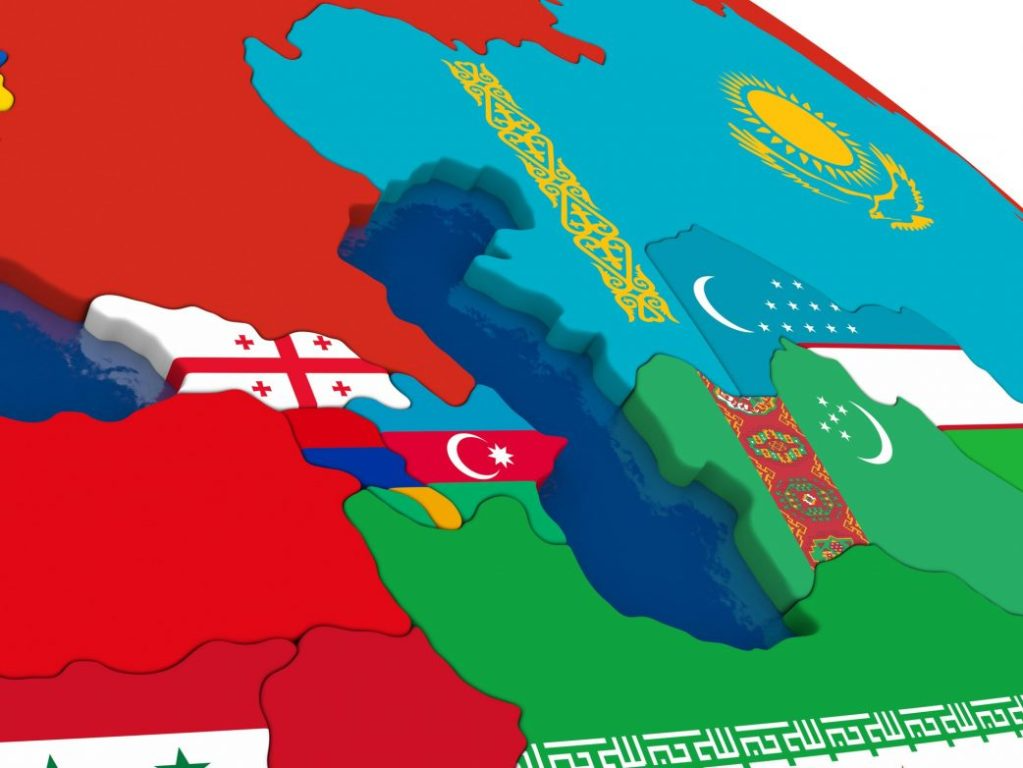
Read moreRecent years have shown that the geopolitical order in the former Soviet space is rapidly shifting. States in the South Caucasus and Central Asia are redefining their foreign policies, prioritizing national sovereignty, diversified partnerships and regional connectivity over reliance on Moscow.
This shift threatens the traditional dominance of the Kremlin. Given Russia’s recent resurgence of confidence, especially after what many in Moscow consider gains in Ukraine, there is a growing risk that the Kremlin may attempt to reassert its influence through interference in neighboring regions, given the facts of looming possibility of peace treaty negotiations.
The backdrop
Once, Russia exercised near-total dominance over the South Caucasus. Its security architecture, military bases, and mediation role in regional conflicts allowed it to shape outcomes according to its interests.
For years, Russian-Azerbaijani relations have looked stable on the surface, yet underneath they carry a set of unresolved contradictions that are slowly turning into strategic pressure points. None of these contradictions alone signal a breakdown, but together they reveal an increasingly fragile balance that could shift abruptly if Moscow decides it must reassert its influence in the post-Soviet space once the fighting in Ukraine moves toward a political end.
But recent events have undermined that dominance. During the 2023 conflict over Garabagh, Russia was unable to prevent the re-assertion of Azerbaijani control. Its peacekeepers withdrew, and Armenian forces failed to mobilize effective support from Moscow a clear signal that Russian guarantees no longer hold the same weight.
In parallel, Azerbaijan has been building alternative east-west and north-south transit links, energy routes, and trade corridors tied less to Russia and more to Türkiye, Europe, and global markets.
Another sensitive point is the Zangazur corridor. Russia has watched with discomfort as Azerbaijan expands cooperation with the United States and Europe around this route. Moscow expected exclusive control over all transport corridors in the region. Granting Western actors a role, even indirectly, challenges Russia’s traditional monopoly. It also signals that the South Caucasus is no longer a region where Moscow decides everything alone.
The situation in other countries of the region is mixed. Armenia has been actively working to distance itself from Russia for several years and plans to leave the CSTO in the coming months. Georgia has yet to determine the direction of its relations with Russia. While this could be elaborated further, the main point is that countries in the Asian part of the post-Soviet space are making progress. Although Russia is not isolated in this context, as it is involved in several economic projects, its influence in the region is not as strong as it once was.
Similarly, in Central Asia, many states increasingly avoid automatic alignment with Moscow, favoring diversified foreign relations, often including China, Türkiye, or Western economic partners.
All this points to a shrinking sphere of Russian influence, a shift that Moscow would find hard to accept, particularly at a time when the war in Ukraine appears to have strengthened the Kremlin’s domestic and global posture.
Given this context, several motivating factors could push Russia to act to regain control of transit and strategic corridors, re-establishing a security pivot under the guise of regional instability, leveraging post-Ukraine victories for renewed ambition.
Moscow is actively seeking to regain control over transit and strategic corridors, with projects linking the Caspian Sea, the South Caucasus, Central Asia, and Europe increasingly bypassing Russian territory. This shift poses a challenge to Russia's long-standing monopoly as the gatekeeper between East and West, and by controlling or disrupting these routes, Russia aims to reassert its strategic significance. Analysts have noted that the expanding geoeconomic presence of non-Russian actors in the Caucasus and Central Asia is diminishing Moscow’s historical dominance in the region.
In light of its weakened influence in Armenia and Azerbaijan, Russia may explore new avenues to reinsert itself as a supposed "stabilizer." This could involve promoting or even fomenting localized tensions in disputed border areas, ethnic minority regions, or contested transport routes, using these instabilities as a pretext for establishing new security roles, peacekeeping missions, or exerting political leverage. Furthermore, as Central Asian states cautiously engage with China, Türkiye, and Europe, Moscow may perceive a risk of being sidelined. In response, the Kremlin could remind these nations of their shared historical ties and potential security threats, leveraging economic pressure, particularly in terms of energy, migration, and trade.
Finally, emboldened by recent military developments stemming from the Ukraine conflict, the Kremlin may feel that it is an opportune moment to reclaim geopolitical territory it has lost in recent years. These perceived "victories" could serve as both a rationale and an impetus for renewed military or political assertiveness in its neighboring regions.
In the South Caucasus, several vulnerabilities could become leverage points for Russian interference:
-
Transit corridors and the new geopolitical order.
As Azerbaijan and Armenia move ahead with agreements on connectivity, including routes linking Azerbaijan’s main territory with its exclave via Armenia, Russia’s traditional role as mediator and gatekeeper is bypassed. Moscow could seek to regain influence by contesting the security or legal status of these corridors, offering “peacekeeper” status, or pushing for control over border security, all under the pretext of regional stability. Russian sources already express concern over losing their monopoly on transport links. -
Economic and energy ties outside Russian orbit.
Azerbaijan’s energy exports and diversified alliances, including growing cooperation with Türkiye, Europe, and non-Russian markets, weaken Moscow’s leverage via energy dependency. As a result, Russia may attempt economic pressure: leveraging gas, or other trade corridors, or destabilizing markets to create leverage. -
Political influence and soft power erosion.
Russia’s influence over domestic politics, in both Armenia and Azerbaijan, has already been diminished. As Yerevan moves away from traditional security dependence on Moscow, Baku openly perceives Moscow as unreliable. Russia might attempt to exploit internal divisions, revive old narratives, or support oppositional elements to destabilize governments that drift away from Moscow’s orbit.
Central Asia as another potential front
The same logic applies to Central Asia. If transit corridors between East and West bypass Russia, connecting Azerbaijan, Türkiye, Europe, and Central Asia, Moscow’s traditional role as Eurasian transit hub weakens drastically. In response, Russia could try to reassert influence through economic coercion, diplomatic pressure, or support for pro-Moscow political forces in countries such as Kazakhstan, Uzbekistan, and Kyrgyzstan.
For Russia, re-establishing control over transit routes means securing strategic depth and leverage. Losing that could mean losing the ability to project influence across Eurasia.
Yet, despite these motivations, there are substantial obstacles that could limit the success of any Russian interference.
Regional actors have learned to diversify, with countries in the South Caucasus and Central Asia already beginning to reduce their dependence on Moscow. Their growing economic ties with Türkiye, Europe, and Asia, along with active infrastructure projects, make them less vulnerable to Russian pressure. New regional cooperation frameworks are weakening old alliances; agreements that link multiple countries through transport corridors, trade routes, and energy networks create shared interests that do not include Russia, offering built-in deterrents to interference precisely because disruption would hurt many stakeholders, not just one.
Furthermore, international scrutiny and the shifting global context have intensified, as Russia’s war in Ukraine has exposed its aggression and made many states wary of becoming overly dependent again. External powers keen on stability in Eurasia, such as Türkiye, EU states, and other regional actors, might support regional sovereignty and resist Russian attempts to meddle.
Russia’s growing confidence at home and its victories in Ukraine may tempt the Kremlin to try and re-expand its influence in the post-Soviet space. The South Caucasus and Central Asia, with their strategic corridors, evolving alliances, and weakened Russian dominance, present possible fronts.
The risk is not of a full-scale conflict but of a new phase of geopolitical pressure in which Russia attempts to reshape regional alignments. The boundaries of influence in the post-Soviet space are shifting, and Moscow will not accept these shifts passively. If it interprets the outcome of the Ukrainian war as a victory or even a strategic recovery, it may try to redraw political realities in its eastern neighbourhood.
But any such intervention would come at a cost: resistance from newly assertive regional actors, disruption to trade and stability, and likely pushback from global powers. In the most optimistic scenario, this would mean targeted pressure, coercive diplomacy, and revived manipulation of unresolved issues. In a more concerning one, it could open a new front of geopolitical friction in both the South Caucasus and Central Asia. The countries in these regions must remain vigilant. Their future depends not on returning to old models of dependency, but on deepening cooperation, strengthening regional integration, and protecting their emerging architecture of sovereignty.
Here we are to serve you with news right now. It does not cost much, but worth your attention.
Choose to support open, independent, quality journalism and subscribe on a monthly basis.
By subscribing to our online newspaper, you can have full digital access to all news, analysis, and much more.
You can also follow AzerNEWS on Twitter @AzerNewsAz or Facebook @AzerNewsNewspaper
Thank you!