
Pashinyan accepts hard truths in name of peace
Akbar Novruz
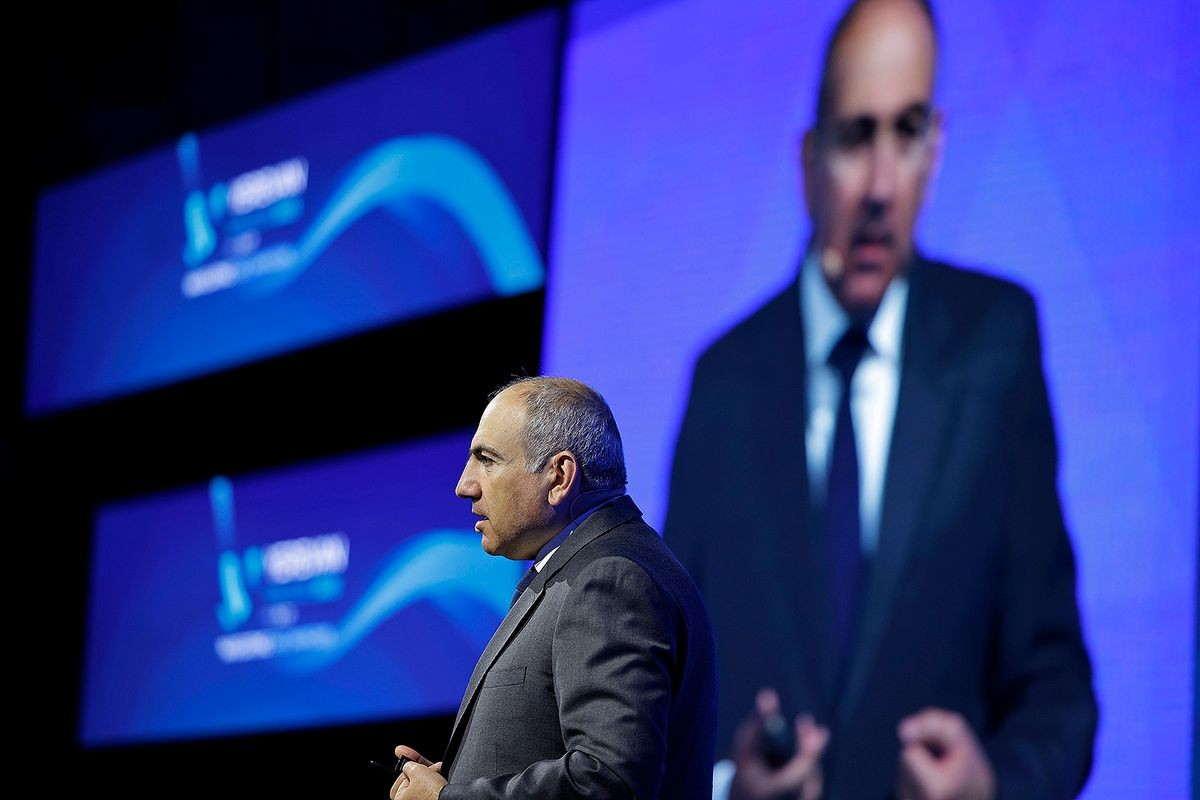
Read moreFollowing the Trump-mediated summit in the US capital on August 8, for the first time, official Yerevan is beginning to voice words of peace. The meeting also serves as a push for Azerbaijan and Armenia to adapt to a new reality in their relations. Armenian Prime Minister Nikol Pashinyan, returning from vacation, delivered a public address on the Washington Declaration signed on August 8, seeking to counter the flood of opposition-driven narratives dominating the media.
According to Pashinyan, the Washington Declaration has ushered Armenia into "a new South Caucasus and a new republic." He emphasized that the United States views peace as established between Yerevan and Baku, setting the stage for his ruling party to enter the next elections on a peace platform.
The prime minister highlighted that peace is what most Armenians want, after decades of war and conflict, and that opposition calls for renewed hostilities no longer resonate with a population weary of instability. Street polls, he argued, confirm this sentiment—suggesting that by aligning with popular demand, his government strengthens its electoral chances.
"Armenia is emerging from the blockade after 30 years. For the first time since the 1990s, we are experiencing peace. Everything changed after August 8. We don’t know what it feels like to live in peace or to work peacefully. This is a new feeling for us because, since the day we gained independence, we have lived amidst conflict and war. We have to relearn what it means to live in peace, understand what peace actually is, how it is achieved, and what it looks like", - he said.
For Armenia, which has remained isolated for more than three decades, connectivity is "as important as air and water." With Azerbaijan already spearheading regional and international logistics projects, Pashinyan underscored the urgency of joining these initiatives to revive Armenia’s struggling economy.
This requires advancing border demarcation and delimitation, a process Yerevan has already initiated in Tavush and intends to expand further. Pashinyan acknowledged that some Azerbaijani territories would inevitably be returned to Baku through this process—a step he described as both legitimate and necessary.
The opening of the Zangezur corridor (recently labelled as Trump Route for International Peace and Prosperity - TRIPP), he stressed, would not only grant Azerbaijan unhindered access to Nakhchivan but would also provide Armenia with significant economic benefits, from budget revenues to regional job creation, particularly in Syunik. "Joining international logistics projects is Armenia’s path out of isolation," he stated, countering opposition criticism that has weaponized the corridor debate.
Undoubtedly, in line with this, his statement during his meeting with Massoud Pezeshkian that the agreement with Azerbaijan would open up new opportunities for railway cooperation between Armenia and Iran should be welcomed. This also served as a strong rebuttal to Iranian politicians who have recently expressed anti-Azerbaijan sentiments regarding this project.
Perhaps the most striking part of the address was Pashinyan’s declaration that the Garabagh issue "is closed." He admitted that without resolving this matter, peace would have been impossible.
This comes at a very ideal moment, especially since, during the meeting in Washington, an Armenian journalist posed a question about the fate of Armenians who left Garabagh but did not receive a response. Consequently, this topic was not addressed in the bilateral talks. Moreover, the Armenian government occasionally argue that Azerbaijan's demands for constitutional amendments are harmful to the peace process. Additionally, the issues mentioned above are also obstructing progress toward peace. The current peace process aims to eliminate efforts to address the Garabagh issue in any international context. This is why Baku has made this a prerequisite, and it appears to be a condition that is being adhered to.
On the question of Garabagh Armenians, Pashinyan dismissed any prospects for their return, warning that keeping the issue alive risks becoming a tool of foreign influence.
Pashinyan also addressed the politically sensitive issue of Armenian separatists currently on trial in Azerbaijan, including figures like Ruben Vardanyan, once seen as a rival to the prime minister. He emphasized that this matter was not included in the peace agreement and should not obstruct the peace process. By framing it as an internal Azerbaijani affair, Pashinyan appeared to be preparing Armenian society for acceptance of Baku’s position.
Armenia’s acceptance of new regional realities and of Azerbaijan’s legitimate demands. Importantly, he highlighted that the agreement was the product of direct, bilateral negotiations—without mediators—underscoring its credibility. This is part of adapting to new realities; these conditions determine the next steps.
Pashinyan positioned his government as pragmatic and forward-looking, while challenging the opposition’s revanchist narrative.
Last remarks
Armenian PM's remarks come at a crucial point, and it is indeed plausible. However, a rational approach to resolving the post-Washington settlement issues is to establish legal foundations and institutional mechanisms. Not everyone agrees with the current situation. Leaders from the Armenian diaspora, church, and nationalist figures argue that recent developments undermine the Armenian cause. These actors create a constellation of influence that opposes Pashinyan’s realist ideologies. What they defend is not merely a set of territorial claims, but a worldview rooted in grievance, martyrdom, and a narrative of heroic victimhood. As governments have come and gone in Yerevan, the Church has acted as a stable institution and, at times, a power center in its own right, arguably functioning as a sort of "deep state." Significant reforms and steps not taken today could be undermined at any moment in the near future. Pashinyan's another real challenge - the 2026 Parliamentary Election - also accentuates this.
Real outcomes can only be achieved when the uncertainty of the political landscape, conflicting interests, and empty rhetoric are replaced by law. Peace is not just the absence of war; it is a robust system founded on legal guarantees, international recognition, and mutual agreement. Achieving this requires more than just vision; it requires public consent. Any enduring agreement must be built from the ground up, rather than imposed from above.
Without this vital, any discussions about peace are nothing more than an illusion. We must remember that signing a peace agreement and maintaining peace relies not only on statements and declarations but also on real actions. In this ideal environment, implementing this agreement is now the responsibility of everyone.
Here we are to serve you with news right now. It does not cost much, but worth your attention.
Choose to support open, independent, quality journalism and subscribe on a monthly basis.
By subscribing to our online newspaper, you can have full digital access to all news, analysis, and much more.
You can also follow AzerNEWS on Twitter @AzerNewsAz or Facebook @AzerNewsNewspaper
Thank you!