
Baku concerned over planned Turkish-Armenian deal
Azerbaijan is concerned over the planned signing of
agreements between Turkey and Armenia, an official has said,
despite Ankara`s repeated assurances that it will not hurt its
ally`s interests in the Upper (Nagorno) Garabagh conflict.
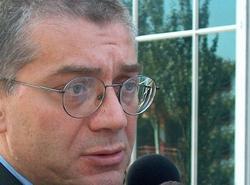
Deputy Foreign Minister Araz Azimov said Tuesday, referring to the documents that seek to establish Turkish-Armenian diplomatic ties, that the importance of resolving historical and political issues for both countries is understandable. However, if the linkages between outstanding problems in the region are taken into account, it becomes clear that addressing the Garabagh conflict and Turkish-Armenian relations separately is impossible.
``It would be better for the withdrawal [of Armenian troops] from the occupied Azerbaijani territories and granting the Lachin road [linking the occupied Upper Garabagh region with Armenian territory] to joint use by Azerbaijan and Armenia, and the opening of the Turkish-Armenian border to be in the same package,`` Azimov told a press conference.
Turkey and Armenia, Azerbaijan`s long-time foe, have faced enmity for decades due to the Armenian occupation of Azerbaijani territories and claims on the World War I-era genocide of up to 1.5 million Armenians. On August 31, the Turkish and Armenian governments announced they would launch domestic consultations over two protocols on forging diplomatic ties and bilateral relations, to be followed by their parliamentary approval. The protocols are due to be inked on Saturday. However, Turkey has repeatedly said it could normalize ties with Armenia and open the border, which has been shut since 1993, only after the Garabagh conflict has been fairly settled.
The deputy minister said signing the protocols could leave out an important point.
``The Turkish leadership is providing assurances that the protocols will be signed but their further ratification will be postponed. Our leadership, having heard these statements, takes notice and says it accepts them. But if the protocols are inked, Turkey may immediately face pressure again. The Armenian lobby may again raise the purported genocide issue in the US Congress. Turkey will then be compelled to say that it has to revisit those issues. Therefore, I am saying that, personally, I am concerned, things are very complicated. I would not want for such a dark scenario to materialize.``
Further, Azimov said Azerbaijan was ready to compromise in Garabagh settlement.
``There is no 100 percent solution to any conflict. But a process is in place for the settlement of conflicts mutually and based on compromise. You compromise something, but you get something else in return. For this reason, Azerbaijan, adhering to its position of principle, is ready to accept some compromise… Azerbaijan says it is ready to grant a status of high-level administration within its territorial integrity to Upper Garabagh, the two communities that will live there. This means that Azerbaijan has already covered its road and stands in the middle of the bridge, and now Armenia must relinquish its maximalist stance and meet us halfway. In other words, they have to agree with resolving outstanding issues within Azerbaijan`s territorial integrity.``
Azimov emphasized that reaching a solution is possible in stages, based on the logic of the conflict settlement process.
``Vacating seven districts around Upper Garabagh does not amount to a conflict settlement. To reach the following stages, the population [displaced in the aftermath of hostilities in the 1990s] has to return to their homes. The Garabagh problem will be resolved only after Azerbaijanis have returned to Garabagh. Afterwards, by forging cooperation and peacefully co-existing with the Armenian population, they will provide normal environment there. In these very objective conditions, problems could be fully resolved during the further stages. Turning this logic upside-down, dragging it backwards and twisting it is impossible and unacceptable.``
Azimov reminded that Azerbaijanis were ousted from Garabagh as a result of ethnic cleansing, and determining the status of the region is out of the question until these consequences are eliminated.
Armenia has occupied 20 percent of Azerbaijani territory for nearly two decades. The two South Caucasus republics signed a cease-fire in 1994 after fighting a lengthy war and peace talks, brokered by the OSCE Minsk Group, are still underway. But numerous rounds of negotiations have produced little tangible result thus far.
Deputy Foreign Minister Araz Azimov said Tuesday, referring to the documents that seek to establish Turkish-Armenian diplomatic ties, that the importance of resolving historical and political issues for both countries is understandable. However, if the linkages between outstanding problems in the region are taken into account, it becomes clear that addressing the Garabagh conflict and Turkish-Armenian relations separately is impossible.
``It would be better for the withdrawal [of Armenian troops] from the occupied Azerbaijani territories and granting the Lachin road [linking the occupied Upper Garabagh region with Armenian territory] to joint use by Azerbaijan and Armenia, and the opening of the Turkish-Armenian border to be in the same package,`` Azimov told a press conference.
Turkey and Armenia, Azerbaijan`s long-time foe, have faced enmity for decades due to the Armenian occupation of Azerbaijani territories and claims on the World War I-era genocide of up to 1.5 million Armenians. On August 31, the Turkish and Armenian governments announced they would launch domestic consultations over two protocols on forging diplomatic ties and bilateral relations, to be followed by their parliamentary approval. The protocols are due to be inked on Saturday. However, Turkey has repeatedly said it could normalize ties with Armenia and open the border, which has been shut since 1993, only after the Garabagh conflict has been fairly settled.
The deputy minister said signing the protocols could leave out an important point.
``The Turkish leadership is providing assurances that the protocols will be signed but their further ratification will be postponed. Our leadership, having heard these statements, takes notice and says it accepts them. But if the protocols are inked, Turkey may immediately face pressure again. The Armenian lobby may again raise the purported genocide issue in the US Congress. Turkey will then be compelled to say that it has to revisit those issues. Therefore, I am saying that, personally, I am concerned, things are very complicated. I would not want for such a dark scenario to materialize.``
Further, Azimov said Azerbaijan was ready to compromise in Garabagh settlement.
``There is no 100 percent solution to any conflict. But a process is in place for the settlement of conflicts mutually and based on compromise. You compromise something, but you get something else in return. For this reason, Azerbaijan, adhering to its position of principle, is ready to accept some compromise… Azerbaijan says it is ready to grant a status of high-level administration within its territorial integrity to Upper Garabagh, the two communities that will live there. This means that Azerbaijan has already covered its road and stands in the middle of the bridge, and now Armenia must relinquish its maximalist stance and meet us halfway. In other words, they have to agree with resolving outstanding issues within Azerbaijan`s territorial integrity.``
Azimov emphasized that reaching a solution is possible in stages, based on the logic of the conflict settlement process.
``Vacating seven districts around Upper Garabagh does not amount to a conflict settlement. To reach the following stages, the population [displaced in the aftermath of hostilities in the 1990s] has to return to their homes. The Garabagh problem will be resolved only after Azerbaijanis have returned to Garabagh. Afterwards, by forging cooperation and peacefully co-existing with the Armenian population, they will provide normal environment there. In these very objective conditions, problems could be fully resolved during the further stages. Turning this logic upside-down, dragging it backwards and twisting it is impossible and unacceptable.``
Azimov reminded that Azerbaijanis were ousted from Garabagh as a result of ethnic cleansing, and determining the status of the region is out of the question until these consequences are eliminated.
Armenia has occupied 20 percent of Azerbaijani territory for nearly two decades. The two South Caucasus republics signed a cease-fire in 1994 after fighting a lengthy war and peace talks, brokered by the OSCE Minsk Group, are still underway. But numerous rounds of negotiations have produced little tangible result thus far.
Here we are to serve you with news right now. It does not cost much, but worth your attention.
Choose to support open, independent, quality journalism and subscribe on a monthly basis.
By subscribing to our online newspaper, you can have full digital access to all news, analysis, and much more.
Subscribe
You can also follow AzerNEWS on Twitter @AzerNewsAz or Facebook @AzerNewsNewspaper
Thank you!