
Kazakhstan set to debate looser tenge grip to keep up with ruble
By Bloomberg
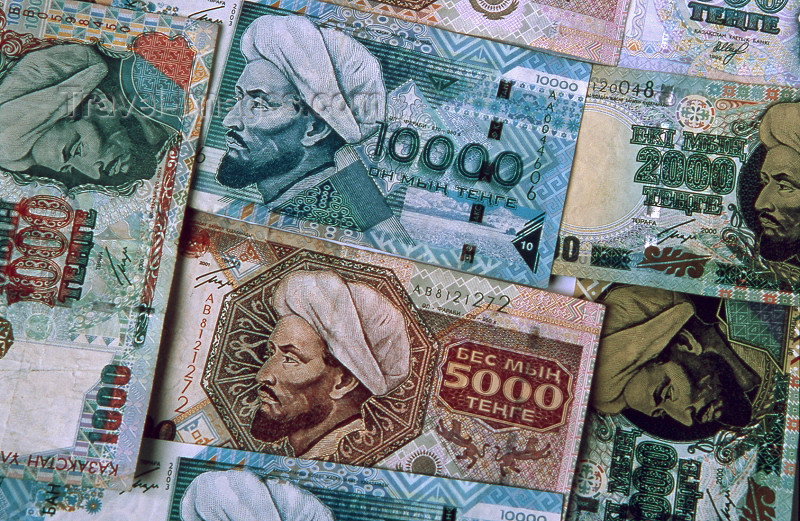
Kazakhstan may allow its currency to weaken as soon as this week as it struggles to stay competitive amid the Russian ruble’s slide, according to Royal Bank of Scotland Group Plc and Citigroup Inc.
Policy makers are leaning toward loosening the reins on the tenge, which they devalued by 19 percent in February last year, as a gradual weakening may be more palatable for Kazakh businesses than another one-off revaluation, said Tatiana Orlova, an economist at RBS in London. The ruble’s 50 percent plunge per dollar since 2013 is pricing many former Soviet republics out of their biggest export market, triggering currency adjustments and, in Belarus, stricter capital controls.
President Nursultan Nazarbayev is scheduled to meet with the government and central bank on Wednesday to discuss the economy. Standard & Poor’s cut Kazakhstan’s sovereign rating on Monday to two steps above junk, saying the central bank will probably have to shift toward a weaker tenge in one or more steps.
“S&P’s decision will certainly put more pressure on the currency and invite fresh thoughts by the central bank about the need to re-adjust the tenge to market realities,” Ivan Tchakarov, Moscow-based chief economist for Russia at Citigroup, wrote by e-mail on Tuesday.
S&P cut Kazakhstan to BBB from BBB+, citing the effect on the economy of declines in the price of oil, which accounts for as much as 30 percent of national output. The central bank will probably allow thetenge to depreciate to offset lower energy prices and the weaker ruble, S&P said.
Slowing Growth
Kazakhstan’s economy will probably expand 3.6 percent this year, the slowest pace since 2009, and down from 4.6 percent growth in 2014, according to data compiled by Bloomberg. Oil has tumbled 49 percent from its peak in June.
The tenge declined 0.3 percent to 185.74 against the dollar by the close on Tuesday in Almaty. The central bank manages the exchange rate in a trading band of 185 plus 3 or minus 15 tenge. The currency has weakened 2.3 percent since the end of November, the best performance after Azerbaijan and Uzbekistan among 12 nations in the former Soviet Union, compared with a 25 percent decline in the period for the Russian ruble.
“Ruble devaluation made it impossible for Kazakh producers to compete, as Russian goods lost half of their price,” Rakhim Oshakbayev, deputy chairman of the Astana-based National Chamber of Entrepreneurs, said in e-mailed comments last week. Companies may be forced to stop producing and cut jobs, he said.
Kazakh authorities intend to “prevent sharp fluctuations” in the tenge, central bank Governor Kairat Kelimbetov said last month in a meeting with the president, according to the president’s website. The bank’s press office declined to comment on Tuesday.
Policy makers will gradually move away from the current exchange-rate regime and may seek government approval for some changes at Wednesday’s meeting, Yerulan Mustafin, an Almaty- based analyst at Halyk Finance, wrote by e-mail on Tuesday.
The central bank will probably weaken the tenge in “a modest first step of 10 percent to 15 percent, followed by further controlled depreciation,” RBS’s Orlova said by e-mail on Tuesday.
“The authorities are unlikely to go for a substantial one- step devaluation, fearing another bout of panic in the foreign- exchange market and a run on the banks” that followed last year’s devaluation, she said.
Here we are to serve you with news right now. It does not cost much, but worth your attention.
Choose to support open, independent, quality journalism and subscribe on a monthly basis.
By subscribing to our online newspaper, you can have full digital access to all news, analysis, and much more.
You can also follow AzerNEWS on Twitter @AzerNewsAz or Facebook @AzerNewsNewspaper
Thank you!