
Fragile peace in South Caucasus faces its loudest opposition overseas [OPINION]
![Fragile peace in South Caucasus faces its loudest opposition overseas [OPINION]](https://www.azernews.az/media/2026/03/22/345735673567wfghsfgh.jpg)
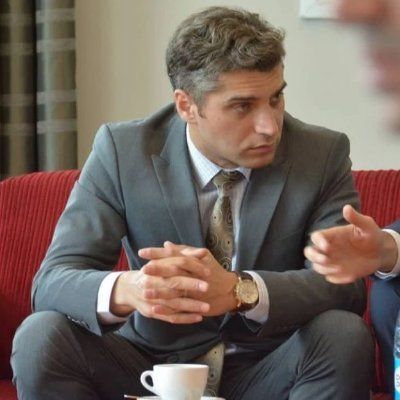
Elnur Enveroglu
Read moreArmenian revanchism cultivated by diaspora groups has not disappeared with the guns falling silent. If anything, it has simply migrated, taking root far from the South Caucasus in shape of networks that continue to promote grievance, resentment and outdated narratives of separatism. At a time when Azerbaijan and Armenia are cautiously navigating a fragile peace process, these external actors are attempting to reopen wounds that both societies can scarcely afford to revisit.
For more than three decades, Armenia has paid a heavy price for its policies during the conflict. The economic and diplomatic consequences have been severe, isolating the country and paralysing regional connectivity. The South Caucasus, once envisioned as a corridor linking Europe and Asia, instead became a zone of stagnation. Nowhere was this more visible than in the blockade of Azerbaijan’s Nakhchivan Autonomous Republic, a situation that symbolised the wider breakdown of regional cooperation.
The post conflict period has offered an opportunity to correct this trajectory. The developments following the 2023 anti terror operation in Garabagh have altered the political landscape decisively. Individuals detained and brought to Baku are facing legal proceedings within the framework of international law and human rights standards. However, rather than acknowledging this shift, segments of the Armenian diaspora continue to frame the situation through the language of victimhood, presenting claims that often ignore the broader legal and political context.
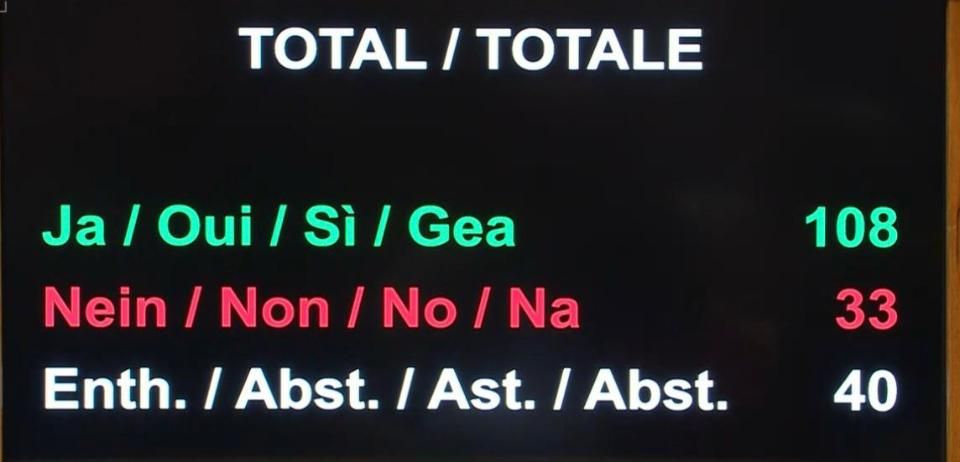
The latest episode in Switzerland illustrates the growing disconnect between diaspora activism and political reality. On March 20, the National Council, the lower house of the Swiss parliament, overwhelmingly rejected a cantonal initiative titled “Canton of Geneva 24.321: Annexation of "Nagorno Karabakh". Release of political prisoners in Azerbaijan.” The vote, 108 to 33, was not merely a procedural outcome. It was a clear signal that attempts to internationalise and politicise the issue in European legislatures are losing traction.
This rejection followed an earlier decision by the upper house, effectively closing the matter. It also reflected a broader sentiment within Swiss political institutions. During previous deliberations, members of the Senate’s foreign relations structures had already warned against allowing such initiatives to undermine the ongoing peace process between Azerbaijan and Armenia. The message was unmistakable. External interference dressed as advocacy risks doing more harm than good.
Despite this, diaspora organisations have continued their efforts. A press conference held on March 18 at the Geneva Press Club brought together a range of groups, including entities such as Christian Solidarity International and the Swiss Armenian Association. The event sought to revive familiar accusations, including claims targeting SOCAR and its trading activities. These allegations, suggesting financial complicity in alleged expulsions, are not new. Nor have they gained legal or institutional credibility.
What is striking is not the content of these claims, but their timing. Armenia is entering an election year, and the domestic political landscape remains highly fragmented. In this context, diaspora driven narratives serve a dual purpose. They reinforce hardline positions among certain constituencies while attempting to weaken the current government’s most significant political asset, the pursuit of peace.
The absence of Swiss parliamentarians at this latest gathering is telling. Where earlier events may have attracted political attention, this time the response was one of deliberate disengagement. It suggests a growing recognition that such initiatives are less about constructive dialogue and more about sustaining a cycle of grievance that no longer reflects realities on the ground.
The Swiss government’s earlier refusal to support a proposed “peace forum” involving not only Azerbaijan and Armenia but also self styled representatives of Garabagh further underscores this shift. Both Baku and Yerevan declined to participate, favouring direct negotiations supported by international partners such as the United States. The rejection of a symbolic gathering in favour of substantive diplomacy points to a maturing approach on both sides.
This is where the central contradiction becomes most apparent. While political leadership in Armenia has, however cautiously, moved towards recognising new realities and engaging in dialogue, segments of the diaspora remain anchored in a past that no longer exists. Their campaigns, whether in European parliaments or public forums, risk complicating a process that is already fragile.
None of this is to suggest that the path to peace is straightforward. It is not. The legacy of conflict runs deep, and trust between the parties remains limited. Yet, the alternative to engagement is a return to the very dynamics that have hindered Armenia’s development for decades. Continued isolation, economic stagnation and geopolitical marginalisation are not abstract risks. They are lived experiences from the recent past.
The events in Switzerland may seem minor in isolation, but they are indicative of a broader pattern. In the presence of Karnig Kerkonian, Sarkis Shahinian and Joel Veldkamp, who acted as speakers at the press conference hosted by the Geneva Press Club, the already fragile peace between Armenia and Azerbaijan appeared not merely under strain but deliberately targeted, as their rhetoric and positioning seemed aimed at keeping the South Caucasus locked in a cycle of perpetual tension and denying the region any real prospect of lasting peace. As the region moves, however unevenly, towards normalisation, the space for narratives rooted in confrontation is narrowing. Legislative bodies, international partners and even sections of Armenian society are beginning to recognise that sustainable progress cannot be built on the foundations of revanchism.
Ultimately, the question is not whether such provocations will continue. They almost certainly will. The more important question is whether they will succeed in shaping outcomes. The evidence so far suggests otherwise. The rejection in Switzerland is not just a diplomatic footnote. It is a reflection of a changing international environment in which the politics of perpetual grievance are losing their resonance.
For Armenia, the choice remains stark. It can continue to be influenced by voices that seek to relitigate the past, or it can consolidate a future based on cooperation, connectivity and pragmatic statecraft. The peace process with Azerbaijan, however imperfect, offers a pathway towards that future. Undermining it for short term political gain would be a mistake with long term consequences.
Here we are to serve you with news right now. It does not cost much, but worth your attention.
Choose to support open, independent, quality journalism and subscribe on a monthly basis.
By subscribing to our online newspaper, you can have full digital access to all news, analysis, and much more.
You can also follow AzerNEWS on Twitter @AzerNewsAz or Facebook @AzerNewsNewspaper
Thank you!