
Euro and yen rally telling Fed forget about September rate rise
By Bloomberg
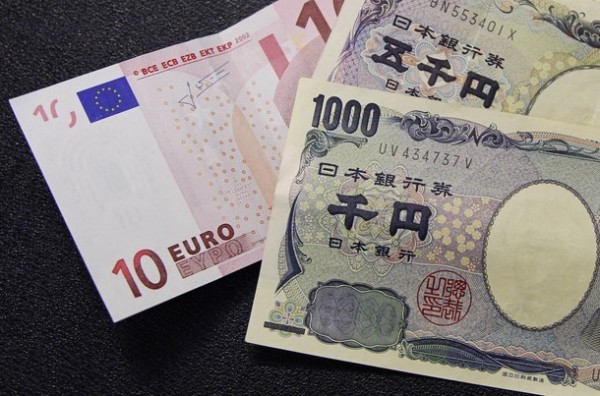
The euro and yen are rallying like currency traders don’t believe the Federal Reserve will raise interest rates next month.
The common currency climbed to the strongest since February against the dollar, while Japan’s rose to a six-week high as slumping commodity and share prices spurred a rout in emerging- market currencies that had started after China’s shock currency devaluation on Aug. 11. South Africa’s rand was the hardest hit Monday. Australia’s dollar reached a six-year low.
“The yen and euro are benefiting from both emerging-market risk aversion caused by China’s surprise move this month on the yuan and from falling expectations that the Fed will hike interest rates,” said Mansoor Mohi-uddin, senior markets strategist in Asia at Royal Bank of Scotland Group Plc in Singapore.
The euro climbed 0.6 percent to $1.1449 at 1:50 p.m. in Tokyo after reaching $1.1499 earlier, a level not seen since Feb. 5. The yen surged 0.7 percent to 121.18 per dollar. It reached 120.73, the strongest since July 9.
The Aussie dropped to 72.01 U.S. cents, the lowest since April 2009, before trading at 72.29, down 1.2 percent from Friday. New Zealand’s currency slid 1.4 percent to 65.93 cents.
‘Selling Interest’
The 19-nation currency has strengthened 4.3 percent this month, on course for its biggest gain since April, while Germany’s DAX Index has tumbled 10.5 percent, heading for its worst monthly drop in four years.
“We would not be surprised with selling interest emerging again closer to the session highs at $1.15, but looking more broadly, a test of $1.1550 cannot be ruled out should equities weaken further and the strong negative correlation between the euro and the DAX persists,” said Prashant Newnaha, a rates strategist at TD Securities Inc. in Singapore.
The Swiss franc, euro and yen were the best performers among 10 developed-nation peers in the past week, according to Bloomberg Correlation-Weighted Currency Indexes.
Equities worldwide have lost more than $5 trillion in value since China devalued its yuan. South Africa’s rand was the worst performer against the greenback among 31 major currencies, tumbling 3.1 percent to 13.3745 per dollar, heading for its biggest drop since December 2011.
Hedge funds and large speculators last week reduced wagers for declines in the euro against the dollar to the lowest since June, according to Commodity Futures Trading Commission data. They also lowered bets for a weaker yen after increasing such wagers the previous four weeks.
The probability that futures traders assign to a Fed rate increase next month slid to 28 percent, from more than 50 percent before China devalued its yuan, based on the assumption that the effective fed funds rate will average 0.375 percent after the first increase.
Given South Africa’s “status as an EM market sensitive to commodity prices and funding risks, I would suggest that it is the risk-off dynamic,” said Sam Tuck, a senior currency strategist at ANZ Bank New Zealand Ltd. in Auckland.
Here we are to serve you with news right now. It does not cost much, but worth your attention.
Choose to support open, independent, quality journalism and subscribe on a monthly basis.
By subscribing to our online newspaper, you can have full digital access to all news, analysis, and much more.
You can also follow AzerNEWS on Twitter @AzerNewsAz or Facebook @AzerNewsNewspaper
Thank you!