
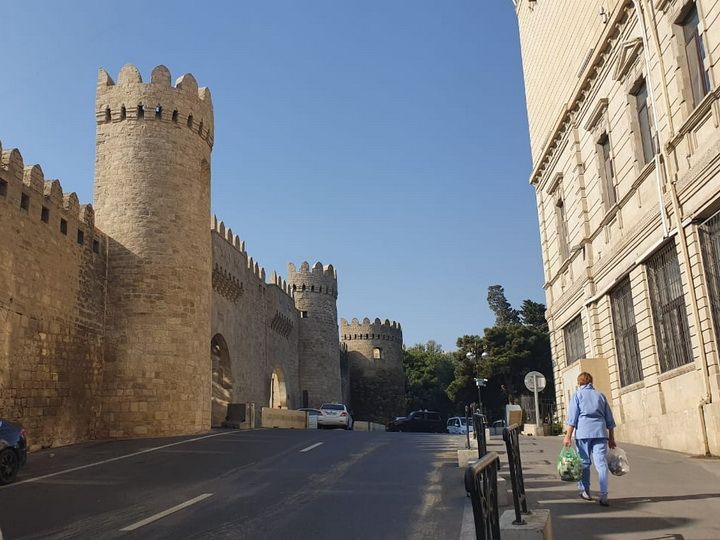
Baku’s Old City walls undergo scientific restoration after erosion incident

AzerNEWS Staff
Read moreThe recent partial erosion and structural deformation observed in a section of the historic fortress walls of Icherisheher (the Old City) has drawn significant public attention. While such incidents naturally cause concern, a professional analysis reveals that they are not isolated anomalies but rather a recurring challenge faced by ancient architectural monuments worldwide. The Administration of the State Historical-Architectural Reserve "Icherisheher" continues to manage these challenges through a framework of scientific conservation, prioritized restoration, and alignment with international standards.
In the field of cultural heritage management, it is a well-established fact that ancient fortifications and antique masonry are subject to sudden shifts. History is a living entity, and the materials used centuries ago—while remarkably durable—are constantly battling environmental stressors. Across Europe and Asia, historical cities frequently encounter similar structural issues.
The primary drivers of these incidents are often beyond human control: accelerating climate change, the fluctuating movement of groundwater, and subtle seismic activities. For defensive structures exposed to the elements, these factors create a "fatigue" in the masonry. For example:
The Muro Torto (Twisted Wall) of the Aurelian Walls in Rome, Italy, has historically suffered from structural leaning and partial collapses due to the pressure of the earth behind it.
Sections of the Great Wall frequently undergo emergency stabilization due to erosion and the harsh impact of seasonal weather changes.
Or medieval fortifications in cities like Krakow and Avignon require constant, localized interventions to prevent the sudden detachment of stone layers caused by humidity and temperature cycles.
The incident in Icherisheher, therefore, must be viewed through this lens of global heritage reality. It is a specific technical occurrence related to the unique geological and environmental conditions of a particular section, rather than a reflection of the overall state of the fortification.
The Administration of Icherisheher operates on a philosophy of long-term sustainability rather than short-term "cosmetic" fixes. Restoration is a phased, meticulously planned process. In recent years, conservation efforts have been carried out in stages, ensuring that every intervention respects the historical authenticity and structural integrity of the site.
International best practices, as advocated by organizations like UNESCO and ICOMOS, emphasize that the total, simultaneous restoration of an entire complex is neither feasible nor scientifically sound. Instead, a phased and long-term conservation approach is applied. This ensures that the most vulnerable or historically significant areas are addressed first, while others are kept under constant monitoring.
The section where the recent erosion occurred had not been subject to recent structural intervention. Under the Reserve’s management plan, such areas are categorized for future phases. This incident has now accelerated that timeline, making these specific segments a priority for the current work cycle.
The ongoing work by the Reserve Administration is grounded in several core principles:
Authenticity First: The restoration process is conducted using traditional materials and techniques to ensure that the "spirit of the place" is preserved. Modern shortcuts are avoided to maintain the walls' status as a World Heritage site.
Heritage protection is not a one-time event but a continuous process of evaluation. Specialized teams conduct regular assessments of the walls to track moisture levels and stone stability.
Each incident of wear or damage is analyzed based on the specific technical characteristics of that localized area. This allows for bespoke engineering solutions that address the root cause, such as groundwater drainage or stone desalinization.
Work is currently proceeding without interruption. The Reserve ensures that the sequence of restoration follows a scientific hierarchy of needs, ensuring that the most critical structural supports are reinforced first.
Protecting cultural heritage is a marathon, not a sprint. The management of Icherisheher’s walls is a testament to the state’s commitment to preserving Azerbaijan’s identity for future generations. The recent structural event has served as a catalyst for deeper technical investigation and has further validated the necessity of the Reserve's phased conservation strategy.
By choosing long-term durability over rapid, superficial repairs, the Administration ensures that the fortress walls remain a resilient symbol of Baku’s history. The public can be assured that the restoration currently underway is being executed with the highest level of professional oversight, mirroring the most successful heritage management models found in the world’s leading historic capitals. History is being preserved not just for today, but for centuries to come.
Here we are to serve you with news right now. It does not cost much, but worth your attention.
Choose to support open, independent, quality journalism and subscribe on a monthly basis.
By subscribing to our online newspaper, you can have full digital access to all news, analysis, and much more.
You can also follow AzerNEWS on Twitter @AzerNewsAz or Facebook @AzerNewsNewspaper
Thank you!