
Baku-Tbilisi partnership that Europe depends on but rarely notices

Akbar Novruz
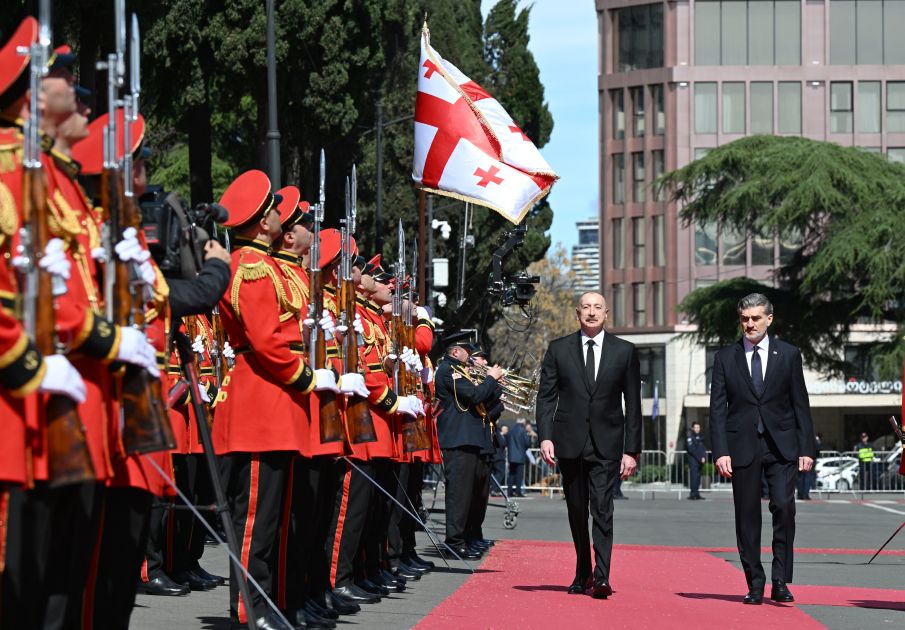
Read moreWhen Mikheil Kavelashvili was elected as Georgia's new president, the first visit he undertook was neither to Brussels nor Washington nor Ankara; it was to Baku. This move, which took place in April 2025, signalled a clear message regarding where Georgia’s most important partnership currently stands. Today, the visit of President Ilham Aliyev to Georgia concludes this cycle, the ultimate form of diplomatic exchange within the bilateral arsenal, meticulously planned with all due ceremony at Shota Rustaveli International Airport.
But once the rhetoric of joint declarations is stripped away, what remains is a unique relationship forged between the two states over the past thirty years that has been of a strategic nature. Azerbaijan and Georgia's trade turnover was estimated at $881 million in 2025, almost doubling the amount registered ten years ago. Azerbaijan is Georgia’s largest trading partner and the sole provider of energy resources, with SOCAR exporting gas to Georgia and maintaining a sizeable network of retail and downstream operations in the country. Azerbaijan has invested a total of $3.1 billion in Georgia's economy.
The tangible manifestation of this alliance is represented by infrastructure. The oil pipeline Baku-Tbilisi-Ceyhan, the gas pipeline Baku-Tbilisi-Erzurum, and the railway Baku-Tbilisi-Kars are not just bilateral initiatives but form a backbone of Europe’s energy security and Eurasian corridor that passes through their territories and creates additional income, political leverage, and importance for them.
Middle Corridor progress has been phenomenal. By 2025, the amount of container cargo passing through Azerbaijan had jumped 19%, to 135,000 TEU, with over 390 container trains running on the China-Europe axis. The transit share of the Middle Corridor’s volume for Georgia had also increased correspondingly – by the close of 2025, transit was responsible for almost 58% of Georgia’s total rail freight traffic. A deal signed between the railway authorities of Azerbaijan, Georgia, and Kazakhstan in October 2025 to digitize documentation had cut the time needed for the transit of goods from eight to nine hours to just forty minutes.
For both Baku and Tbilisi, the last two years have been marked by the experience of being put under the same kind of pressure from outside forces, in the form of the European Union’s demands for democratic governance in Georgia, and Western powers over the internal politics of Azerbaijan. The reaction from both sides is almost identical, with both sides insisting on their own sovereignty and resisting "double standards and external interference," while reinforcing the bond between the two nations as a declaration of regional independence.
This is not just strategic convenience. There is a certain shared logic here that the three countries of the region, and especially those which are the closest allies, should exhibit "trilateral agency" by solving their problems collectively without having any third party mediate for them. The possibility of engaging Armenia in the framework of a genuine trilateral cooperation policy that was raised during the Tbilisi conference of deputy foreign ministers in April 2025 has given this trip extra strategic importance.
The development of the corridor TRIPP (the potential transportation artery from Nakhchivan to the Azerbaijani mainland via Armenia) presents a dilemma for Georgia. The full implementation of such a corridor would provide another east-west transportation corridor not using the territory of Georgia.
Perhaps, Baku is quite sensitive to it as well. There can be at least one way to interpret the amount of investment into Georgia – the Black Sea submarine cable, the joint logistics digitization, and the amounts of traded goods. Indeed, while developing the TRIPP project, Azerbaijan ensures that Tbilisi will always remain structurally interested in this project.
Monday’s state visit comes at a time when the surrounding region has evolved substantially since the last visit by Aliyev to Tbilisi. The war in Iran has interfered with the southern energy routes and forced all governments in the region to think about resilience. Georgia and Azerbaijan have more advantages than many other states in the region due to their economic interconnectedness. In particular, a Black Sea submarine cable that would eventually transfer 4 GW of renewable energy produced by Azerbaijan to Europe through Georgian and Romanian territory has become highly significant for geopolitical reasons; its route was selected specifically for this reason.
At this point, the improved strategic relationship between the two nations acts as an image of what this region could become if the two countries decided to make something of themselves by working together, rather than squabbling over the same strategic leftovers, and doing so in their own way, as they both continually insist.
Here we are to serve you with news right now. It does not cost much, but worth your attention.
Choose to support open, independent, quality journalism and subscribe on a monthly basis.
By subscribing to our online newspaper, you can have full digital access to all news, analysis, and much more.
You can also follow AzerNEWS on Twitter @AzerNewsAz or Facebook @AzerNewsNewspaper
Thank you!