
Trans-Caspian Corridor emerging as Eurasia’s trade lifeline

Qabil Ashirov
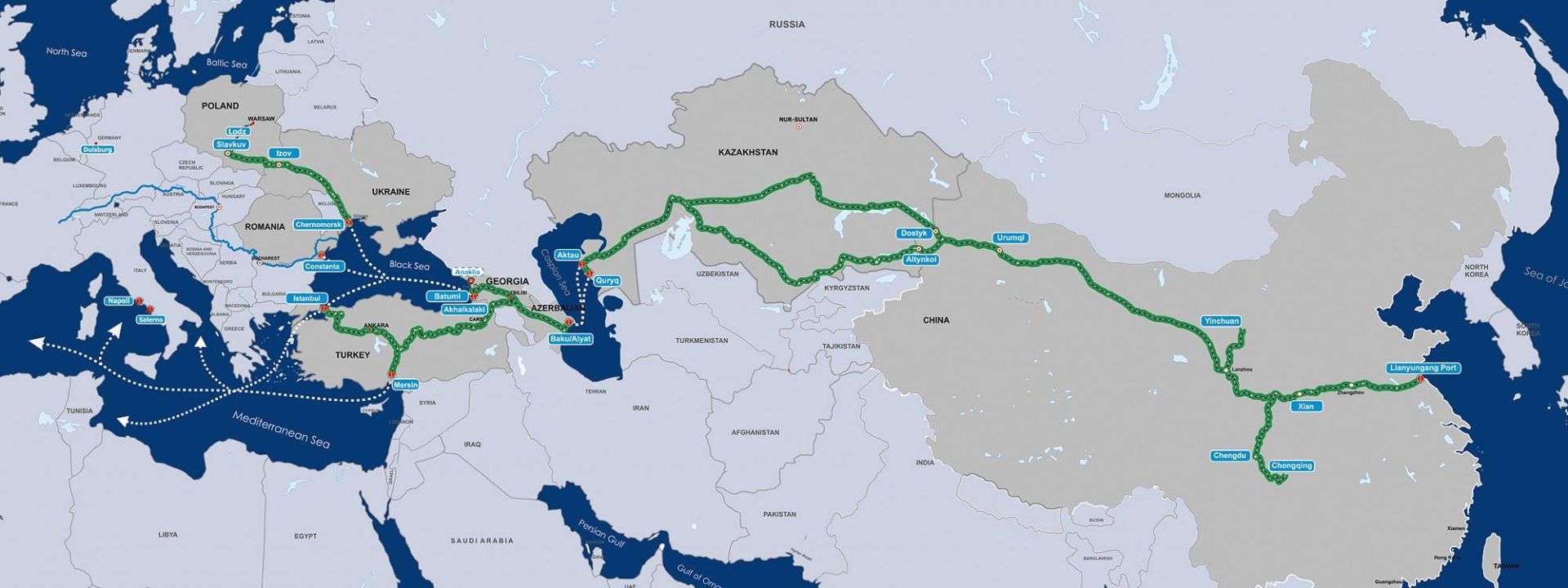
Read moreFor decades, the geography of global trade has revolved around a handful of maritime chokepoints: the Suez Canal, the Strait of Malacca, and the Panama Canal. These narrow strips of water, carved or claimed by history, shaped how goods moved and how economies interacted. But the world of 2025 is no longer defined solely by coastlines. As geopolitical tensions harden and supply chains absorb repeated shocks, new pathways are beginning to attract global attention. Among them, the Trans-Caspian corridor—stretching from China across Central Asia, the Caspian Sea, the South Caucasus, and onward to Europe—has emerged as one of the most compelling alternatives.
What was once dismissed as a niche route has become a strategic artery. Freight volumes along the China–Azerbaijan–Europe axis have risen sharply, with projections indicating they could double by 2030. These numbers are not mere logistics data; they reflect a broader rewiring of global commerce. Companies that once optimized for cost alone now place resilience, redundancy, and predictability at the center of their strategies. The Trans-Caspian corridor, through its geography and growing political relevance, is uniquely positioned to meet that demand.
This shift is rooted in necessity. Western sanctions on Russia—traditionally the dominant overland transit country for Eurasian trade—have forced shippers to reconsider their reliance on the Northern Corridor. Meanwhile, disruptions such as the Red Sea crisis, attacks on commercial vessels, and the long-term fragility exposed during the COVID-19 pandemic have made maritime routes less dependable. In this environment, the so-called Middle Corridor has moved from being a "Plan B" to an increasingly attractive "Plan A."
Azerbaijan sits at the very center of this transformation. Over the past decade, Baku has invested heavily in logistics infrastructure, modernizing the Port of Alat, expanding rail links, and improving customs procedures. This investment has enabled Azerbaijan to position itself not just as a transit stop but as a logistics hub capable of coordinating east–west flows. The country’s ability to integrate rail, road, and maritime transport across its territory is one of the corridor’s defining strengths.
Across the sea, Kazakhstan’s ports in Aktau and Kuryk play a complementary role. Together with Baku, they form the backbone of the Caspian crossing—arguably the corridor’s most sensitive segment. The onward connection through Georgia, linking to the Black Sea ports of Poti and Batumi, provides vital access to Southeastern Europe. Although this multimodal structure presents coordination challenges, it also disperses risk. In an era when supply chains must endure geopolitical unpredictability, diversification is not a luxury but a necessity.
The potential impact of the corridor extends well beyond trade volumes. For Central Asian states, historically dependent on Russian transit routes, the Middle Corridor offers long-sought strategic autonomy. It opens alternative pathways to global markets and enhances their leverage in negotiating economic partnerships. For Azerbaijan, it represents a chance to evolve from being merely an exporter of hydrocarbons to becoming a central node in Eurasian logistics—a shift that aligns with the country’s long-term diversification goals. Georgia, too, stands to benefit through increased transit revenues and strengthened geopolitical weight within the region.
Europe’s interest is also easy to understand. With freight disruptions becoming more frequent, the European Union seeks reliable alternatives that connect it to Asian markets without passing through politically volatile or militarized zones. The Trans-Caspian corridor, though still developing, offers precisely that: a land route largely insulated from the geopolitical storms of Russia and the Middle East.
China, for its part, views the corridor as a useful complement—not a replacement—to its northern supply chains. As part of the Belt and Road Initiative, Beijing has long sought redundancy to protect against strategic vulnerabilities. A diversified set of land routes improves China’s negotiating position and reduces dependence on any single transit state.
Momentum is on the corridor’s side. Major logistics firms, including European operators, have begun integrating the route into their long-term planning. Their reasoning is simple: the global economy is entering an age in which resilience matters more than raw speed. Companies seek corridors that are politically stable, operationally predictable, and diversified enough to withstand shocks. The Middle Corridor is increasingly meeting those criteria.
Looking ahead, the route’s future will depend on three core pillars: continued investment in high-quality infrastructure; coordinated governance, including harmonized tariffs and digitalized customs systems; and political stability across the transit states. Each pillar is achievable, but only through sustained cooperation.
The corridor’s true significance lies not only in its commercial promise but in its symbolic power. It represents a shift toward a more multipolar, distributed model of global trade—one in which mid-sized nations can shape the flow of goods and ideas. If managed wisely, the Trans-Caspian corridor could become one of the defining trade routes of the 21st century, reshaping Eurasia’s economic landscape and offering a durable alternative in an increasingly uncertain world.
Here we are to serve you with news right now. It does not cost much, but worth your attention.
Choose to support open, independent, quality journalism and subscribe on a monthly basis.
By subscribing to our online newspaper, you can have full digital access to all news, analysis, and much more.
You can also follow AzerNEWS on Twitter @AzerNewsAz or Facebook @AzerNewsNewspaper
Thank you!