
Iran dismisses allegations on Parchin site
By Sara Rajabova
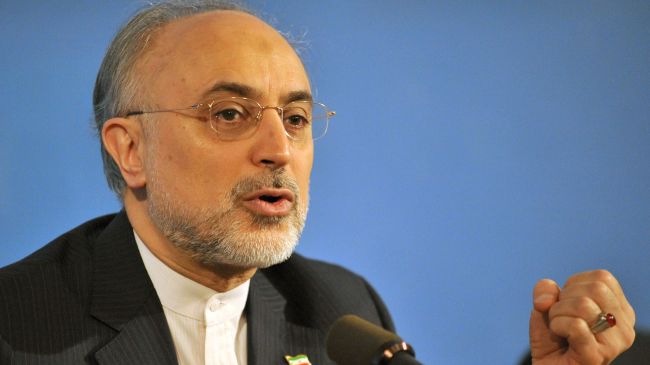
Newly appointed head of Iran's Atomic Energy Organization (AEOI) Ali Akbar Salehi has dismissed recent reports by Western media regarding Iran's Parchin military site, Press TV reported.
"Some Western media outlets are trying to affect public opinion regarding the issue and capitalize on public unawareness to level accusations against Iran," he said.
A number of reports in Western media earlier claimed that Iran has "paved over large swaths" of the Parchin site, where the West accuses Iran of having conducted nuclear activities.
Recently, The Washington Times reported that a U.S. institute with a mission of tracking Iran's weaponry and military development reportedly claimed new satellite images show the country is making nuclear gains.
Salehi reiterated that not only the Western allegations about nuclear activities at the site are baseless, but also they are scientifically wrong, since traces of nuclear activity technically cannot be wiped out.
Salehi also referred to a request by the International Atomic Energy Agency (IAEA) to visit the Parchin site and said that the issue would be discussed separately within the framework of the negotiations between Tehran and the IAEA.
IAEA has several times requested to visit the Parchin site, but Iran hasn't allowed IAEA officials to enter the site.
Pointing to the latest IAEA report on Iran released August 28 in the Austrian capital Vienna, the AEOI director described it as a "commonplace and recurrent move," adding, "In this report, the agency has referred to the details of Iran's peaceful nuclear activities such as the number of centrifuges."
In the report, the agency insists on the right to receive additional information on the issues discussed earlier and says its right to conduct inspections should not be "excessively limited."
Furthermore, Salehi stated that completion work is running its normal course at Iran's Bushehr Nuclear Power Plant and that after all the tests are carried out and when the country is assured of the proper functioning of the equipment, the Russian contractor will then hand over the power plant to the Iranian side as scheduled.
After Iran takes over the plant, he said, the number of Russian experts at the facility will gradually be reduced in three years' time.
IAEA and Iran will hold a new round of talks in late September over Tehran's nuclear program.
The first such meeting since relative moderate Hassan Rouhani took office as Iranian president has been set for September 27, a spokeswoman for the IAEA said on August 28.
World powers are monitoring the IAEA-Iran talks for any signs as to whether Tehran, facing intensifying sanctions pressure, may be prepared to finally start tackling mounting international concerns about its nuclear activities.
On May 15, Iran and the IAEA wrapped up their latest round of talks on Tehran's nuclear energy program in Vienna.
The West suspects Tehran's nuclear program may be aimed at developing nuclear weapons capability, but Iran insists it is purely for peaceful purposes.
Iran reiterates that its main demand is that its right to uranium enrichment, as stipulated in the NPT agreement, be recognized.
The line-up of the two negotiating teams is expected to change for the upcoming talks.
Iran recently appointed Reza Najafi to replace Ali-Asghar Soltanieh as its representative at the UN's nuclear agency.
Recently, Iran replaced its ambassador to the IAEA Ali Asker Sultaniye. President Rouhani nominated Reza Najafi as Ambassador and Permanent Representative of Iran to the IAEA.
The IAEA chief inspector, Herman Nackaerts, is also due to retire in September.
Here we are to serve you with news right now. It does not cost much, but worth your attention.
Choose to support open, independent, quality journalism and subscribe on a monthly basis.
By subscribing to our online newspaper, you can have full digital access to all news, analysis, and much more.
You can also follow AzerNEWS on Twitter @AzerNewsAz or Facebook @AzerNewsNewspaper
Thank you!