
Iran plans to phase out dollar, euro in int'l transactions
By Sara Rajabova
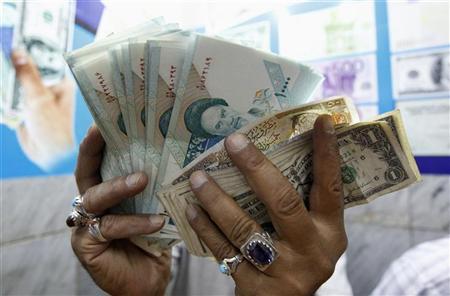
Iran's Minister of Economic Affairs and Finance Shamseddin Hosseini said Iran plans to phase out dollar and euro in its future international transactions after the US and the European Union (EU) imposed sanctions on Iran, Press TV reported.
"Iranian government has made up its mind to phase out vehicle currencies such as dollar and euro in its foreign trade," Hosseini told reporters on the sidelines of the first meeting of the heads of Economic Cooperation Organization's tax organizations in Tehran on Monday.
He added that after the imposition of sanctions on Iran by the US and the EU, the Central Bank of Iran (CBI) immediately moved to change the country's hard currencies reserves into euro and gold which "was beneficial to the country."
Iran's currency rial dropped sharply on October 2012 after imposition of the sanction. The currency has reportedly lost 80% of its value since the end of 2011.
The Iranian minister noted a change in trade model would reduce the country's need to vehicle currencies, including dollar and euro.
Hosseini stated that Iran's trade partners have welcomed the decision due to the currency war waged by the US through devaluation of dollar and also because of West's financial crisis which has convinced other countries to phase out vehicle currencies.
Earlier on November 2012, the CBI Governor Mahmoud Bahmani called for the use of local currencies in the global trade system as alternative to dominant tenders.
"Iran has taken proper measures to remove dominant currencies, particularly dollar and euro, from its foreign currency reserves as well as its international trade. By this way, Iran has shown that it is possible to do trade without relying on major currencies," he said.
In 2012, the US and the European Union imposed new sanctions on Iran's oil and financial sectors with the goal of preventing other countries from purchasing Iranian oil and conducting transactions with the Central Bank of Iran.
However, The United States Treasury Department said last week that Iran is always finding ways to evade sanctions imposed against it over its nuclear energy program.
Director of the Treasury's Office of Foreign Assets Control Adam Szubin said that Iran was using private exchange houses and trading companies in third countries to skirt the embargoes.
"Increasingly we're seeing them turn to trading houses in third countries to facilitate movement of money that would ordinarily go through a bank," he said.
"This is an evolving and emerging threat," Szubin stated. "Two years ago we saw little of this because Iran was able to find banks that were able to handle its business."
Iran rejects the allegations, arguing that as a committed signatory to the nuclear Non-Proliferation Treaty (NPT) and a member of the International Atomic Energy Agency (IAEA), it has the right to use nuclear technology for peaceful purposes.
In addition, the IAEA has conducted numerous inspections of Iran's nuclear facilities but has never found any evidence showing that Iran's civilian nuclear program has been diverted to nuclear weapons production.
Here we are to serve you with news right now. It does not cost much, but worth your attention.
Choose to support open, independent, quality journalism and subscribe on a monthly basis.
By subscribing to our online newspaper, you can have full digital access to all news, analysis, and much more.
You can also follow AzerNEWS on Twitter @AzerNewsAz or Facebook @AzerNewsNewspaper
Thank you!