
Minister: Iran's currency market to be back to normal soon
By Sara Rajabova
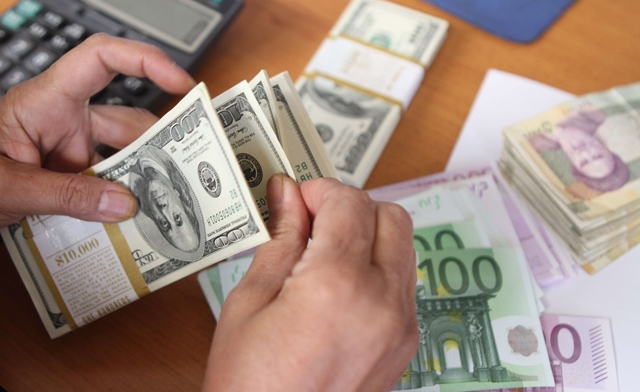
Iran's Economy Minister Seyed Shamseddin Hosseini has said the conditions reining the domestic foreign currency market show a slide in prices in the coming days, adding that the market will soon resume normal operations after recent fluctuations, Fars news agency reported on Wednesday.
Hosseini told reporters at the end of a cabinet meeting in Tehran that Iran's market is moving toward falling foreign currency prices and expressed hope that the trend will continue with the allocation of foreign currencies to the prioritized fields.
He said the economy ministry along with the ministry of industry and trade and the Central Bank of Iran (CBI) will take necessary measures to regulate the currency market in the near future.
Iranian money changers and foreign exchange market activists also believe that parity rates of various foreign currencies will soon decline due to the special measures taken by the government.
They argue that despite temporary "bubble-like" increase in foreign exchange rates in the Iranian market in recent weeks, the new measures taken by the CBI will reverse the current trend.
The CBI has taken substantial measures to keep the foreign exchange rate in check as a result of which speculators are now finding less room for maneuvering to manipulate the market.
Meanwhile, Mino Kiani-Rad, the CBI's deputy governor for foreign exchange affairs, said the CBI's Foreign Exchange Transactions Center has taken new steps to speed up distribution of foreign exchange by prioritizing demands for various goods and is also taking measures to minimize the time needed for the allocation of foreign exchange.
Iranian money changers believe that if the CBI continues to inject more US dollars into the market, its parity rate against Iran's national currency, rial, will soon fall to 30,000 rials per dollar.
On the other hand, the main index in the Tehran Stock Exchange, one of the largest and most diversified in the Middle East, has gained almost 28% in the past three months, Mehr news agency reported on Wednesday.
Tehran Stock Exchange index last Saturday surpassed the 31,000-point threshold for the first time in its 45-year history. It continued rising on Tuesday, closing up 0.4% to 31,331.6 points.
The Tehran bourse did loosen investment rules for foreigners, allowing them more flexibility to buy or sell shares, two years ago.
Indeed, the bourse is a haven in Iran. It gives investors an opportunity to buy into companies that have benefited from sanctions. These are state-owned industrial companies that rely on a mostly domestic supply chain, turning locally-produced raw materials into products targeting Iranian consumers.
According to Iran's Ministry of Economic Affairs and Finance, last Saturday's record was driven by trades in companies like Mobarakeh Steel Co., which produces steel from iron ore mined in central Iran, and Bandar Abbas Oil Refining Co., which transforms Iranian crude into gasoline for Tehran's motorists.
Bandar Abbas's refinery, one of the largest in the country, has been booming since sanctions against sales of oil products to Iran forced the country to become largely self-reliant. Since the company went public in June, the stock has nearly tripled in value. On Tuesday, it closed up 89 rials, or 3% at 3025 rials.
Mobarakeh Steel, up 23% in the past nine months, is getting a similar boost from international pressure on Iran. Its products are gaining market share as importers of manufactured metal products such as pipes go out of business because of the drop in the local currency and difficulties in paying suppliers. Scrutiny of international financial transactions adds to their challenges.
On Tuesday, Mobarakeh Steel closed down 9 rials, or 0.2%, at 3698 rials.
Sanctions limiting export of the goods and services to Iran create more growth opportunity for the firms, experts say. In addition, a weaker rial makes imports more unaffordable, creating more demand for domestic goods and services, they conclude.
The trend looks likely to continue. Iranian authorities said over the weekend that they would seek to cut imports of nonessential goods, such as phones and cars, by requiring traders bringing them into the country to buy foreign exchange at an unfavorable rate.
Here we are to serve you with news right now. It does not cost much, but worth your attention.
Choose to support open, independent, quality journalism and subscribe on a monthly basis.
By subscribing to our online newspaper, you can have full digital access to all news, analysis, and much more.
You can also follow AzerNEWS on Twitter @AzerNewsAz or Facebook @AzerNewsNewspaper
Thank you!