
ADB removes Azerbaijan from preferential borrowers category
By Nigar Orujova
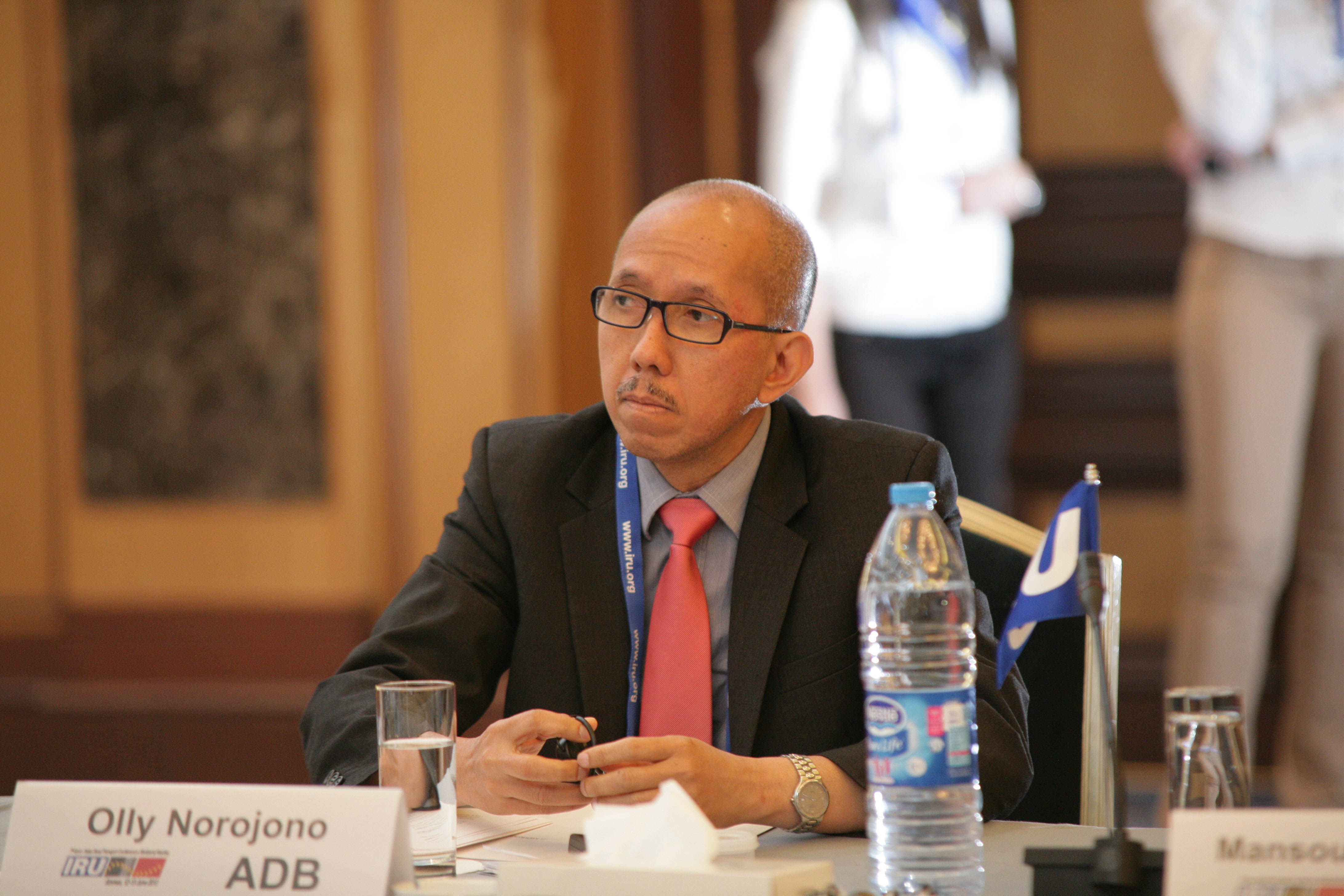
The Asian Development Bank has tightened lending conditions for Azerbaijan, head of the ADB's Baku office Olly Norojono said on October 17.
According to Norojono, the ADB's Board of Directors made the decision this summer.
Azerbaijan so far has had access to the resources of both the Asian Development Fund (ADF), which are provided on preferential terms, and ordinary capital resources. From now onward, the country can borrow ADB funds only on regular lending terms.
"Azerbaijan has already reached a certain level of development and is not included in the category of countries needing preferential loans," Norojono said.
According to him, in the future, Azerbaijan may reach a level whereby the ADB will stop providing the country with funding altogether.
Singapore, which was formerly an ADB borrower, took such a path, Norojono said.
According to Norojono, the ADB activity in Azerbaijan, which is an ADB member since 1999, has improved the lives of millions of people.
The implementation of a program on the development of the road network in the western Ganja-Gazakh region and in the country's south Masalli and Astara regions benefited 1.2 million and 900,000 people respectively, Norojono said.
"Some 2.1 million people are immediate beneficiaries of these roads, but it should be stressed they are also used for transit purposes, that is, they indirectly serve more people," he said.
The water supply projects are more local in a sense that they had a direct impact on the lives of 80,000 people in Nakhchivan, 60,000 people in Beylagan, 30,000 people in Agdash, i.e. a total of 160,000 to 200,000 people.
The project on preventing floods implemented across the territory of Azerbaijan covered nearly 240,000 people.
In addition, according to Norojono, the project on improving electricity transmission in Azerbaijan, which envisions constructing a double 220-kilovolt circuit power transmission line running from the Mingachevir hydropower plant to the Absheron substation will have a positive impact on one-third of the country's electricity generation.
Norojono said one could thereby talk about a positive impact of the project on the lives of one-third of the country's population.
First five-year strategy
According to Norojono, the ADB is planning to pass the first strategy for operations in Azerbaijan in the first quarter of 2014.
The ADB is working on a five-year strategy including detailed business plans. Its first strategy in the country will cover the period from 2014 to 2018.
The bank previously planned to adopt a strategy by the end of this year, but postponed this for some reason, Norojono said. The ADB completed consultations with the government in July and plans to submit a document to the Board of Directors informally in November and officially in December 2013 or January 2014. The document is expected to be approved in the first quarter of next year.
"The main directions of the strategy will include the traditional areas of the bank's activity in Azerbaijan such as transport, energy and urban services. That is, our activity will focus on infrastructure projects," he added.
The Manila-based ADB is dedicated to reducing poverty in Asia and the Pacific through inclusive economic growth, environmentally sustainable growth and regional integration. Established in 1966, it is owned by 67 members, including 48 from the region. In 2012, ADB assistance totaled $21.6 billion, including cofinancing of $8.3 billion.
The Azerbaijan's share in the bank's capital is 0.5 percent.
Here we are to serve you with news right now. It does not cost much, but worth your attention.
Choose to support open, independent, quality journalism and subscribe on a monthly basis.
By subscribing to our online newspaper, you can have full digital access to all news, analysis, and much more.
You can also follow AzerNEWS on Twitter @AzerNewsAz or Facebook @AzerNewsNewspaper
Thank you!