
Aftermath of Pakistan-Taliban border clashes: What is next?
Akbar Novruz
Read moreThe Middle East is once again engulfed in fiery wars. American and Israeli aircraft are striking targets inside Iran, opening a new and perilous chapter in an already combustible region. That drama commands global headlines. Yet, further east, beyond the Persian Gulf and across the mountains of the Hindu Kush, another confrontation is sharpening, quieter but no less consequential.
This article examines how the latest clashes began, why they escalated, and what strategic consequences they may produce.
How it all began?
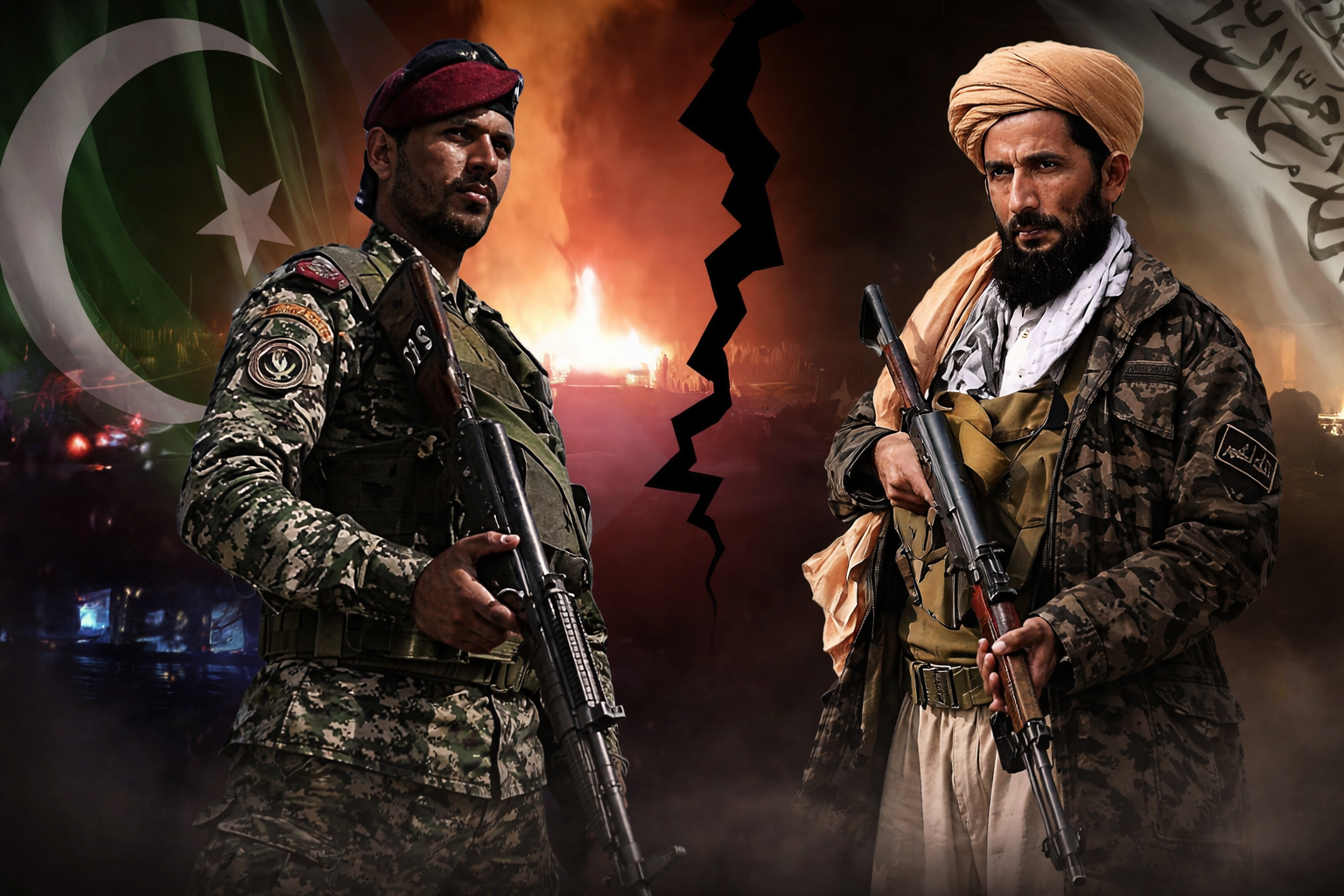
On 27–28 February 2026, Pakistan’s military launched air and artillery strikes deep into Afghan territory, including Kabul, Kandahar, and Paktia, marking one of the most significant escalations in years. Pakistan’s defence minister publicly framed this as an “open war” against the Afghan Taliban government.
Pakistan’s armed forces report hitting 22+ Taliban targets, destroying dozens of military posts and claiming hundreds of enemy combatants killed, while suffering dozens of casualties on its side.
Theatre-wide operations, named Operation Ghazab Lil Haq (“Righteous Fury”), marked a shift from reactive border engagements to direct strikes on regime-level military infrastructure.
Pakistan quickly retaliated, saying the Taliban had "miscalculated and opened unprovoked fire on multiple locations" across the border in its north-western province of Khyber Pakhtunkhwa, which had been met with an "immediate and effective response" by Islamabad's security forces.
It then launched a series of bombing raids on Afghanistan in the early hours of Friday morning, striking targets in Kabul and in border provinces.
Zabihullah Mujahid, the Afghan Taliban spokesman, published, then subsequently deleted, a post on X that the group had launched strikes early on Friday on Pakistani military positions in Kandahar and Helmand.
The claims are yet to be verified.
Why now?
At the core of the crisis lies Pakistan’s long-standing accusation that Afghanistan’s Taliban authorities are either unwilling or unable to restrain the Tehrik-i-Taliban Pakistan (TTP).
Islamabad links the group to a surge in attacks inside Pakistan, including suicide bombings targeting mosques and security installations. The Afghan Taliban reject these accusations, insisting Afghan soil is not used to threaten other states.
This unresolved security dilemma has created a cycle:
- militant attack inside Pakistan
- cross-border retaliation
- Taliban counter-response
- diplomatic breakdown
The October ceasefire brokered by regional mediators collapsed under precisely this dynamic.
Domestic political calculations
Pakistan’s civilian and military leadership faces rising domestic pressure to demonstrate control amid insurgent violence. Strong military action signals resolve and restores deterrence credibility internally.
For the Taliban, however, appearing weak in the face of Pakistani strikes risks undermining their domestic legitimacy. The movement’s historical identity is rooted in resistance. Failure to respond forcefully could fracture internal cohesion.
Shifting regional environment
The broader geopolitical backdrop matters.
With the US and Israel engaged in active military operations against Iran, regional alignments are in flux. Tehran borders both Pakistan and Afghanistan. Although Iran is not directly involved in the current clashes, its own military engagement and internal pressures reduce its capacity to mediate or stabilize eastern borders.
What effect has this had?
The Afghan Taliban has said it carried out air strikes on several targets within Pakistan on Friday morning.
Sources in the Taliban government told the BBC these were conducted with drones launched from Afghanistan.
A Pakistani military officer confirmed that Afghan Taliban drones targeted three locations, the army's artillery school in Nowshehra, one near a military academy in Abbottabad, and one that fell near a primary school in Swabi, but said all were destroyed.
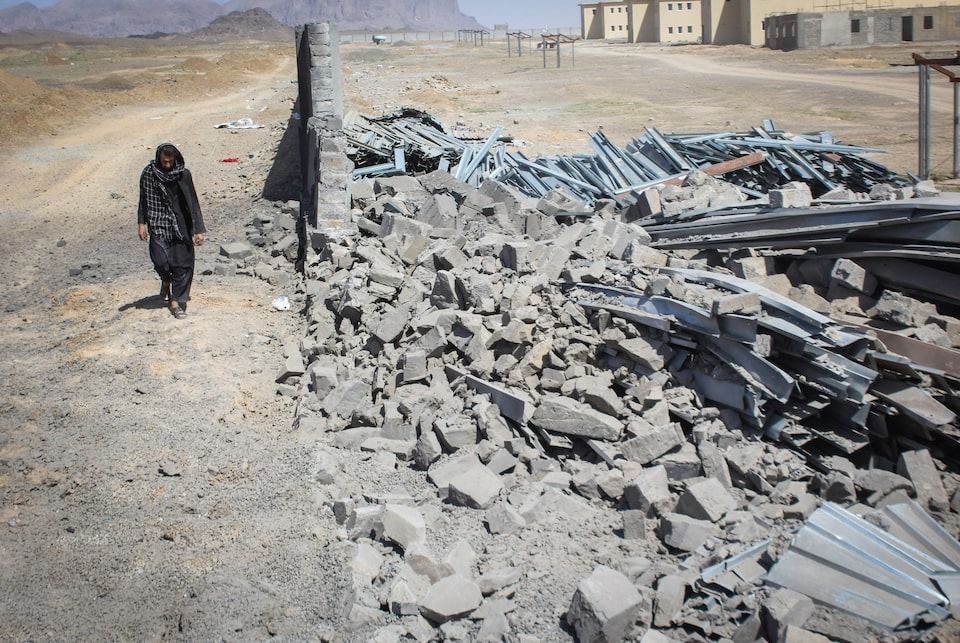
These attacks are still unprecedented. Taliban fighters are thought to rely predominantly on commercially available drones carrying improvised explosives, making their range and targeting capabilities limited.
A spokesman for the Pakistani army said it had targeted 22 military sites across Afghanistan, including Kabul and Kandahar, and that "great care" had been taken to avoid civilian casualties.
He claimed that at least 274 Afghan Taliban fighters had been killed, with 73 posts inside Afghanistan destroyed and 18 captured. An estimated 115 tanks, armoured vehicles and artillery systems were also destroyed, he said.
Twelve Pakistani soldiers had been killed, 27 others injured, and one was missing in action, he said.
Afghan Taliban spokesman Mujahid said 13 Taliban fighters had been killed and 22 others injured, while 13 civilians had been injured and an indeterminate number killed.
He specifically said a farmer's home in Jalalabad had been bombed and the majority of his family killed, while a religious school in Paktika had also been attacked.
The Taliban spokesman said 55 Pakistani soldiers had been killed, 23 of whose bodies had been taken back to Afghanistan. He also said others had been captured alive, while 19 bases had been destroyed.
But was this clash a coincidence and what is next? As the US, Israel v Iran ablazing even further, can this escalation go even further?
"It was writing on the wall”: Dr Mehmood Ul Hassan Khan tells AzerNEWS in his exclusive commentary:
Dr Mehmood Ul Hassan Khan, President of the Center for Knowledge and Public Policy and a regional expert on China, CPEC, BRI and world affairs, argues that the recent escalation along the Pakistan–Afghanistan border was neither sudden nor accidental, but the result of prolonged strategic neglect by the Afghan Taliban.
According to him, the Taliban’s “complete denial, defiance and non-cooperative behavior” in controlling and dismantling militant groups operating from Afghan soil made escalation inevitable. He maintains that Islamabad had repeatedly urged Kabul to take “meaningful action” against the Tehrik-i-Taliban Pakistan (TTP), the Balochistan Liberation Army (BLA), IS-KP and other armed factions allegedly regrouping in Afghanistan.
“It was writing on the wall that this situation would escalate,” he states, pointing to the surge in suicide bombings and militant attacks across Khyber Pakhtunkhwa, Balochistan and Punjab as the tipping point that compelled Pakistan’s military and civilian leadership to act.
He further claims that the unprecedented use of electronic warfare aircraft, tactical drones and quadcopters in attacks on Pakistani police, paramilitary units and frontier posts marked a dangerous qualitative shift in militant capabilities. “These coordinated drone and physical assaults forced the armed forces of Pakistan to respond decisively,” he argues, describing the retaliation as a necessary act of self-defence.
Dr Khan insists that Islamabad pursued diplomatic engagement before turning to force. He cites attempts to engage Taliban authorities in Doha, Istanbul, Riyadh and Muscat to resolve infiltration concerns and cross-border militancy.
“Taliban only borrowed time but could not take any substantial actions,” he says, adding that Islamabad perceived Kabul’s outreach to New Delhi as strategically provocative.
He also references a recent report by Russia’s foreign ministry, which, according to him, highlighted the regrouping and reactivation of TTP, TTA, BLA, IS-KP and Al Qaeda inside Afghanistan, developments he says pose a broader regional threat.
Operation “Ghazab lil-Haq”
The Director General of Inter-Services Public Relations (ISPR), Lieutenant General Ahmed Sharif Chaudhry, briefed the media on what Pakistan calls “Operation Ghazab lil-Haq.”
Dr Khan recounts that Afghan Taliban forces and affiliated militants allegedly attacked 53 locations along the border in Khyber Pakhtunkhwa using armed quadcopters and heavy weaponry.
“Pakistan’s armed forces responded immediately and effectively,” he states, claiming that all attacks were repulsed and drones neutralised.
He cites official figures indicating that 274 Taliban regime personnel and affiliated fighters were killed and more than 400 injured during the operation. Seventy-three border posts were destroyed and eighteen captured, he says, describing this as evidence of Pakistan’s military superiority.
According to his account, the Pakistan Air Force conducted strikes on 22 locations in Kabul, Kandahar, Paktia, Nangarhar, Khost and Paktika. He emphasises that these were “carefully selected military targets,” including corps and brigade headquarters, ammunition depots and logistics bases allegedly used to support militant activity.
“At no place was any civilian infrastructure targeted,” he asserts, dismissing reports circulating on social media as misinformation.
He acknowledges that 12 Pakistani soldiers were killed, 27 injured and one reported missing in action.
Dr Khan argues that the violence cannot be viewed in isolation. He alleges that “Indian sponsorship, abetment and design” underpin terrorist activity in Pakistan, further claiming that strategic coordination between New Delhi and Kabul has intensified.
He references recent diplomatic engagements involving Narendra Modi and Benjamin Netanyahu, suggesting these interactions signal a broader alignment detrimental to Pakistan’s security interests.
He also raises concerns about what he describes as Israeli-linked non-governmental presence in Afghan provinces such as Kunar, Nangarhar, Khost, Paktika and Paktia - areas he says overlap with TTP sanctuaries. These assertions, he argues, indicate a “certain pattern” that warrants further scrutiny.
Strategic prescriptions
Dr Khan concludes that Pakistan has sent a clear message: the Afghan Taliban must choose between cooperation with Islamabad and continued tolerance of militant networks.
He proposes several policy measures:
- Consolidating military presence at captured posts.
- Considering the implementation of a buffer-zone strategy similar to the “Syrian model” along a defined stretch of the border.
- Exploring coordination with the National Resistance Front (NRF).
- Seeking Chinese assistance for enhanced aerial surveillance, including long-endurance drone capabilities.
- Deploying advanced anti-drone technologies and jamming systems to counter rudimentary drone attacks on cities such as Rawalpindi, Abbottabad and Swabi.
- Strengthening human intelligence networks, drawing lessons from counterinsurgency models in Iraq and Libya.
Dr Khan’s assessment frames the current confrontation as part of a larger regional security equation. With instability spreading across multiple theatres, including the escalating military operations against Iran by the United States and Israel, he warns that militant reactivation in Afghanistan could create a multi-layered security crisis.
In his view, the clashes are not merely tactical border incidents but a strategic inflection point. Whether they lead to sustained deterrence or prolonged low-intensity conflict will depend, he argues, on whether Kabul recalibrates its approach toward armed groups operating from its territory.
Bottom line
Diplomatic efforts gathered pace late on Friday as Afghanistan said its foreign minister, Amir Khan Muttaqi, had spoken with Saudi Arabia’s Prince Faisal bin Farhan about reducing tensions and keeping diplomatic channels open. The European Union urged both sides to de-escalate and engage in dialogue, while the United Nations urged an immediate end to hostilities.
Russia urged a return to talks, while China said it was deeply concerned and ready to help ease tensions.
The U.S. State Department said the U.S. supported Pakistan’s right to defend itself against attacks by the Taliban.
What began as a border confrontation has rapidly escalated into one of the most serious exchanges between Pakistan and the Taliban-ruled Afghan state in years. The situation now combines large-scale air strikes, downed aircraft, drone exchanges and strong international diplomatic pressure, setting the stage for either a prolonged confrontation or a renewed, urgently needed ceasefire effort.
Here we are to serve you with news right now. It does not cost much, but worth your attention.
Choose to support open, independent, quality journalism and subscribe on a monthly basis.
By subscribing to our online newspaper, you can have full digital access to all news, analysis, and much more.
You can also follow AzerNEWS on Twitter @AzerNewsAz or Facebook @AzerNewsNewspaper
Thank you!