
Six years after war, South Caucasus faces historic chance for lasting peace

Ulviyya Poladova
Read moreFor years, the world looked at Karabakh as a frozen conflict. Diplomats wrote their reports, mediators gathered around tables in European capitals, while along the line of contact Azerbaijani soldiers and civilians kept dying, again and again. The occupation dragged on for decades. And still Azerbaijan waited. Time after time Baku sat down at the negotiating table and agreed to principles recognized by the whole world, including the four UN Security Council resolutions that demanded the immediate and unconditional withdrawal of the occupying forces. Those documents stayed on paper. No one intended to carry them out, and the provocations along the border went on.
On September 27, 2020, everything changed. The Azerbaijani army launched a counter-offensive operation in response to the large-scale provocations carried out by the Armenian armed forces along the front line. That Patriotic War ended in a glorious Victory that put an end to thirty years of occupation.
Azerbaijan took back what was its own. It did not seize anything foreign; it simply returned what belonged to it by every law. These lands can rightly be called the cradle of peace. Because the Azerbaijani people fought for that peace to the very end. Azerbaijan showed that justice sometimes has to be defended on your own, when international mechanisms turn out to be powerless or indifferent.
The South Caucasus has undergone a fundamental transformation over the past six years, moving from a region marked by unresolved conflict and instability toward new opportunities for peace, cooperation and development, political analyst Frank Musmar said in a commentary to AzerNEWS.
"Six years ago, in 2020, the South Caucasus was a zone of unresolved conflict and chronic instability. Occupation continued, international law was not implemented, ceasefire violations were daily, and the entire regional architecture was hostage to one conflict. The security environment was unpredictable and fragile," he noted.
According to the political analyst, the situation today is completely different. He noted that Azerbaijan’s restoration of its territorial integrity and sovereignty had removed the root of what caused the conflict.
"With Azerbaijan restoring its territorial integrity and sovereignty in full accordance with international law, the root cause of war in the region has been removed. The long-standing conflict is over," Musmar emphasized.
He stressed that the current regional environment provides new opportunities for cooperation and economic development. The expert stressed that Azerbaijan, in particular, has established itself as a responsible state, a reliable energy supplier to Europe.
The analyst pointed out that this transformation is taking place against the backdrop of growing instability in several parts of the world.
"While wars and crises are escalating in the Middle East, Eastern Europe, and other regions, Azerbaijan has established itself as a responsible state, a reliable energy supplier to Europe, a key pillar of the Middle Corridor, and a country that ensures security and stability not only within its borders but far beyond," Musmar highlighted.
He added that the atmosphere in the South Caucasus has changed from confrontation to opportunities for cooperation, connectivity and development.
Commenting on the prospects for lasting peace in the region, Musmar said that the current period represents a historic opportunity.
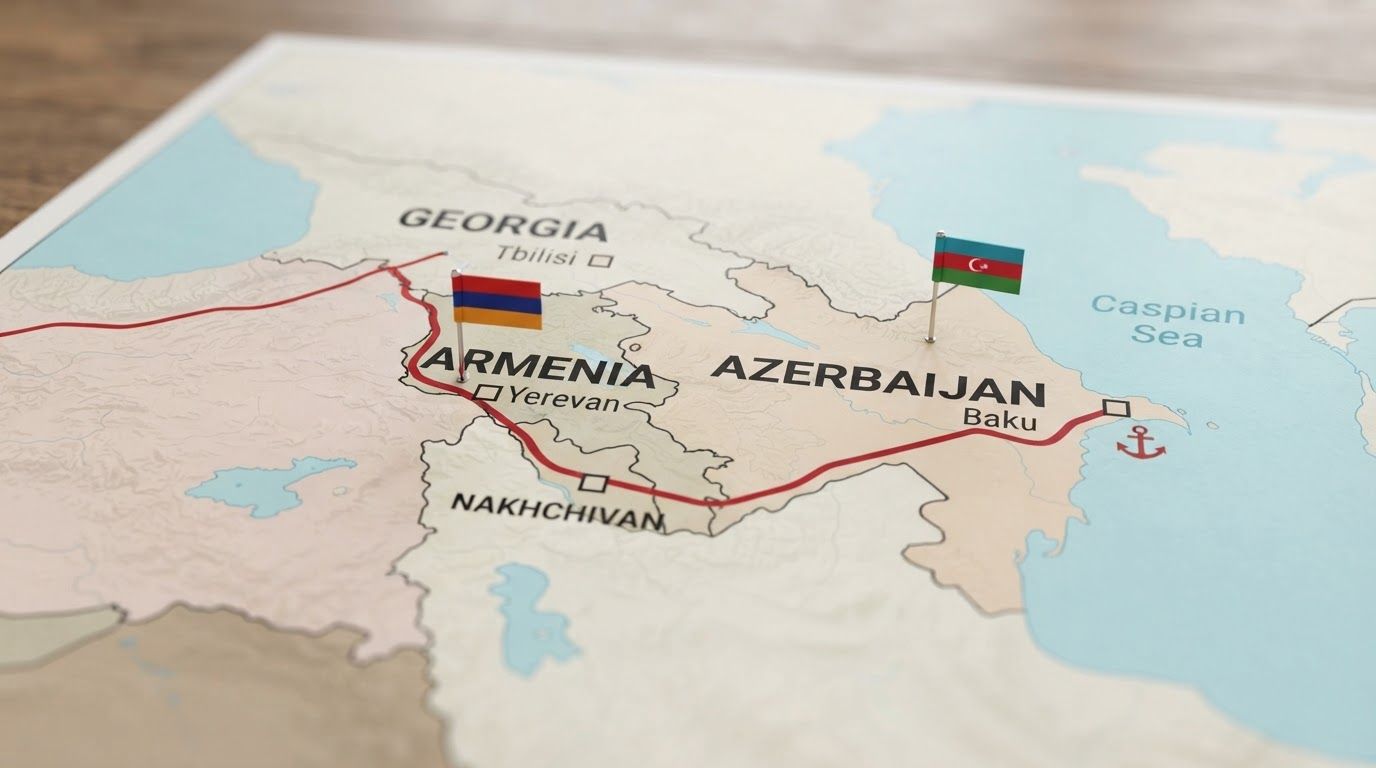
"The main opportunity is historic: for the first time in more than 30 years, we have a real chance to achieve lasting peace. The path to that is clear — mutual recognition of territorial integrity, full respect for sovereignty, border delimitation, and the opening of all communications, including the Zangezur corridor," the analyst said.
According to him, peace will bring enormous dividends: opening of borders, integration of the South Caucasus into global transport and energy routes, foreign investment, and prosperity for all peoples of the region.
"The main challenge is the persistence of revanchist thinking. Lasting peace requires Armenia to finally accept the new realities, abandon territorial claims, amend its constitution and other legal documents that still contain claims against Azerbaijan, and stop arming itself beyond defensive needs," the academic researcher added.
Speaking about the forces in Armenia that continue to hold the old mindset and on whether international pressure is needed, Musmar said that such forces remain a challenge to the peace agenda.
"Despite the historic chance for peace, there are still revanchist forces in Armenia — remnants of the former junta, nationalist circles, and their sponsors abroad — who live with the myths of the past, who poison their society with hatred, and who openly call for revenge," he said.
The analyst stated that such rhetoric could undermine efforts toward peace and argued that Azerbaijan had demonstrated goodwill by putting forward peace proposals.
"Azerbaijan has shown goodwill and has proposed peace. But peace cannot be one-sided," Musmar stressed.
At the same time, he pointed out that the primary responsibility for choosing the path toward peace rests with Armenia itself.
However, Musmar also argued that the international community and countries with interests in the South Caucasus have a role to play.
"The support of regional actors who sincerely want stability — first and foremost Türkiye, as well as partners interested in connectivity and energy security — is already important. But consistent international pressure and a principled position against revanchism are needed to ensure that Armenia does not miss this historic window for peace," he added.
Here we are to serve you with news right now. It does not cost much, but worth your attention.
Choose to support open, independent, quality journalism and subscribe on a monthly basis.
By subscribing to our online newspaper, you can have full digital access to all news, analysis, and much more.
You can also follow AzerNEWS on Twitter @AzerNewsAz or Facebook @AzerNewsNewspaper
Thank you!