
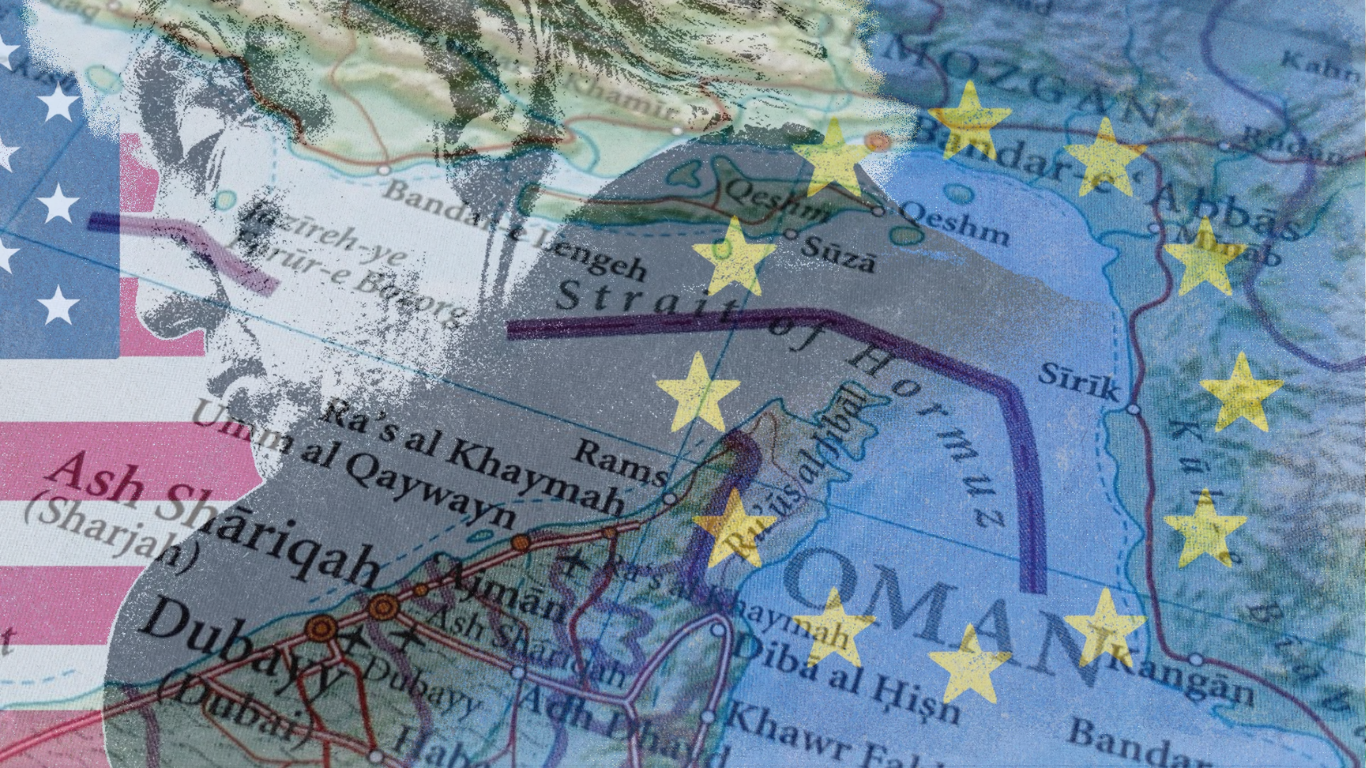
US–Europe split in the Gulf as Washington signals withdrawal from Hormuz
Elnur Enveroglu
Read moreUS President Donald Trump’s statement that he may withdraw troops from Iran and the Strait of Hormuz within the next two or three weeks has begun to generate serious interest across the international community. At present, global analysts are offering divergent views: some argue that Washington’s plans remain incomplete and that a deeper escalation in the region is unlikely, while others point to the fact that a prolonged US presence in the Gulf ultimately works against its own interests.
In truth, both arguments carry weight. The latter perspective can also be understood in light of domestic developments within the United States, where public opposition to military engagement in the Gulf has grown, suggesting that the Trump administration may be taking a step back under internal pressure.
Nevertheless, a more consequential question is now emerging. In particular, Trump’s remark - “You’ll have to start learning how to fight for yourself, the U.S.A. won’t be there to help you anymore, just like you weren’t there for us. Iran has been, essentially, decimated. The hard part is done. Go get your own oil!” - raises critical questions about what alternatives the European Union might pursue in response to the evolving situation.
If US forces do indeed withdraw from the region within the coming weeks, the question becomes unavoidable: how will European leaders, particularly the United Kingdom, engage with Iran, and are there more discreet yet strategically significant plans already taking shape behind the scenes?
Reports circulating on social media suggest that Gulf states are discussing a new gas export project aimed at Europe. The proposal envisions a pipeline stretching across the Arabian desert to the Red Sea and onwards to European markets. While still largely speculative, the prospect gains plausibility when viewed against several factors: a potential US withdrawal, the absence of Iran’s full disarmament, and the continued activity of Iran-aligned forces in Yemen and other areas. Taken together, these dynamics lend greater clarity to the possibility that such a project could materialise within the coming years.
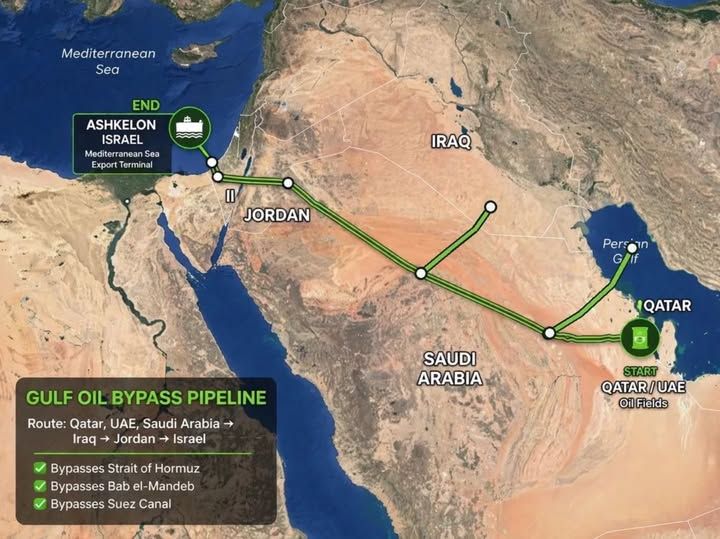
At the same time, Europe’s comparatively limited military capacity, particularly when set against that of the United States, and its traditional preference for resolving disputes through negotiation rather than conflict, raises a further question: is Europe preparing to chart a more independent course from Washington in the Gulf?
This may appear speculative, yet there are tangible signs of strain within the Western alliance. The United States has shown reluctance to commit both military and financial resources not only in the Gulf but also in relation to NATO and Ukraine. In turn, this raises the possibility that European Union member states may no longer align themselves as closely with Washington as they once did.
It is plausible that the Western alliance is currently navigating a period of economic turbulence, during which disagreements over how to confront rival powers have become more pronounced. Nevertheless, a broader view suggests that both sides remain ultimately focused on a shared objective: securing access to energy resources. The divergence lies in approach. For Washington, the priority appears to be strategic competition and the containment of larger rivals, whereas for Europe, the immediate concern is mitigating the impact of an energy crisis.
For this reason, the European Union today appears to struggle to keep pace with the scale of American global ambitions.
It is also possible that a European Union in need of reform is reluctant to expend its strength in standing firm against Russia amid an ongoing energy crisis. Historically, the United States assumed responsibility for Europe’s defence while simultaneously encouraging its demilitarisation. Yet there remains a lingering concern that Washington could, at some point, leave the European Union to face Russia alone. History offers no shortage of such precedents.
In the current climate, the Old Continent’s pressing need for alternative energy sources may signal a prolonged period of caution, perhaps even a strategic autonomy that could shape Europe’s posture for the next two decades.
---
Photo credit: Axios
Here we are to serve you with news right now. It does not cost much, but worth your attention.
Choose to support open, independent, quality journalism and subscribe on a monthly basis.
By subscribing to our online newspaper, you can have full digital access to all news, analysis, and much more.
You can also follow AzerNEWS on Twitter @AzerNewsAz or Facebook @AzerNewsNewspaper
Thank you!