
Israel continues building settlements despite int'l criticism
By Sara Rajabova
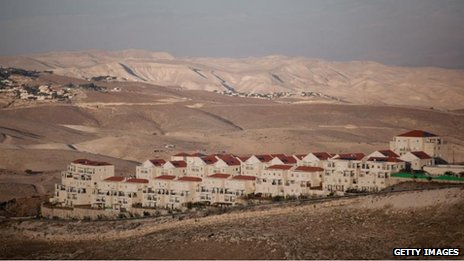
Israel's announcement about the construction of thousands of new homes in the West Bank and East Jerusalem despite warnings made by the international community have drawn worldwide condemnation, including from its closest ally the U.S.
Israeli Prime Minister Benjamin Netanyahu announced on Wednesday plans to build thousands of homes in settlements in the West Bank and East Jerusalem in response to the UN General Assembly's decision last month to upgrade Palestine's status to non-member observer state.
On Monday, he said Israel will push forward with plans to build 1,500 apartments in East Jerusalem, the Palestinians' hoped-for capital.
Also on Wednesday, Jerusalem's planning committee granted approval for 2,610 homes in a new settlement in East Jerusalem called Givat Hamatos - the first to be built in the area since 1997.
Meanwhile, tenders have been announced for several settlements in the West Bank for a total of 1,000 new homes.
The authorization for new residential units in the West Bank and East Jerusalem comes 18 months after the project was frozen due to a diplomatic tiff between Israel and the United States.
Israel's move drew harsh Palestinian condemnation and were likely to heighten the already rising tensions between Israel and its allies in the West.
The Palestinian Authority condemned Monday's decision, with presidential spokesman Nabil Abu Rudeineh describing it as "a flagrant defiance of the will of the entire international community."
The international community opposes all Israeli settlement in the two areas.
Turkey has strongly condemned Israeli authorization for new residential units in the West Bank and East Jerusalem, saying the announcements of the settlement construction were the latest example of Israeli provocation despite international calls and warnings, Todays Zaman reported.
"We strongly condemn Israel's attitude, which violated international laws and deliberately destroyed a platform for permanent and fair peace in the region," the Turkish Foreign Ministry said in a statement.
The statement called on Israel to fulfill its obligations under international law and immediately end all activities that damage the platform for peace.
Besides, the UN Secretary General Ban Ki-moon said the peace process was now in "deep freeze," speaking in an end-of-year news conference in New York, BBC reported on Thursday.
He said this gravely threatens efforts to establish a viable Palestinian state.
Ban called on Israel to refrain from continuing its plan saying it will undermine the prospects a resumption of dialogue and a peaceful future for Palestinians and Israelis alike.
Also, all Security Council members except the U.S. demanded an immediate halt to new construction.
The four European members of the UN Security Council - France, Germany, the UK and Portugal - issued a statement saying they were "extremely concerned" by Israel's intentions to build more settlements.
"If implemented, these plans would jeopardise the possibility of a contiguous, sovereign, independent and viable Palestinian State and of Jerusalem as the future capital of both Israel and Palestine," the statement said.
Despite, the U.S. protects Israel at the UN but the State Department accused Israel of "a pattern of provocative action".
State Department spokeswoman Victoria Nuland said this week that Washington was "deeply disappointed that Israel insists on continuing this pattern of provocative action," Reuters reported.
Nuland said settlement expansion put the goal of achieving a two-state solution already delayed by peace talks being stalled for two years, "further at risk."
Meanwhile, the UN Under-Secretary-General for Political Affairs Jeffrey Feltman in the Security Council said: "We urgently ask the Israeli government to hear the international calls to stop the settlements."
He also criticized Israel for blocking tax and customs payments to the Palestinian Authority, saying "Israel is undermining the authority of the Palestinian leaders when it withholds the money."
Moreover, the Peace Now settlement watchdog slammed the Israel's move, saying Netanyahu government is ruining with its own hands the chance for a two-state solution for two peoples and as such harms Israel's interest for peace.
However, the Israeli Prime Minister Netanyahu said that his government would press ahead with expanding Jewish settlements around Jerusalem despite Western criticism.
Israeli analysts see the settlement drive as also an effort by Netanyahu to enhance support for his right-wing Likud party against other hawkish rivals in a January 22 parliamentary election he is expected to win.
Israel captured east Jerusalem in a 1967 war and annexed it as part of its capital in a move never recognized internationally. Palestinians want the area to be capital of a state they seek to establish in the West Bank and the Gaza Strip, land also captured by Israel.
Here we are to serve you with news right now. It does not cost much, but worth your attention.
Choose to support open, independent, quality journalism and subscribe on a monthly basis.
By subscribing to our online newspaper, you can have full digital access to all news, analysis, and much more.
You can also follow AzerNEWS on Twitter @AzerNewsAz or Facebook @AzerNewsNewspaper
Thank you!