
Hungary’s OTS role faces uncertainty as it adopts new policy after Orbán

Ulviyya Poladova
Read moreViktor Orbán has long stood at the center of Europe’s political tensions, shaping Hungary into one of the most controversial actors within the European Union. Since returning to power in 2010, Viktor Orbán has pursued a strategy that blends nationalism, economic pragmatism, and geopolitical balancing.
During Orbán’s premiership, Hungary achieved a major milestone in foreign policy. In 1999, alongside Poland and Czech Republic, Hungary was officially admitted into NATO, marking a significant step in its integration into Western political and security structures.
Orbán’s believed that the traditional Western system, rooted in individual rights and multiculturalism, has failed to preserve national identity and social stability. Instead, Orbán promoted a strong, centralized state that prioritizes sovereignty, Christian values, and national interests.
This ideological divergence has inevitably led to conflict with
the European Union.
Orbán’s foreign policy further illustrated his strategy of
balancing competing powers. Within the EU, Hungary has often been
an outlier in its approach to Russia. While most European states
moved to isolate Moscow after the Russian war in Ukraine, Orbán
maintained relatively cooperative relations with the Kremlin.
Hungary continued energy cooperation and resisted some EU
sanctions, emphasizing the country’s dependence on Russian gas and
the importance of maintaining economic stability.
At the same time, Orbán has actively expanded Hungary’s relations
beyond Europe through what he calls the "Eastern Opening" strategy.
A key partner in this direction was Azerbaijan. Relations between
Budapest and Baku have grown steadily over the past decade,
encompassing energy cooperation, educational exchanges, and
diplomatic alignment.
Beyond Azerbaijan, Hungary has also deepened its relations with the Turkic world. As an observer in the Organization of Turkic States, Hungary has cultivated ties with countries such as Türkiye, Kazakhstan, and Uzbekistan. Orbán has emphasized historical and cultural connections, while also pursuing economic and strategic opportunities.
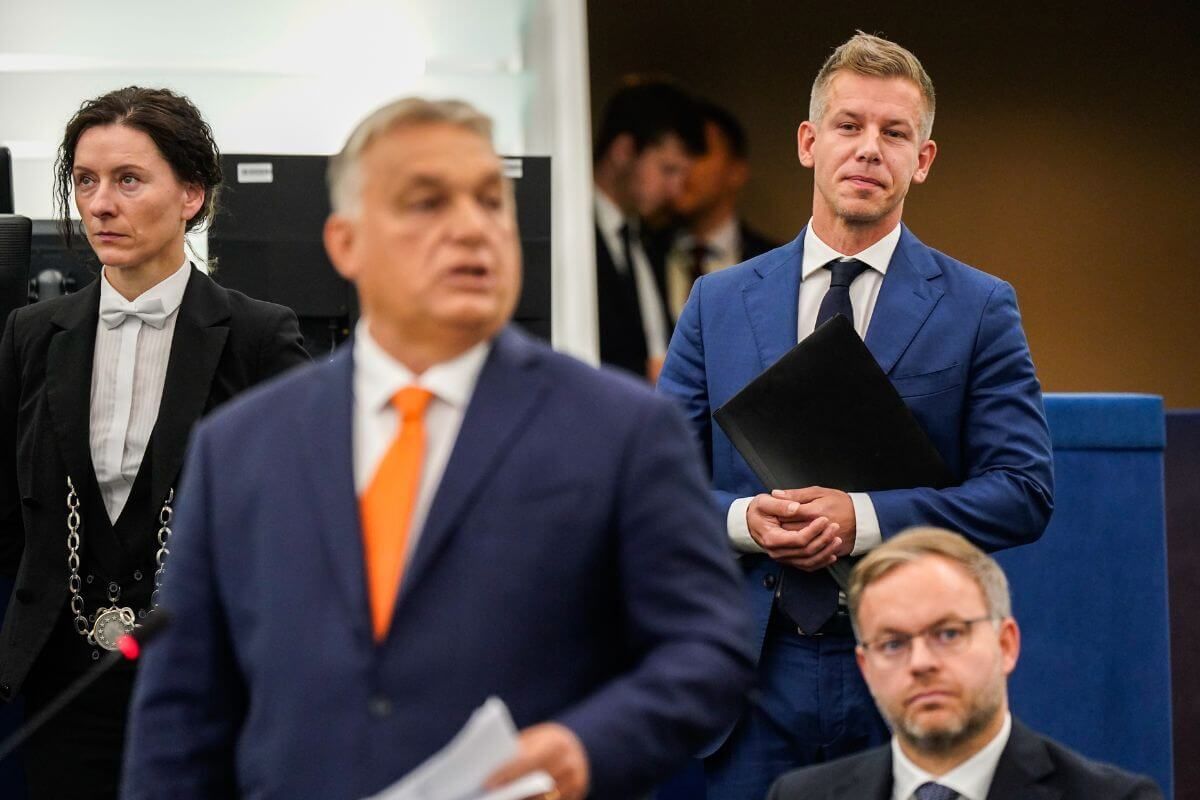
Following the outcome of the April 12 elections in Hungary, opposition figure Péter Magyar has emerged as the winner, signaling a major shift in the country’s political landscape.
Magyar’s political platform has been built around promises of institutional reform, anti-corruption measures, and closer alignment with European democratic standards. A central pillar of his policy agenda is restoring the independence of key state institutions, including the judiciary, media regulators, and anti-corruption bodies. He has emphasized the need to strengthen the rule of law and rebuild public trust in governance.
In a speech to supporters following his landslide victory, Magyar reiterated to rebuild ties with Brussels and NATO.
"We will join the European Public Prosecutor's Office and guarantee the democratic functioning of our country. We will never again allow anyone to hold free Hungary captive or to abandon it," he stated.
Here we are to serve you with news right now. It does not cost much, but worth your attention.
Choose to support open, independent, quality journalism and subscribe on a monthly basis.
By subscribing to our online newspaper, you can have full digital access to all news, analysis, and much more.
You can also follow AzerNEWS on Twitter @AzerNewsAz or Facebook @AzerNewsNewspaper
Thank you!