
Global warming exposes Russia’s dependence on China and Iran, says Goble

AzerNEWS Staff
Read moreRussia is once again talking about building the maritime infrastructure it needs to exploit the Northern Sea Route, but the scale of the task and the weakness of its domestic shipbuilding industry may leave Moscow with little choice but to turn to China for assistance, says Paul Goble, former Special Advisor to the Secretary of State and a longtime specialist on ethnic and religious questions in Eurasia, in his recent commentary on WindoonEurasia.
He says that would be an ironic outcome for the Kremlin. Moscow presents the Northern Sea Route as a strategic national asset and a critical component of Russia’s future economic and geopolitical position in the Arctic. Yet the effort to keep the route navigable may ultimately increase rather than reduce Russia’s dependence on Beijing.
The former US diplomat writes that Yury Trutnev, the Russian presidential plenipotentiary for the Far Eastern Federal District and one of Moscow’s leading officials responsible for Northern Sea Route policy, has said that Russia intends to establish a national “dredging fleet” to deepen waterways and maintain access to ports along the route.
According to Trutnev, President Vladimir Putin is expected to approve the plans.
On paper, the proposal is straightforward. In practice, it presents Russia with a formidable engineering and financial challenge.
The Northern Sea Route is not simply a maritime highway that becomes available when Arctic ice retreats. Its effective operation requires a substantial supporting infrastructure, including ports, navigation systems, icebreakers and vessels capable of maintaining adequate depths in increasingly busy waterways.
Dredging is one of the less visible but essential parts of that infrastructure.
The scale of the challenge was highlighted by Rosatom earlier this year. The state corporation estimated that around 60 million cubic metres of sediment would have to be dredged and removed along the Northern Sea Route over the next five years.
Russia does not currently possess the domestic dredging capacity required to undertake a project of that magnitude.
That admission is particularly significant because Moscow has already encountered a similar problem elsewhere.
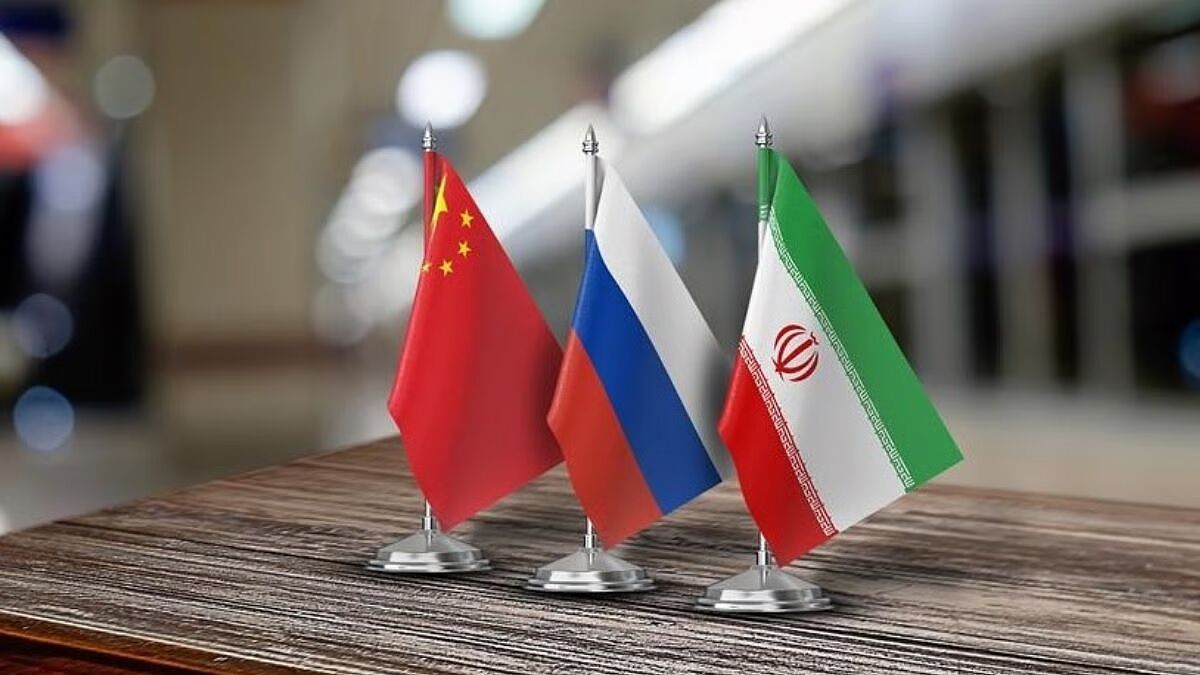
Global warming, changing water conditions and growing economic activity have increased the need to maintain navigable waterways in Russia. On the Caspian and along major Russian rivers, Moscow has increasingly had to look beyond its own borders for dredging capabilities, including to China and Iran.
The Northern Sea Route could therefore become the next area in which Russia’s ambitions run ahead of its capabilities.
There is an additional complication. Dredging in the Arctic is not equivalent to ordinary dredging in warmer waters. Vessels operating in or near the Northern Sea Route would need to function in extremely difficult conditions. Some would have to be ice-capable, while others could require protection and assistance from Russia’s already heavily utilised icebreaker fleet.
That makes the construction of a Russian dredging fleet a much more expensive and technically demanding undertaking than simply ordering conventional vessels.
And Russia’s shipbuilding industry is already under pressure.
The Kremlin has made repeated efforts to revive domestic shipbuilding and reduce dependence on foreign technology and equipment. But sanctions, technological constraints, financing problems and the broader difficulties facing the Russian industrial sector have complicated those ambitions.
The question, therefore, is not whether Moscow wants to build a national dredging fleet. It clearly does.
The more important question is whether Russia can build one quickly enough, cheaply enough and at the necessary technical level to meet the demands of the Northern Sea Route.
If it cannot, China is likely to emerge as the obvious alternative.
That would not be without precedent. Russia has increasingly turned to China when it has needed equipment, technology or industrial capacity that it cannot readily produce itself. The same pattern has already appeared in the management and development of waterways outside the Arctic.
Beijing would consequently have another opportunity to translate Russia’s infrastructural weaknesses into political leverage.
This is particularly important in the Arctic because the Northern Sea Route is not simply an economic project. Moscow regards it as a strategic corridor connecting Russia’s European and Asian territories and as a means of increasing the country’s role in global shipping.
The Kremlin also sees the route as a symbol of Russian sovereignty and technological capability in the Arctic.
Dependence on Chinese dredging vessels would complicate that narrative.
It could also create a relationship in which Russia depends on China not only for trade and investment, but for maintaining one of the most strategically important transport corridors under Moscow’s control.
The more the Arctic warms and the more heavily the Northern Sea Route is used, the greater the need for regular maintenance is likely to become. Sedimentation does not respect geopolitical boundaries, and commercial vessels cannot operate efficiently on a route whose channels are inadequately maintained.
That creates a potentially long-term structural dependence.
Moscow may therefore be right to seek a national dredging fleet. From the standpoint of Russian sovereignty and strategic planning, it would make sense.
But announcing such a fleet and possessing one are two very different things.
The 60 million cubic metres of sediment that Rosatom says must be removed over the next five years offer a useful measure of the gap between Russia’s Arctic ambitions and its existing capabilities.
If Russian shipyards can close that gap, Moscow will have strengthened its ability to control and develop the Northern Sea Route on its own terms.
If they cannot, Russia may once again turn to China.
And if that happens, the Northern Sea Route could become another example of a broader transformation already under way: Russia seeking greater strategic independence while, in practice, becoming increasingly dependent on Chinese economic and technological capacity.
That may prove to be one of the most consequential unintended consequences of Moscow’s Arctic strategy.
Here we are to serve you with news right now. It does not cost much, but worth your attention.
Choose to support open, independent, quality journalism and subscribe on a monthly basis.
By subscribing to our online newspaper, you can have full digital access to all news, analysis, and much more.
You can also follow AzerNEWS on Twitter @AzerNewsAz or Facebook @AzerNewsNewspaper
Thank you!