
Karabakh as leverage: how Moscow sustains its grip on South Caucasus
Elnur Enveroglu
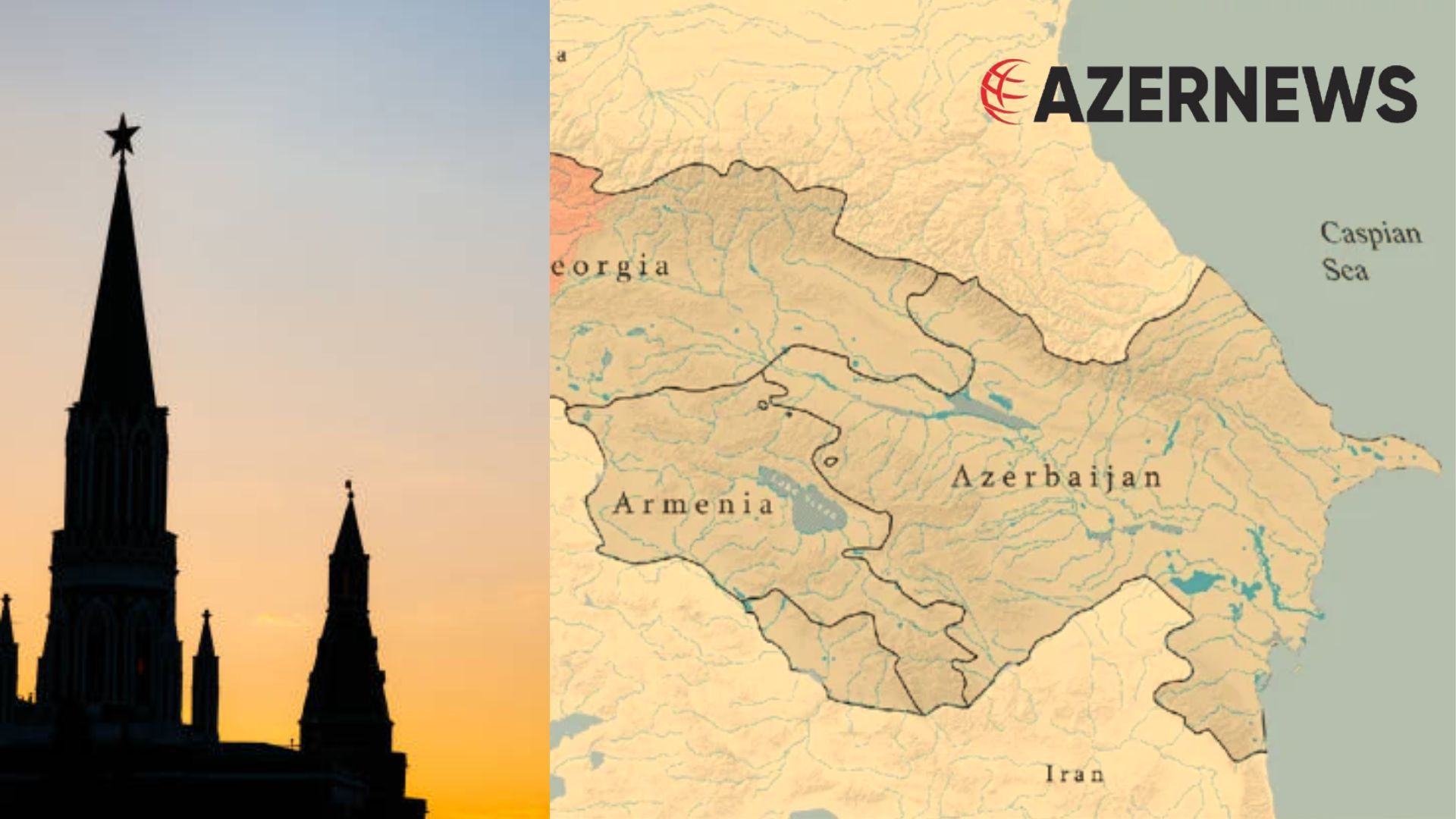
Read moreWhy did Nikol Pashinyan’s recent visit to Moscow once again place Karabakh, the Azerbaijani territory that is internationally recognised, at the centre of discussions with Russia's Vladimir Putin?
The answer lies not in the present realities of the region, but in Moscow’s long-standing geopolitical habits.
And another key question is why does Russia continually revive the already resolved Karabakh issue?
For your biggest concerns I will make a shortcut, going straight to the answer; simple and logical: For decades, Russia has treated unresolved conflicts as instruments of influence. The Karabakh question, despite Azerbaijan restoring control over the region, remains one of Moscow’s most enduring levers in the South Caucasus.
By periodically reintroducing the issue into high-level talks, the Kremlin signals that it still considers itself an indispensable broker, even when the facts on the ground have shifted. In this sense, Karabakh is less a dispute to be resolved than a mechanism to preserve Russian relevance.
This approach is not new. It echoes patterns established during the Soviet Union, where Moscow maintained authority through managed instability in its peripheries. Frozen conflicts were never truly "frozen"; they were tools of calibrated control.
Why now, amid Russia’s broader geopolitical strain?
At a time when Russia remains deeply entangled in its war against Ukraine and locked in confrontation with Western powers, its renewed rhetorical focus on Karabakh appears paradoxical. It is precisely this strain that explains Moscow’s behaviour.
With its strategic bandwidth stretched, Russia is seeking to reaffirm influence in regions it still considers within its traditional sphere. The South Caucasus, sitting at the crossroads of Europe and Asia, remains central to that ambition.
Reasserting the Karabakh narrative allows Moscow to remind both Armenia and Azerbaijan that it retains the capacity to shape outcomes or at least complicate them. That is so far clear, and how about Armenia? How does Armenia’s domestic politics factor into this?
Armenia’s internal political cycle adds another layer of urgency. As Yerevan moves towards elections, the Kremlin’s interest in shaping the political landscape intensifies.
Opposition figures with historical ties to Moscow become, in effect, strategic assets. Among them is Robert Kocharyan, a former leader whose political base and rhetoric are closely aligned with Russia’s regional outlook.
Kocharyan’s return to power would likely reintroduce a more confrontational posture towards Azerbaijan and revive narratives that favour separatism. We have no doubt that it is a framework that has long served Russian strategic interests.
This raises a critical question: is the persistence of the Karabakh issue as much about Armenia’s internal contest for power as it is about interstate relations?
Could a change in leadership trigger renewed conflict?
The prospect of renewed hostilities cannot be dismissed outright. However, structural realities suggest that Armenia, in its current state, lacks the capacity to initiate a large-scale conflict independently.
Rebuilding military capability sufficient for such an undertaking would likely take years. Any rapid escalation would therefore depend heavily on external backing.
Here, Russia’s role becomes decisive. Should Moscow choose to rearm or politically embolden actors in Armenia, the risk of renewed confrontation could increase, of course, not necessarily as a primary objective, but as a byproduct of broader strategic calculations.
In this sense, the conflict risks becoming less about local grievances and more about external manipulation.
Why does Azerbaijan’s foreign policy concern Moscow?
Another factor shaping Russia’s behaviour is Azerbaijan’s increasingly diversified foreign policy.
By deepening ties with the United States and European partners, Baku has expanded its strategic options beyond traditional regional frameworks. This shift challenges Moscow’s expectation of exclusive influence.
Recent Russian commentary on regional transport initiatives, including the West-backed TRIPP discussions linked to the Zangazur corridor, reflects a degree of unease. From Moscow’s perspective, such projects risk diminishing its control over connectivity and trade routes in the South Caucasus. This interpretation nevertheless arguably rests on outdated assumptions.
The a question arises: Is Russia misreading the region’s transformation?
There is a growing sense that Moscow’s approach is anchored in a historical mindset that no longer aligns with present realities.
The South Caucasus of 2026 is not the geopolitical landscape shaped by the Treaty of Turkmenchay about two centuries ago. The sovereignty of regional states is internationally recognised, and their foreign policies are increasingly multidirectional.
Azerbaijan’s restoration of control over Karabakh marked a decisive shift, reducing the viability of the conflict as a geopolitical bargaining chip. However, Russia’s continued invocation of the issue suggests a reluctance to fully adjust to this new environment.
Ultimately, the persistence of the Karabakh narrative in Russian diplomacy raises a broader question: can the South Caucasus move beyond externally sustained conflicts?
For Armenia, the challenge lies in navigating domestic political pressures without becoming a conduit for external agendas. For Azerbaijan, the task is to consolidate sovereignty while managing a complex regional balance.
For Russia, however, the choice is more fundamental, whether to adapt to a changing regional order or continue relying on tools of influence that are steadily losing their effectiveness.
Here we are to serve you with news right now. It does not cost much, but worth your attention.
Choose to support open, independent, quality journalism and subscribe on a monthly basis.
By subscribing to our online newspaper, you can have full digital access to all news, analysis, and much more.
You can also follow AzerNEWS on Twitter @AzerNewsAz or Facebook @AzerNewsNewspaper
Thank you!