
Could oil really hit $200? Iran’s Hormuz threat faces market reality

Qabil Ashirov
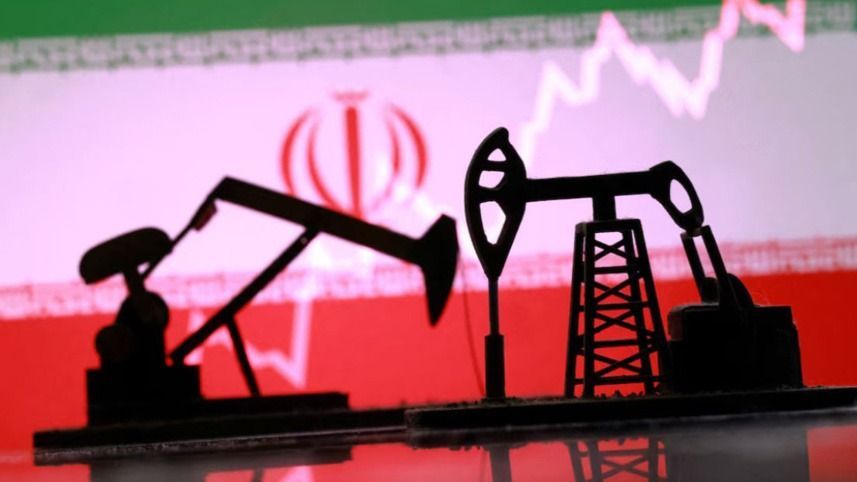
Read moreWhen Ebrahim Zolfaqari, spokesperson for Iran’s Islamic Revolutionary Guard Corps (IRGC), declared that oil prices could surge to $200 a barrel if tensions escalate in the Persian Gulf, markets understandably took notice. His warning, coupled with threats to block the Strait of Hormuz, was not the first time an Iranian official has invoked the specter of triple-digit oil shocks. Yet the question remains: how realistic is this scenario, and what would it mean for the global economy?
The statement is a calculated move, designed to inject uncertainty and exploit the nervous psychology of traders. In an environment already destabilized by Russia’s protracted war and restricted access to global energy markets, even the hint of disruption in the Gulf can amplify volatility. Iran understands this and leverages its threats as a form of economic warfare. The mere suggestion of $200 oil can spark speculative buying, temporarily inflating prices without any physical blockade.
On the other hands. at first glance, the claim seems plausible. The Strait of Hormuz is the world’s most critical energy chokepoint, with roughly 20 percent of global oil trade passing through its narrow waters. The broader Middle East supplies nearly 30 percent of the world’s crude. Any disruption in this artery would send shockwaves across energy markets. For those unfamiliar with the mechanics of oil supply and demand, the idea of $200 oil may even appear inevitable. Panic-driven speculation could push futures higher in the short term, creating a psychological rally detached from fundamentals.
But history and economics tell a more nuanced story. Oil prices at $200 would trigger severe inflationary pressures worldwide, likely plunging economies into stagflation—a toxic mix of rising prices and slowing growth. The International Monetary Fund has estimated that crude sustained between $150 and $200 could shave 1–2 percent off global GDP. Transportation and manufacturing costs would soar, consumer spending would contract, and developing economies would face currency crises. In advanced economies, gasoline prices could double, while airlines and logistics firms would struggle with exploding fuel bills. Stock markets would panic: energy majors might benefit, but consumer-driven sectors such as automotive and aviation would suffer steep losses. Investors would flock to the U.S. dollar as a safe haven, amplifying volatility in emerging markets.
Europe, heavily dependent on imported energy, would be hit particularly hard. Inflationary shocks would ripple through its industrial base, raising export costs and undermining competitiveness. For countries like Azerbaijan, the picture is more complex. As an oil exporter, Baku could enjoy short-term revenue windfalls. The manat might strengthen, but imported inflation would erode domestic purchasing power. A stronger currency historically undermines Azerbaijan’s non-oil sector, making local producers less competitive against Turkish or Chinese manufacturers. Thus, the benefits of high oil prices could be offset by structural economic risks.
But can oil skyrocket to $200 against the backdrop of the war in the Middle East? The likelihood of sustained $200 oil is slim. There are several facts that undermine this scenario. The most important counterweight lies in U.S. shale production. Shale oil is expensive to extract, but once global prices exceed $100 per barrel, American producers ramp up output aggressively. This dynamic was evident between 2010 and 2014, when prices hovered around $100–120 and U.S. shale boomed. The surge in supply contributed to the 2014–2016 price collapse, when crude plunged to $30–40 as Saudi Arabia and Russia flooded the market to squeeze American producers. If prices were to climb above $100 again for an extended period, shale would return in force, stabilizing markets and preventing the kind of runaway escalation Iran suggests.
As for the second reason, more precisely, Iran’s ability to enforce a prolonged blockade of the Strait of Hormuz is also questionable. Its navy has been weakened, relying largely on land-based missiles and mines. While asymmetric tactics—drones, fast boats, sporadic attacks—can disrupt shipping temporarily, sustaining a full closure against U.S. and allied naval power is improbable. Reports of 16 mine-laying vessels being destroyed on March 11 underscore the fragility of Tehran’s strategy. Over time, Iran’s capacity to choke off global oil flows would diminish, making the $200 scenario less credible.
Ultimately, the prospect of $200 oil is more political theater than economic forecast. Realistic projections place the upper bound closer to $120–150 under severe disruption scenarios. Beyond that, market mechanisms—particularly U.S. shale—would intervene. Iran’s rhetoric is less about predicting the future and more about shaping perceptions, sowing fear, and signaling defiance to Washington and Tel Aviv.
For policymakers and investors, the lesson is clear: while the Strait of Hormuz remains a critical vulnerability, the global energy system is more resilient than Iran’s threats suggest. Panic-driven speculation may cause short-term spikes, but structural supply responses and geopolitical realities make sustained $200 oil highly unlikely. The world should take Tehran’s words seriously, but not literally.
Here we are to serve you with news right now. It does not cost much, but worth your attention.
Choose to support open, independent, quality journalism and subscribe on a monthly basis.
By subscribing to our online newspaper, you can have full digital access to all news, analysis, and much more.
You can also follow AzerNEWS on Twitter @AzerNewsAz or Facebook @AzerNewsNewspaper
Thank you!