
France’s turn to private armies risks tearing Western alliance apart
Elnur Enveroglu
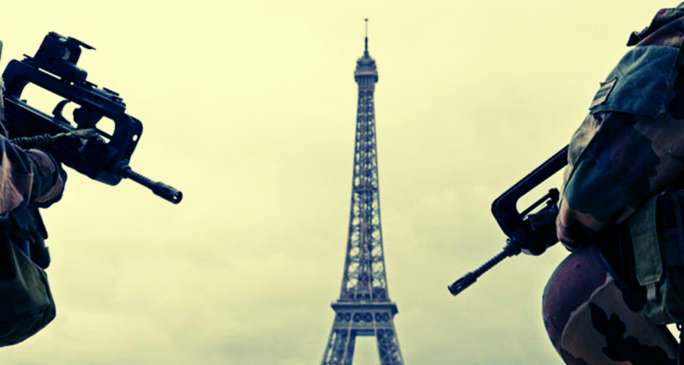
Read moreIn recent months, amid growing fractures within the European Union and against the backdrop of the Ukraine-Russia war, a range of new interpretations has emerged regarding NATO and the Western camp. France’s increasing drive towards militarisation and the legalisation of private military structures now openly signals Paris’s intention to challenge cohesion within the Western alliance, including NATO, an organisation that is over seventy years old. In reality, France’s tensions with the Western bloc are not new. As early as September 15, 2021, when France was excluded from the AUKUS security pact and responded with decisions that contradicted allied unity, deeper and more risky strategic ambitions became visible. Today, new information sheds further light on the dangers inherent in France’s evolving security policy.
At the centre of this shift lies France’s move to formalise the role of so-called trusted operators within its defence framework. Legislative amendments adopted recently allow the French Ministry of the Armed Forces to engage selected private organisations and companies for international military cooperation, training, support missions and foreign operations. Although Paris avoids the explicit term private military companies, the substance of the policy suggests precisely that. The rebranding appears designed to reduce political backlash while expanding France’s operational flexibility abroad.
Under the new framework, contracts with these trusted operators may last up to ten years. These entities would be authorised to take part in military operations in support of third countries facing a crisis or armed conflict. Their remit would include training, operational assistance, technical support and logistics. Their activities would extend across land, sea, air and cyber domains. This scope closely mirrors that of private military companies operating in other global theatres, from Africa to the Middle East.
The legalisation of such actors marks a strategic departure for France. It enables Paris to project power indirectly while limiting formal accountability. Unlike the French Foreign Legion, which remains an official component of the French armed forces and operates openly under the national flag, trusted operators provide plausible deniability. This distinction is critical. It allows the French state to distance itself from direct responsibility while still shaping outcomes on the ground.
The timing of this policy is not accidental. In November 2025, President Emmanuel Macron announced a declaration of intent to sell up to one hundred Rafale fighter jets to Ukraine over a ten-year period. Training Ukrainian pilots to operate these advanced aircraft would take considerable time. In this context, trusted operator companies could provide a convenient solution. French pilots and retired officers could be deployed through private structures to train Ukrainian personnel. The possibility that they could also participate directly in combat operations cannot be ruled out.
Such an arrangement would allow France to maintain a public narrative that its official armed forces are not engaged in the conflict. This would support claims that NATO is not directly intervening in Ukraine. In turn, it would reduce the legal and political grounds for Russia to justify retaliatory military action against France. The use of private military actors thus becomes a strategic tool to manage escalation while still influencing the battlefield.
This approach reflects a broader trend in contemporary warfare. States increasingly rely on indirect means to advance strategic interests while avoiding formal thresholds that trigger collective defence obligations or international retaliation. For France, trusted operators represent a way to assert influence without the constraints imposed by alliance politics and public opinion.
However, this strategy also carries risks. It weakens transparency and undermines established norms of state responsibility in armed conflict. The blurred line between state and non-state actors complicates accountability under international law. It also raises ethical concerns, particularly when private entities are granted authority to operate across multiple domains, including cyberspace, where attribution is already difficult.
The implications extend beyond Ukraine. France maintains close relations with Armenia, a country that has become increasingly militarised following its regional conflicts. Armenia already hosts various private military-style organisations, such as VOMA. It is not implausible that French-trusted operators could establish cooperation with Armenian counterparts. Through lobbying networks and political connections, such collaboration could develop with limited public scrutiny.
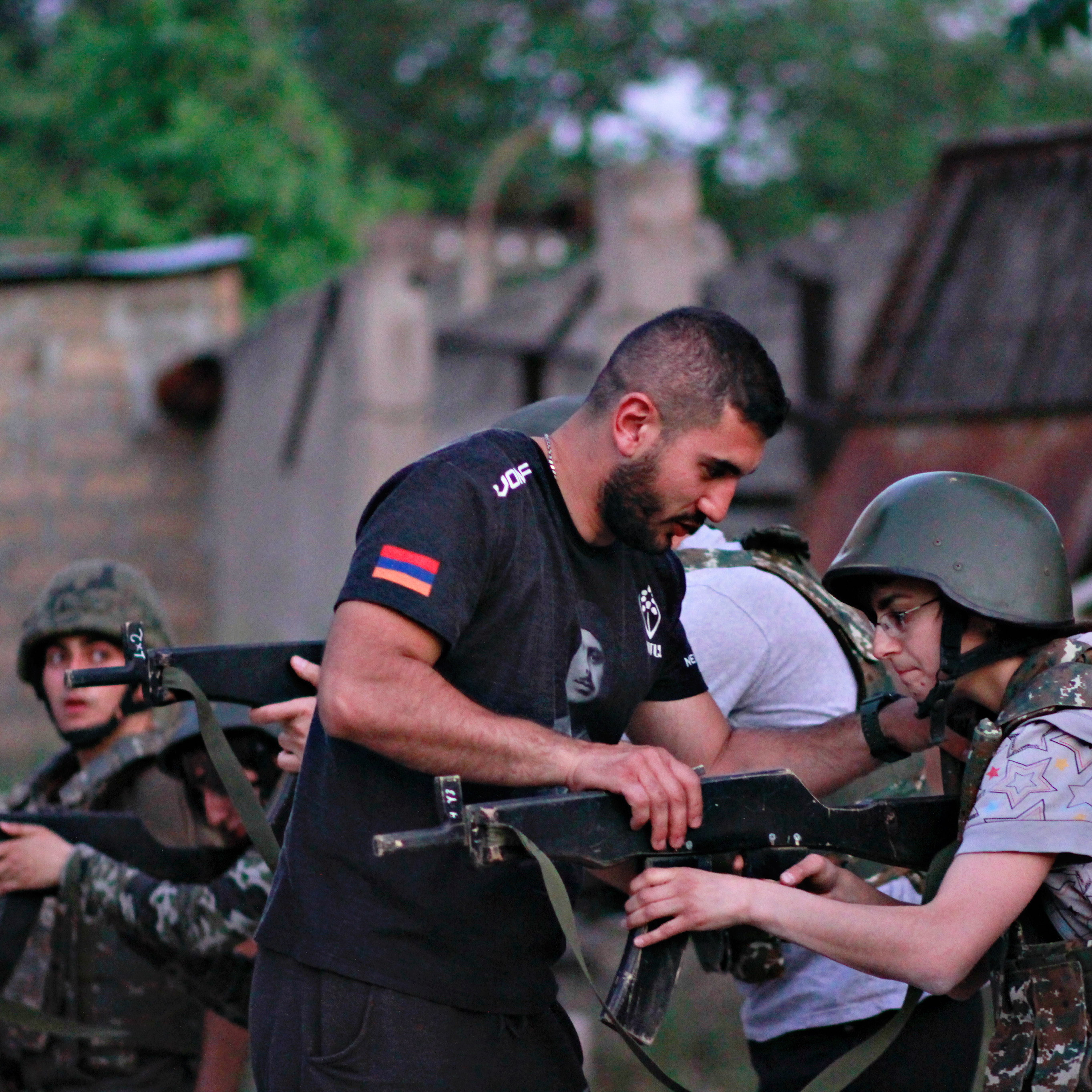
If France were to provide military support to Armenia through private structures, it would further illustrate how this model can be used to influence sensitive regional conflicts while avoiding diplomatic costs. This could destabilise already fragile balances in the South Caucasus and increase tensions with regional powers. Once again, the use of trusted operators would allow Paris to deny direct involvement while shaping outcomes in line with its strategic preferences.
The French government may present this policy as a pragmatic adaptation to a changing security environment. Yet it also reflects a deeper ambition to act independently of collective Western frameworks. By creating parallel instruments of force projection, France signals dissatisfaction with existing alliance mechanisms and constraints. This risks further fragmentation within NATO and the European Union at a time when unity is already under strain.

Historically, France has pursued strategic autonomy. From its withdrawal from NATO’s integrated military command in the Cold War era to its more recent disputes with allies, Paris has consistently sought freedom of manoeuvre. The trusted operator model fits neatly into this tradition. It allows France to maintain influence without full alignment, cooperation without subordination, and intervention without overt responsibility.
Nevertheless, the long-term consequences may be destabilising. The normalisation of private military actors by a major European power sets a precedent. Other states may follow suit, further eroding international norms governing the use of force. Conflicts could become more opaque, more fragmented and harder to regulate.
In conclusion, France’s move to legalise private military activity under the guise of trusted operators represents a significant shift in European security policy. It reflects a desire for strategic flexibility and political insulation but also exposes deeper fractures within the Western alliance. In the context of the Ukraine war and broader geopolitical competition, this approach may offer short-term advantages. Yet it also risks undermining collective security structures and accelerating the privatisation of warfare. The challenge for Europe lies in recognising these dynamics before they reshape the security order in irreversible ways.
Here we are to serve you with news right now. It does not cost much, but worth your attention.
Choose to support open, independent, quality journalism and subscribe on a monthly basis.
By subscribing to our online newspaper, you can have full digital access to all news, analysis, and much more.
You can also follow AzerNEWS on Twitter @AzerNewsAz or Facebook @AzerNewsNewspaper
Thank you!