
Turkic States cooperation strengthens collective fight against disinformation, says MEDIA

AzerNEWS Staff
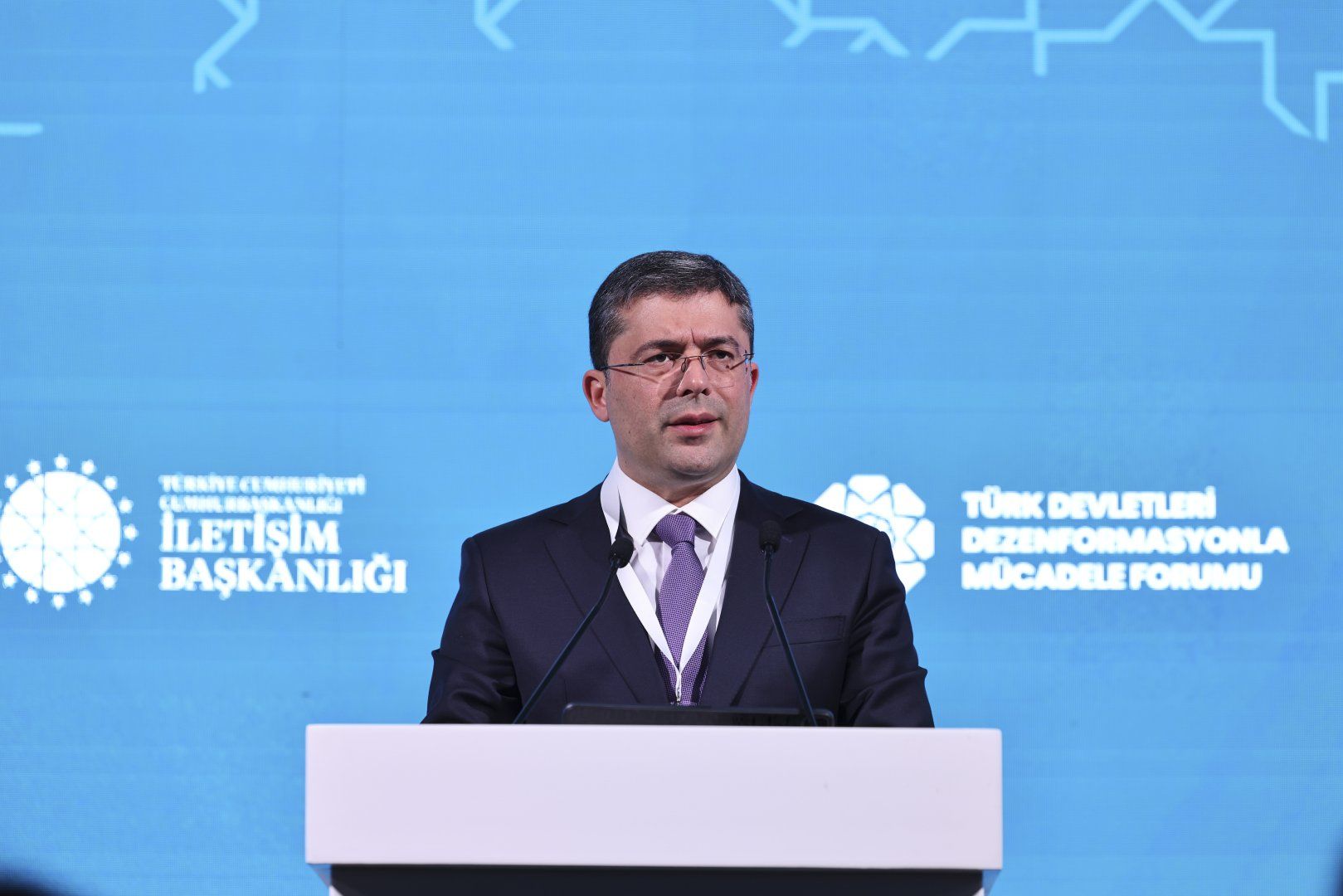
Read moreCooperation among states, societies, and expert communities within the framework of the Organization of Turkic States (OTS) creates a solid foundation for a collective fight against disinformation, said Ahmad Ismayilov, Executive Director of Azerbaijan’s Media Development Agency.
As reported by Azernews, speaking at the Forum on Combating Disinformation among Turkic States in Ankara, Ismayilov noted that merely monitoring social media platforms is no longer an effective tool in countering modern information threats.
“Today, we increasingly understand that simple observation of social networks is insufficient. There is a growing need for deeper analysis and more accurate identification of information,” he said. “If information confrontation was once largely confined to political platforms, the situation has now fundamentally changed. What was previously local and episodic has evolved into a systematic, multi-level phenomenon.”
Ismayilov stressed that the rapid development of modern technologies, digital platforms, and media tools has turned the spread of manipulative content into an almost continuous process, making individual states, often unknowingly, direct targets of disinformation operations. In this context, Turkic states face rising risks from new-generation information and digital threats.
He added that as fake content becomes more sophisticated, the scale and reach of disinformation campaigns continue to expand.
“The more actively falsifications are used, the wider their target audience becomes. The only effective response lies in public awareness, protecting societies from intellectual confusion, and freeing people from imposed ignorance. This is both a measure of societal maturity and the effectiveness of state institutions,” Ismayilov emphasized.
According to him, disinformation in Azerbaijan is increasingly disguised under neutral or humanitarian narratives, particularly during periods when the country is implementing large-scale strategic projects. Such campaigns, he said, aim to create uncertainty, distrust, and hidden pressure, often promoting fabricated narratives under the guise of “alternative viewpoints.”
Ismayilov recalled that Azerbaijani government representatives have repeatedly warned that global disinformation tools—including fake news, deepfakes, algorithmic manipulation, and the misuse of artificial intelligence—are increasingly being employed as instruments of pressure and interference.
“These challenges require not only national responses but also coordinated, collective defense mechanisms,” he said. “Public awareness and high levels of trust between states must form the backbone of such defenses.”
He underscored that education, analytical platforms, media literacy, and critical information assessment skills should be regarded as integral components of national security. A strong, independent, objective, and professionally managed information ecosystem, he added, is essential for every state.
Ismayilov also stressed the importance of protecting the new generation of journalists, experts, and analysts from professional degradation and value distortion.
“Training programs, specialization, professional expertise, and ethical standards form the foundation of the future media environment. The fight against disinformation must be based on continuous dialogue, joint research, and experience-sharing, rather than fragmented efforts,” he said.
Highlighting the importance of Azerbaijan–Türkiye cooperation, Ismayilov noted that joint initiatives aimed at strengthening information security, along with Türkiye’s recent steps in this field, are of strategic significance. Consultations, expert engagement, technological solutions, and rapid response mechanisms have already marked important progress.
“These efforts contribute to fostering responsible public behavior, preventing the spread of manipulation, and reinforcing ethical standards in both national and international information spaces,” he added.
Concluding his remarks, Ismayilov emphasized that close cooperation between Azerbaijan and Türkiye, as well as collaboration among states, societies, and expert communities within the OTS, provides a strong basis for a collective response to disinformation.
“This direction should become one of the key priorities on the agenda of joint platforms and coordination mechanisms,” he said.
The forum in Ankara brings together representatives of state institutions, leading media organizations, and experts in the field. Azerbaijan is represented by senior officials from the Media Development Agency, the Presidential Administration, leading analytical centers, and major news agencies.
Within the forum’s framework, participants will discuss the impact of disinformation on national security, public opinion, and regional stability, as well as practical mechanisms for joint action in the modern information environment. In line with the OTS Action Plan for 2025, the forum aims to serve as a platform for exchanging knowledge and experience in media literacy, information security, countering disinformation, responsible use of digital technologies, international broadcasting, and next-generation journalism.
Here we are to serve you with news right now. It does not cost much, but worth your attention.
Choose to support open, independent, quality journalism and subscribe on a monthly basis.
By subscribing to our online newspaper, you can have full digital access to all news, analysis, and much more.
You can also follow AzerNEWS on Twitter @AzerNewsAz or Facebook @AzerNewsNewspaper
Thank you!