
US–Venezuela tensions escalate as Washington expands oil sanctions and naval operations

Qabil Ashirov
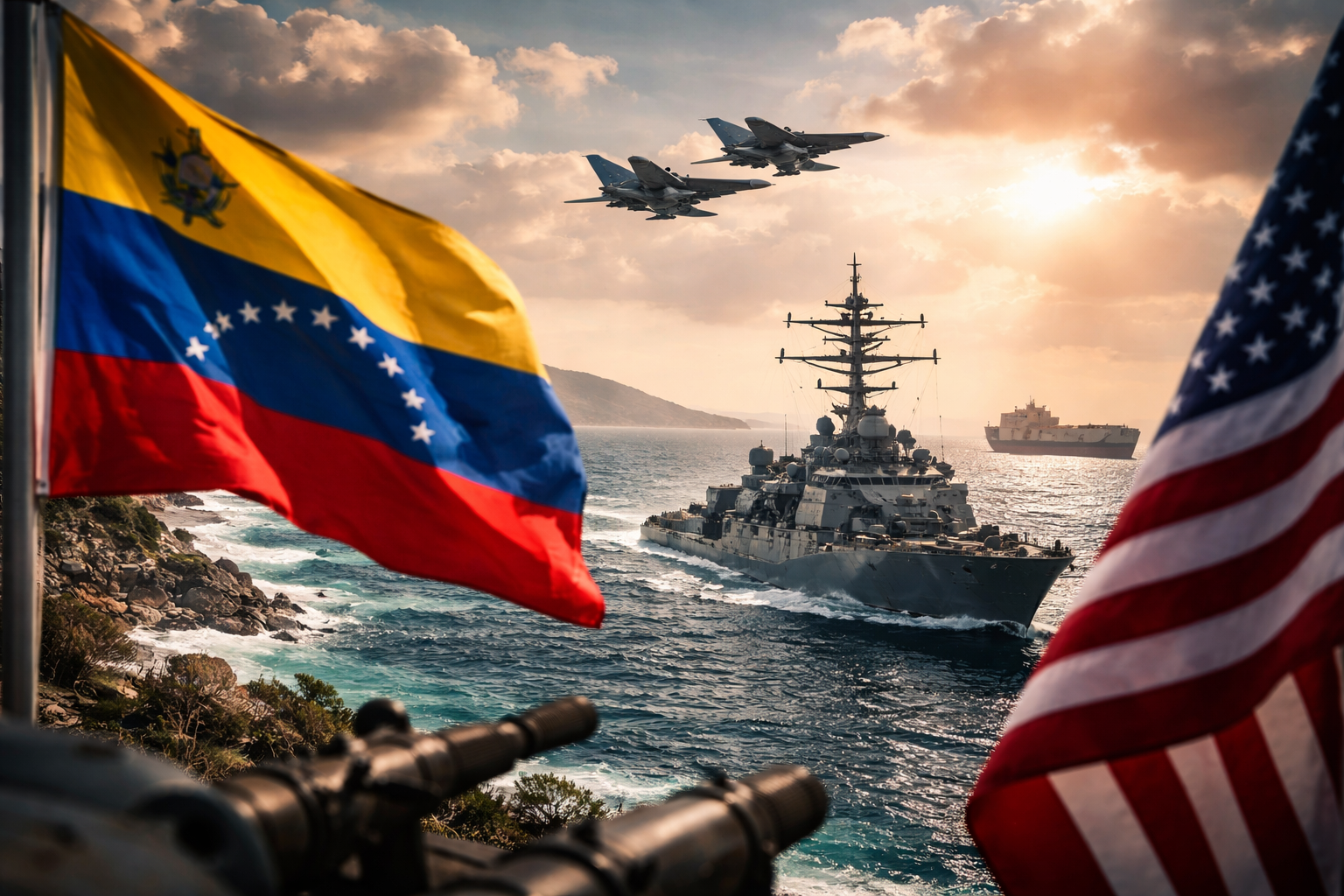
Read moreRelations between the United States and Venezuela have become increasingly tense, and the trend is expected to follow an upward trajectory. Washington accuses the Maduro government of supporting drug trafficking and illegal activities and has imposed sanctions on the country’s oil sector. Furthermore, the US has deployed naval and air forces to the region, striking several vessels and blocking oil tankers. Maduro’s government calls these actions an attack on state sovereignty and hints at possible countermeasures. Energy markets face uncertainty, while regional leaders urge calm. The UN Secretary-General and international organisations are calling for a peaceful resolution, as the crisis impacts Latin America and the global community.
Speaking to Azernews, Peter Marko Tase, Honorary Professor at AUL and Founder of the Azerbaijan-US Economic and Education Council, noted that President Trump’s Proclamation 10949 fully restricts entry for nationals of twelve countries. Additionally, the proclamation directed the United States Government to partially restrict and limit the entry of nationals of the following seven countries.
“The proclamation directed the US Secretary, in consultation with the Attorney General, the Secretary of Homeland Security, and the Director of National Intelligence, to immediately engage each of the countries identified in the proclamation on measures that must be taken to comply with United States screening, vetting, immigration, and security requirements. In this backdrop, the bilateral relations of Washington and Caracas are not an exception; the Trump administration has publicly acknowledged that fighting drug trafficking and organised crime is its top priority,” Peter Tase said.
He recalled that over the past four months, the United States Southern Command has successfully led major operations in the Caribbean Sea that have neutralised over 94 per cent of drug trafficking sea routes that aim to flood the U.S. territory with dangerous amphetamine, cocaine and other dangerous drugs.
“As of December 17, US President Donald J. Trump has publicly announced that "a total and complete" blockade of all sanctioned oil tankers entering and leaving Venezuela. This decision is characterised by Caracas as "warmongering threats". Currently, Venezuela’s authorities are in complete disarray and are heavily relying on their Brazilian partners, who are expected to provide shelter to Mr. Maduro’s trusted associates, the Honorary Professor underscored.
He opined that the current escalation of military operations led by the U.S. Navy nearby the Venezuelan coast is a clear testimony of Washington’s strategic interest to overthrow the Government of Nicolas Maduro. The next foreign government that could receive a similar punishment to that against Caracas is Gustavo Petro’s Government of Colombia.
“The Trump Administration is determined to reduce and neutralise the presence of Russian Military bases and intelligence personnel coming from the Islamic Republic of Iran, Cuba, the Russian Federation and P R China in the territory of Venezuela. By overthrowing the Government of Nicolas Maduro, Washington is expected to establish a new era of geopolitical priorities that are suitable to the defence of US National Security, with Moscow and Beijing leaving South America. Given the ongoing turbulence in the bilateral relations between Brazil and the United States of America; in 2026 the U.S. Department of War will establish a major intelligence and military operations base in the territory of Paraguay, a strategic initiative that will effectively fight the presence of drug cartels and Terrorist organizations (with ties to Islamic State circles in the Middle East) including their financial operations arms, in the region of South America,” he added.
He emphasised that the recent decision of President Trump to conduct a blockade of all sanctioned oil tankers arriving in the maritime space of Venezuela will further embolden the bilateral relations between Venezuela and Brazil and certainly increase Colombia’s regional share in Oil exports. Crude Oil Production in Colombia was over 770 thousand barrels per day (2023) with the US-imposed oil embargo against Venezuela; Colombia, as Latin America’s third largest oil producer, will experience a greater global demand for its oil products in the next few years, as a consequence of the ongoing Trump-Maduro Conflict,” he noted.
“The pressuring dynamics of US - Russia - Ukraine Negotiations for a durable peace in Ukraine, are constraining the political future of Venezuela, Cuba, Nicaragua and Honduras. The global spheres of influence are still not determined, and Maduro’s political future is in line.
In concert with Actions against Venezuela, the US is planning additional sanctions on Russia's energy sector — including its "shadow fleet" of oil tankers - if President Putin rejects a peace deal with Ukraine,” he concluded.
Here we are to serve you with news right now. It does not cost much, but worth your attention.
Choose to support open, independent, quality journalism and subscribe on a monthly basis.
By subscribing to our online newspaper, you can have full digital access to all news, analysis, and much more.
You can also follow AzerNEWS on Twitter @AzerNewsAz or Facebook @AzerNewsNewspaper
Thank you!