
After Larijani: Can half Kurdish hardliner Saeed Jalili reshape Iran’s power balance?
Akbar Novruz
Read moreReplacing Ali Larijani, reportedly killed in an Israeli airstrike, is emerging as a critical challenge for Iran’s political leadership, with attention now turning to potential successors who could redefine the country’s strategic direction.
Larijani was indeed a remarkable individual - an adherent of Kant, a Western philosopher, and an intellectual. This conveyed to the world that Iran was not merely a theocratic regime.
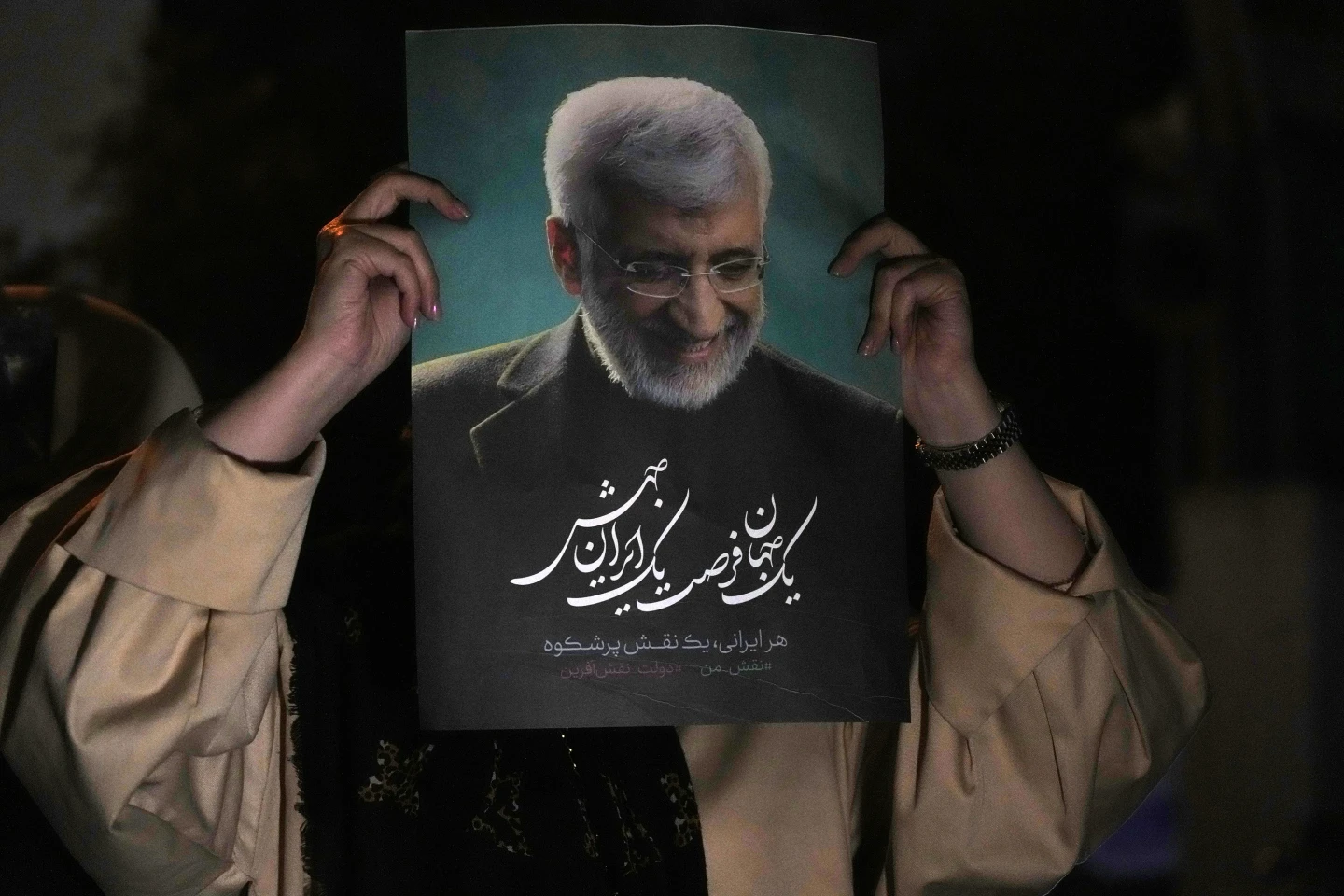
Iranian President Masoud Pezeshkian is legally responsible for appointing the next secretary of the Supreme National Security Council, a position widely seen as one of the most powerful in the country. Early indications suggest that Saeed Jalili, a prominent hardliner and former nuclear negotiator, is the leading candidate.
Jalili, born in 1965 in Mashhad, comes from a mixed background, with Kurdish and South Azerbaijani roots. A graduate of Imam Sadiq University, where he later taught political science, he rose through the ranks of Iran’s diplomatic and security establishment.
A veteran of the Iran-Iraq War, Jalili was seriously wounded in combat and lost his right leg, earning him the nickname “living martyr” among supporters. His political career began at Iran’s foreign ministry, where he served in key roles, including as deputy for European and American affairs, before moving into the office of Supreme Leader Ali Khamenei.
In 2007, then-president Mahmoud Ahmadinejad appointed Jalili as secretary of the Supreme National Security Council, making him Iran’s chief nuclear negotiator. He became known for his uncompromising stance in talks with Western powers and later opposed the 2015 nuclear agreement.
Jalili has also been a recurring figure in Iran’s presidential politics, running in multiple elections. He placed third in 2013, withdrew in favor of Ebrahim Raisi in 2021 at Khamenei’s request, and lost in the second round of the 2024 election to Pezeshkian.
Currently a member of the Expediency Council, Jalili is widely viewed as a leading representative of Iran’s hardline faction. Iran analyst Aras Azizi describes him as “the leader of the most anti-Western and extremist part of the regime,” suggesting that his appointment would signal a decisive shift away from Larijani’s more pragmatic approach.
Larijani, by contrast, had built a reputation as a centrist figure capable of navigating internal divisions and engaging with international counterparts. His role in balancing competing factions made him a key decision-maker in Tehran’s power structure.
Analysts warn that Jalili’s rigid stance could complicate Iran’s ability to manage its current challenges, particularly amid ongoing regional tensions. Azizi notes that Iran’s powerful Islamic Revolutionary Guard Corps may prefer a figure with stronger military credentials, given the current security environment.
The appointment carries broader implications beyond internal politics. As the Supreme National Security Council has become a central hub of decision-making, the choice of successor is expected to shape Iran’s posture in any future negotiations, particularly with the United States and Israel.
Following reports of Larijani’s death, Jalili issued a statement, quoted by the state-run Tasnim News Agency, declaring that such actions “will not save the weak enemy from the quagmire in which it is trapped; on the contrary, they will accelerate the course of its defeat and humiliation.”
The decision over Larijani’s successor may prove pivotal not only for Iran’s internal balance of power but also for the trajectory of regional geopolitics.
Here we are to serve you with news right now. It does not cost much, but worth your attention.
Choose to support open, independent, quality journalism and subscribe on a monthly basis.
By subscribing to our online newspaper, you can have full digital access to all news, analysis, and much more.
You can also follow AzerNEWS on Twitter @AzerNewsAz or Facebook @AzerNewsNewspaper
Thank you!