
Baku expands diplomatic reach with full membership in Central Asia’s top leadership format
By Peter Marko Tase
On November 15, Ilham Aliyev, the president of Azerbaijan, paid an official visit to Uzbekistan and held a productive one-on-one meeting with his counterpart, President Shavkat Mirziyoyev. This working visit to Uzbekistan comes at a pivotal moment for the economic integration of Central Asian nations, a region that increasingly depends on dynamic land-transport corridors, including the East–West Corridor and the Zangezur Corridor, an emerging segment that could significantly accelerate the economic and industrial integration of Central Asia and reduce global dependence on the vulnerable chokepoints that dominate maritime trade routes.
The recent visit of the president of Azerbaijan to Tashkent is a notable achievement for Baku’s foreign service. Its economic and political implications are comparable to the outcome of the 12th Summit of the Organization of Turkic States (OTS), held in Gabala, Azerbaijan, on October 7. The Turkic States summit in Gabala offered Central Asian and broader Turkic nations a rare opportunity to shape a more coherent platform for regional integration and development, convened by Azerbaijan, a state that has made visible strides in advancing a green economy, circular-economy practices, and environmental preservation. For many in the region, Baku’s activism signals that the era of ad hoc cooperation is giving way to a more structured and durable architecture.
On November 16, the 7th Consultative Meeting of the Heads of State of Central Asia was held in Tashkent. President Aliyev participated in this multilateral round table as a guest of honor and, ultimately, as a future full-fledged member of the format.
On this occasion, President Mirziyoyev welcomed the Azerbaijani leader and, in his opening statement, emphasized: “We are making fundamental decisions on the accession of the Republic of Azerbaijan to the consultative meetings format as a full-fledged participant. We will build a solid bridge between Central Asia and the South Caucasus, paving the way for the formation of a unified space of cooperation, which will undoubtedly strengthen the strategic interconnectedness and resilience of both regions. I sincerely thank all my esteemed colleagues for adopting this important decision and congratulate Ilham Heydarovich on Azerbaijan’s accession to the consultative meetings format as a full-fledged participant.”
Mirziyoyev underscored the growing solidarity among Central Asian states and their shared ambition for joint development projects that boost the region’s leverage on the international stage and reinforce Central Asia’s role in global affairs. In contrast to the often lethargic performance of other multilateral organizations, cooperation within the “Central Asia+” formats has intensified, and Azerbaijan has emerged as a principal driver of integration in a world increasingly defined by fragile global cooperation.
The region now speaks with a more unified voice on authoritative international platforms. With Azerbaijan’s accession to this interactive round table, the geo-economic interests of Central Asian nations are poised to gain greater pragmatism and visibility in Europe, Latin America, Africa, and Southeast Asia.
For Kazakhstan’s president, Kassym-Jomart Tokayev, Azerbaijan’s formal inclusion is “a historic decision.” The Kazakh head of state expressed confidence that Azerbaijan will make a substantial contribution to strengthening regional cooperation. The Kyrgyz Republic likewise supported Azerbaijan’s participation in this format of consultative meetings as a full member. President of the Kyrgyz Republic Sadyr Zhaparov stated: “Expanding our format with fraternal Azerbaijan will open new opportunities and broaden horizons for cooperation in Central Asia, particularly in international transit, logistics, and energy. Today, we can confidently say that the consultative meetings format of the Central Asian heads of state has proven successful. It has demonstrated its viability and become a genuine, one-of-a-kind platform where not only existing regional challenges are discussed, but new initiatives and proposals are actively put forward.”
On the occasion of Azerbaijan’s accession to the Consultative Meeting of the Heads of State of Central Asia, President Emomali Rahmon of Tajikistan also offered his congratulations. “I congratulate esteemed Ilham Heydar oglu Aliyev on the accession of the Republic of Azerbaijan to the Consultative Meeting of Heads of State of Central Asia. It is gratifying that our platform is confidently establishing its significance as an important participant in international and regional processes. It is balanced and demonstrates a commitment to advancing the growing interests of the countries in the region,” Rahmon stated.
Baku’s participation in the 7th Consultative Meeting of the Heads of State of Central Asia is likely to advance the region’s deeper cooperation in industrial development, the green economy, technological innovation, and the wider supply chain. With Azerbaijan’s admission, Central Asian countries stand to gain heightened international standing, more effective economic reforms, and ambitious large-scale projects in industry, transport, and agriculture.
Relations between Azerbaijan and the Central Asian states are distinctive, anchored in a shared historical heritage and cultural traditions. The countries are bound together by centuries of spiritual and cultural ties, as well as habits of political and social solidarity. This alliance has evolved into a strategic partnership. Over the past three years, Azerbaijan’s president has conducted fourteen official visits to Central Asian countries, while Central Asian heads of state have visited Baku twenty-three times over the same period.
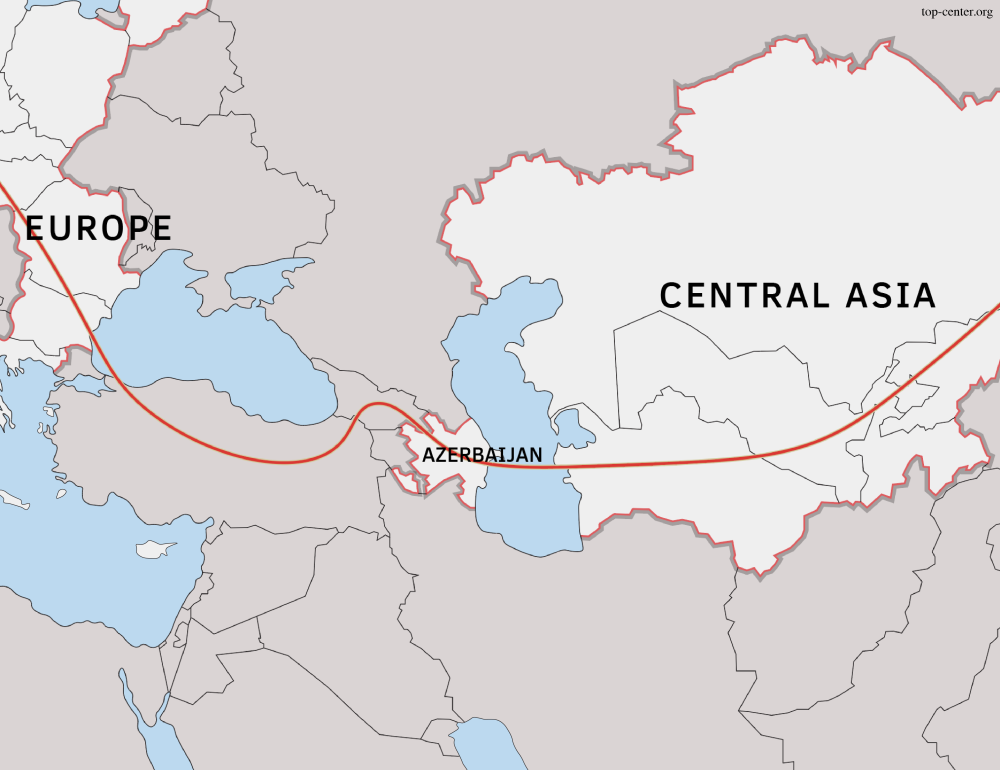
Together, Azerbaijan and the Central Asian nations are positioning themselves as a vital corridor and commercial bridge connecting Western Europe with markets in the Far East and Southeast Asia, at a moment when the basic principles of globalization and free trade are at a crossroads. The Republic of Azerbaijan is likely to retain a central role in nurturing the fraternal nature of its relations with Central Asian governments. This strategic concept remains the fulcrum of Baku’s increasingly confident diplomacy, reshaping how Central Asia and the South Caucasus imagine their place in the wider world.
----
Peter Marko Tase is the author and editor of twelve books about Paraguayan history and foreign policy. He writes extensively about Latin America; the foreign policy, culture, and history of the Republic of Azerbaijan (including the economy of the Autonomous Republic of Nakhchivan, Azerbaijan) and has published many essays about Albania and the region of southeast Europe.
Here we are to serve you with news right now. It does not cost much, but worth your attention.
Choose to support open, independent, quality journalism and subscribe on a monthly basis.
By subscribing to our online newspaper, you can have full digital access to all news, analysis, and much more.
You can also follow AzerNEWS on Twitter @AzerNewsAz or Facebook @AzerNewsNewspaper
Thank you!