
Popular UN magazine publishes article on ancient Azeri town
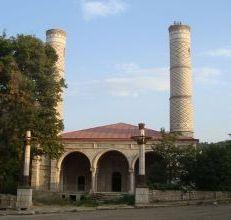
An article by Azerbaijani ambassador at the UN Geneva office Murad Najafbayli about the ancient town of Shusha, currently under Armenian occupation, was published in the June issue of the UN Special magazine (www.unspecial.org), a publication popular in Switzerland with monthly print-run of 10,000 copies.
Below is the article, titled ``Shusha: Temple of Azerbaijani culture``.
Throughout its history different Azerbaijani states were in regular and active relations with foreign countries which in turn led to the exchange of art and culture among their peoples. Ancient and historical Azerbaijani towns and cities were in fact the primary sources of refection of this multicultural diversity and rich heritage of the Azerbaijani nation. In that regard, it should be noted that Shusha is one of these unique centers of Azerbaijani culture.
Founded in the 1750s as a city-style fortress, town of Shusha immediately became famous for its architectural structure and beautiful monuments and at the same time, the capital of Karabakh khanate of Azerbaijan. The dynamic landscape of the area had played a decisive role in determining the position of the fortress walls and towers. Along with being a strong city-castle, Shusha was one of Azerbaijan`s important political, economic, and cultural centers in the 18th-19th centuries. Trade relations with both east and west led to the emergence of a developed commercial center in Shusha. The main square in the center of the city was also the main trade complex. Shusha`s main religious buildings, caravanserais (roadside inns), and trade squares were located in those streets alongside the shops. The name of ``Shusha`` means glass symbolizing pure, remarkable transparent mountain air.
By its picturesque sight having been allocated highly in mountains Shusha caused admiration and surprise among travelers. Painter Vereshagin wrote: ``Its houses are correct, beautiful, high and illuminated by splendid windows. The city was made of rock taken from bluffs on which it is located. Streets are paved everywhere with wide plates, roofs were made of cutting``. Along with its natural beauties, Shusha was the precious monument of the national architecture and medieval town building art. The wall fortress - ``Ganja Gates``, Garden of the Khan, Gara Boyukkhanim castle, Upper Govharagha and Lower Govharagha mosques were the brilliant examples of the town architecture in XVIII and XIX centuries.
Shusha as a town of significant economic, political and cultural importance, has played an important role in the life of Azerbaijani nation and perpetuates our national-moral values and musical traditions. However, Shusha was not only a town of beautiful monuments, but also home to a great number of poets, writers, musicians and other artists such as poets Gasym bay Zakir, Mir Mohsun Navvab, poetess Khurshidbanu Natavan, writers Najaf bay Vazirov, Yusif Vazir Chamanzaminli, Firudin bay Kocharli, composer Uzeyir Hajibayli and other prominent figures. Shusha was known as a cradle of Azerbaijani mugham.
Shusha, which was called ``Conservatoire of the Caucasus`` in the 19th century, was also famous for its folk singers, one of them being Jabbar Garyaghdyoghlu (1861-1944), a person who dedicated 70 years of his life to the development of the eastern music, an outstanding folk singer, brilliant singer of mugham. Khan Shushinski (1901-1919) was a genuine folk singer with a brilliant voice and great creative potentialities and dedicated 50 years of his life to the development of national music. He made the Azerbaijani mugham richer, adding new parts to several of those, and was an excellent singer of Garabagh shikastasi, Rast, Bajati-shiraz, Chaharhag, Mahur, Hejrati, Shur and other mughams. Raising Azerbaijani vocal music to new heights was Bulbul (1897-1961), again from Shusha. He won the nickname ``bulbul``, which means nightingale, due to his skillful warbles. He combined his vocal style with Italian vocal traditions, was the author of a number of works on Azerbaijani national vocal music traditions, the synthesis of these traditions with Russian and European opera culture.
Shusha was also developing in the field of literature and art as well. The first steps in these developments belonged to Molla Panah Vagif which was a prominent representative of the classic Azerbaijani realist poetry. He could organically unite two branches of literary heritage, namely classic and folk literature, and played a crucial role in the development of the Azerbaijani literary language.
In the early 20th century, in the atmosphere of socio-economic and cultural growth in Shusha, the prominent and talented composer Uzeyir Hajibayli laid the foundation of the culture of modern professional music of Azerbaijan and created a synthesis of composer creations and folklore music. The opera ``Leyli and Majnun`` by U. Hajibayov, which was performed for the first time on January 12, 1908 was not only the first opera in Azerbaijan, but also in the whole Muslim world. He introduced significant change to Azerbaijani music. Uzeyir Hajibayli could unite Eastern and Western musical systems in his opera and musical comedies, as well as other genres. His house in Shusha was turned into a museum in 1959.
During the 1970-80s a number of new architectural and memorial monuments, including the two-storied gallery of mineral water, the mausoleum of M.P.Vagif, monuments of M.M.Navvab and Uzeyir Hajibayli, busts of a number of Azerbaijani poets, were built in Shusha. The restoration of historical monuments in the town was also at the center of attention.
Considering the essential and indispensable role of the town of Shusha in the history and culture of our country, its rich cultural heritage has always received great care and attention by the people and government of Azerbaijan.
Here we are to serve you with news right now. It does not cost much, but worth your attention.
Choose to support open, independent, quality journalism and subscribe on a monthly basis.
By subscribing to our online newspaper, you can have full digital access to all news, analysis, and much more.
You can also follow AzerNEWS on Twitter @AzerNewsAz or Facebook @AzerNewsNewspaper
Thank you!