
Azerbaijan's school uniform rules protect equality, not prohibit faith, theologian argues

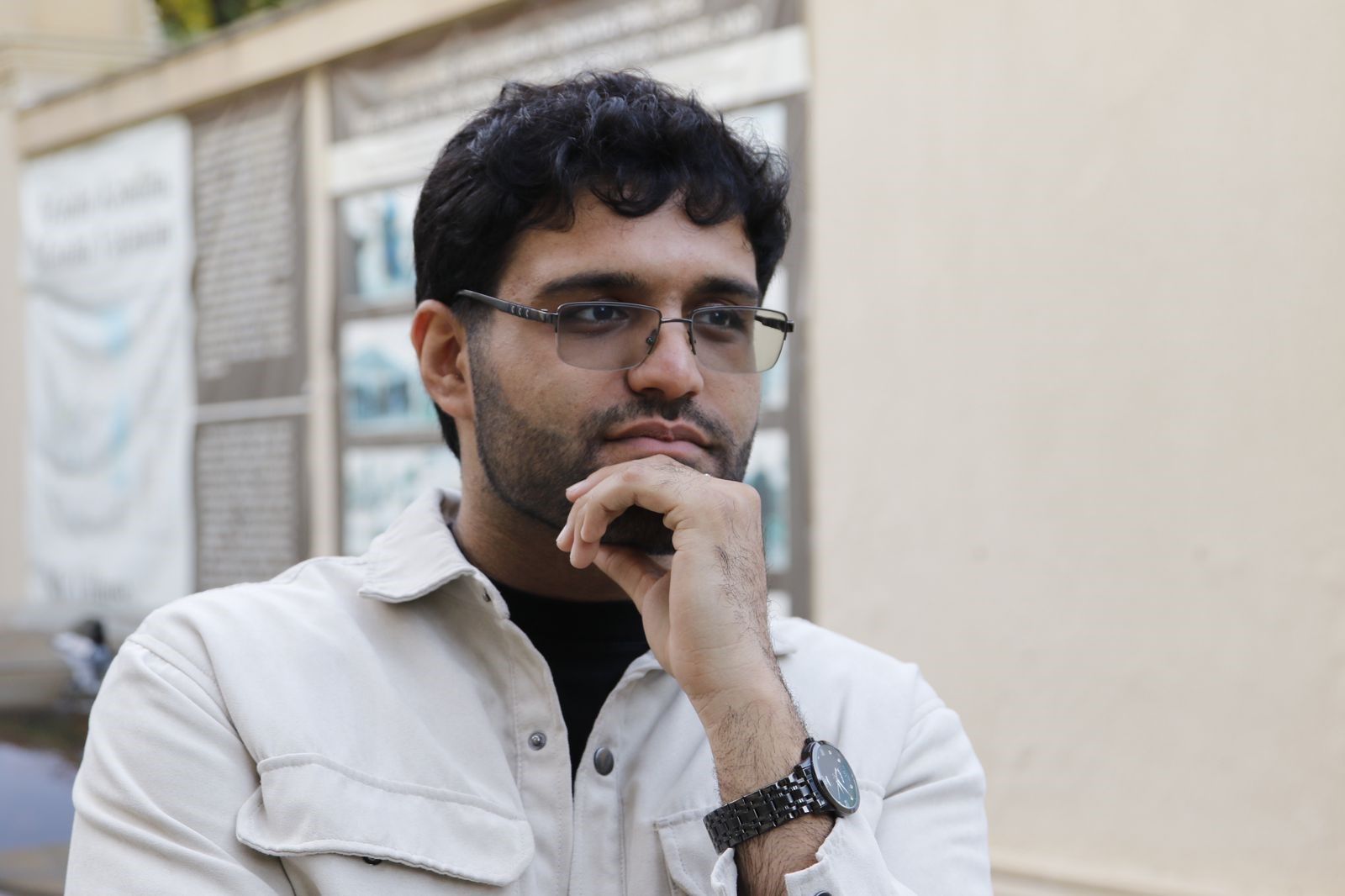
Akbar Novruz
Read moreThe issue of what students should wear at schools has become one of the most heated public debates in Azerbaijan today, going beyond questions of classroom conduct to the issues of secular education and religious freedom in Azerbaijan.
What began as a discussion about the implementation of school uniform regulations has increasingly acquired political dimensions, drawing reactions from religious commentators, political figures and even Azerbaijan's closest regional partner, Türkiye.
At the centre of this sensitive topic is a decision adopted by Azerbaijan's Cabinet of Ministers on September 21, amending the regulations governing uniforms in state general education institutions. Under Resolution No. 309, clothing elements that undermine the prescribed uniform or contradict the secular principle of general education are not permitted. The decision also allows traditional national clothing at school events dedicated to Azerbaijani history, culture, and national values, subject to approval by the school's Pedagogical Council.
The above-mentioned transformations were implemented after the adoption of a new version of the Law on General Education this year, where the principles of national identity and secularism were established. In addition, special regulations concerning teachers' clothes in state schools were approved on October 6.
The distinction is important in Azerbaijan, whose Constitution establishes the secular character of the state while protecting freedom of religion and conscience. Article 48 guarantees the right to profess a religion, or none, and to express religious beliefs. The central dispute therefore concerns how those protections interact with the specific rules governing public schools.
Amid the increasingly polarised discussion, another question has emerged: whether the debate should focus exclusively on religious clothing or also consider Azerbaijan's own traditions of modest dress, particularly the kelaghayi, the traditional silk headscarf recognised by UNESCO in 2014 as part of humanity's intangible cultural heritage.
Speaking to AzerNEWS, theologian Tural Irfan argued that the introduction of standard uniforms in Azerbaijan's secondary schools should be understood as a measure intended to protect equality, discipline and the secular character of education, rather than as a restriction on religious freedom:
"The introduction of a standard uniform in secondary schools not
only protects social equality but also corresponds to religious and
moral principles, as well as social requirements. Religion itself
emphasises equality, justice and modesty, including the importance
of avoiding excessive displays of wealth or status, even through
clothing. In this regard, we have sometimes observed two different
tendencies among secondary school students, particularly in the
upper grades. On the one hand, there has been a tendency towards
overly revealing clothing, while on the other, there has been a
tendency towards excessively restrictive forms of dress. In some
cases, these have gone beyond religious requirements and reflected
colours, symbols and clothing traditions associated more closely
with Arab or Persian national customs.
A fair and unified principle has therefore been adopted to bring
these different tendencies under a common standard. There is
nothing extraordinary about this. Similar practices exist in many
countries around the world, including Muslim-majority countries.
Different professions and institutions have their own uniforms,
whether in the military, aviation, public transport or other
sectors. Certain educational institutions also require specific
clothing."
Drawing a distinction between religious institutions and general secondary schools, Irfan maintained that the latter must operate according to a common set of rules, regardless of students' social backgrounds or religious affiliations:
"At the same time, religious clothing, including the hijab and other religious attributes, is used at the Azerbaijan Institute of Theology and the Baku Theological College because these are educational institutions with a religious orientation. Secondary schools, however, operate within a secular education system. Therefore, racial, national and religious distinctions should not be emphasised through clothing in a way that disrupts the common educational environment.
This is also a question of preserving unity and social equality. Some families are wealthy, while others have limited financial resources. One student may be able to afford expensive clothing, while another cannot. A common school uniform helps prevent these differences from becoming visible markers of social status and protects a shared standard. The school system and the educational process have their own particular requirements. Clothing should not become a means of attracting attention or displaying personal differences. Schools should not turn into places where students compete through their appearance or where different religious, ethnic or national attributes are displayed in ways that interfere with the general educational environment."
However, Irfan acknowledged that the controversy also reflects shortcomings in the way uniform requirements have been introduced and explained to the public.
"From the standpoint of these principles, including the religious values of unity, equality and social justice, I consider the introduction of a standard uniform entirely appropriate.
However, I believe that some of the dissatisfaction and the manipulation of this issue in different directions stem from shortcomings that were allowed to develop over time. Perhaps the decision itself was also introduced somewhat late. Because of these earlier gaps, people became accustomed to attending schools in different types of clothing. When stricter requirements are subsequently introduced, some naturally perceive them as restrictions on practices to which they have already become accustomed.
This is why serious public awareness efforts are necessary. Religious institutions, educational specialists, public organisations and theologians should explain the purpose of these regulations. People need to understand that we are not talking about a general ban on the hijab in Azerbaijan. There are many women who wear the hijab and freely participate in public life and perform their religious practices."
According to the theologian, greater public awareness is essential to preventing the school uniform debate from being interpreted as a broader confrontation between the state and religious communities.
"Azerbaijan has created conditions for the preservation of religion and national and moral values, in some respects to a greater extent than certain Muslim-majority countries. Religious communities have opportunities to practise their faith, and it would be unfair to disregard these realities.
Presenting the school uniform regulations as a nationwide hijab ban is, in my opinion, a form of manipulation influenced by external factors. Unfortunately, perhaps we have not communicated these realities to the public clearly enough. We have not sufficiently explained the distinction between regulations governing secular educational institutions and the broader freedom to practise religion. As a result, the issue is being interpreted in different ways, and people who do not fully understand the regulations may be misled.
A person attends school to receive an education. Outside school, that person can wear religious clothing, traditional national dress or other personal clothing. There is no question of a general prohibition."
Irfan also raised concerns about what he described as attempts by certain groups to exploit religious sensitivities for political purposes. He argued that such developments should be considered within the broader context of protecting Azerbaijan's secular constitutional order.
"It is also known that certain individuals and groups in Azerbaijan have been influenced by ideological movements originating in Iran and other countries. Some have studied abroad or received religious instruction from individuals associated with those environments. In my assessment, certain groups seek to promote foreign political ideologies under the cover of religion and use religious sensitivities to exert pressure on the state. Such activities can also become a challenge to the secular constitutional order.
Naturally, the relevant state institutions have responsibilities in addressing these concerns. At the same time, society and individuals must understand their own responsibilities towards the state and its institutions. The state itself guarantees the freedom of religious communities to exist and practise their beliefs. Therefore, I believe religious citizens also have a responsibility to respect and protect the constitutional order that makes these freedoms possible."
The theologian further suggested that the controversy could provide an opportunity to address existing shortcomings in religious education and communication between institutions and the public.
"Nevertheless, we should acknowledge that shortcomings in religious education and public communication have contributed to the emergence of such tensions. I hope that these developments will encourage a more comprehensive examination of the religious sphere, including the activities of religious communities, institutions and individuals who have received religious education abroad.
Questions concerning the nature of that education, the ideas being introduced into Azerbaijan and the compatibility of those ideas with our national traditions deserve serious attention. Addressing these matters could help strengthen Azerbaijan's own model of religious life, which has historically developed alongside traditions of tolerance and coexistence.
If that model is strengthened, it will become more difficult for external actors to exploit misunderstandings between religious citizens and state institutions."
Turning to the cultural dimension of the debate, Irfan highlighted the kelaghayi, Azerbaijan's traditional silk headscarf, as an example of how religious values and national traditions can coexist.
"Another important dimension concerns Azerbaijan's traditional national clothing. Although we describe these garments as national dress, they also reflect the religious beliefs and cultural practices that have existed in our region over different historical periods.
The kelaghayi, which is a traditional Azerbaijani headscarf for women, is an example of dignity, simplicity and elegance. In my view, it also corresponds to the religious principles associated with modest clothing.
Islam places importance on modesty in women's dress. Historically, certain forms of covering were also associated with protecting women from unwanted attention or potential dangers, particularly in the social circumstances of earlier centuries. Although women in modern Azerbaijan do not necessarily face those same circumstances, modest dress remains meaningful for many people because of their religious convictions.
I believe the kelaghayi embodies these values while also preserving our distinctive national identity. This is why public organisations, religious communities and cultural institutions should devote greater attention to promoting it."
He argued that the promotion of traditional Azerbaijani clothing could also help distinguish local cultural practices from forms of dress associated with other societies.
"We should ask why clothing associated with the national traditions of other countries is sometimes presented as the only appropriate expression of religious identity. Garments such as the niqab, chador and certain forms of full-body covering are also connected with particular Arab and Persian cultural traditions. Although covering the head is an important religious principle for many Muslims, these specific forms of clothing should not automatically be confused with a universal religious requirement.
Our own kelaghayi, in my opinion, represents a more progressive and contemporary expression of modest clothing while also incorporating the values that believers associate with their faith.
I therefore believe that religious organisations, public institutions and cultural associations should actively promote the kelaghayi, not merely as an item of clothing but as a shared symbol of national and spiritual identity. It represents a connection between our cultural traditions and religious heritage."
For Irfan, preserving the kelaghayi tradition could also serve as a response to claims that Azerbaijan's secular education policies are incompatible with religious expression.
"Promoting this tradition would also provide an answer to allegations that Azerbaijan is hostile to religious clothing or religious expression. It would demonstrate that we support the preservation of religious life in forms consistent with our national and moral values.
In fact, Azerbaijan has established favourable conditions for religious practice. We have the Azerbaijan Institute of Theology and the Baku Theological College, where students receive religious education and may wear religious clothing, including the hijab, or maintain beards in accordance with their beliefs. We also have numerous places of worship where believers freely perform their religious rituals while wearing the clothing they consider appropriate.
However, we should not confuse these settings with general secondary schools. Schools, like military institutions and certain professional environments, have specific clothing requirements. These standards are necessary for discipline, order, cleanliness and social equality."
Concluding his assessment, the theologian reiterated that he regarded the controversy as a question of educational standards rather than religious prohibition, while again warning against the political exploitation of religious sentiments.
"Unfortunately, the issue has been manipulated. I believe certain external ideological influences are attempting to exploit the religious feelings and limited understanding of some believers to advance political interests and create pressure on the state.
This is not a question of restricting religion. On the contrary, I would emphasise once again that the introduction of a standard uniform in schools can also help address other problems within the educational environment.
Previously, there were situations in which students attended school in widely differing clothing, sometimes attracting unnecessary attention or creating difficulties associated with appearance and social differences.
A unified uniform helps protect social equality and maintain educational standards. Equality is also one of the fundamental values emphasised in religion. For these reasons, I believe the school uniform regulations are consistent with both the requirements of secular education and the broader principles of fairness and social responsibility."
Here we are to serve you with news right now. It does not cost much, but worth your attention.
Choose to support open, independent, quality journalism and subscribe on a monthly basis.
By subscribing to our online newspaper, you can have full digital access to all news, analysis, and much more.
You can also follow AzerNEWS on Twitter @AzerNewsAz or Facebook @AzerNewsNewspaper
Thank you!