
Trump’s energy pragmatism risks handing Moscow another financial lifeline

Akbar Novruz
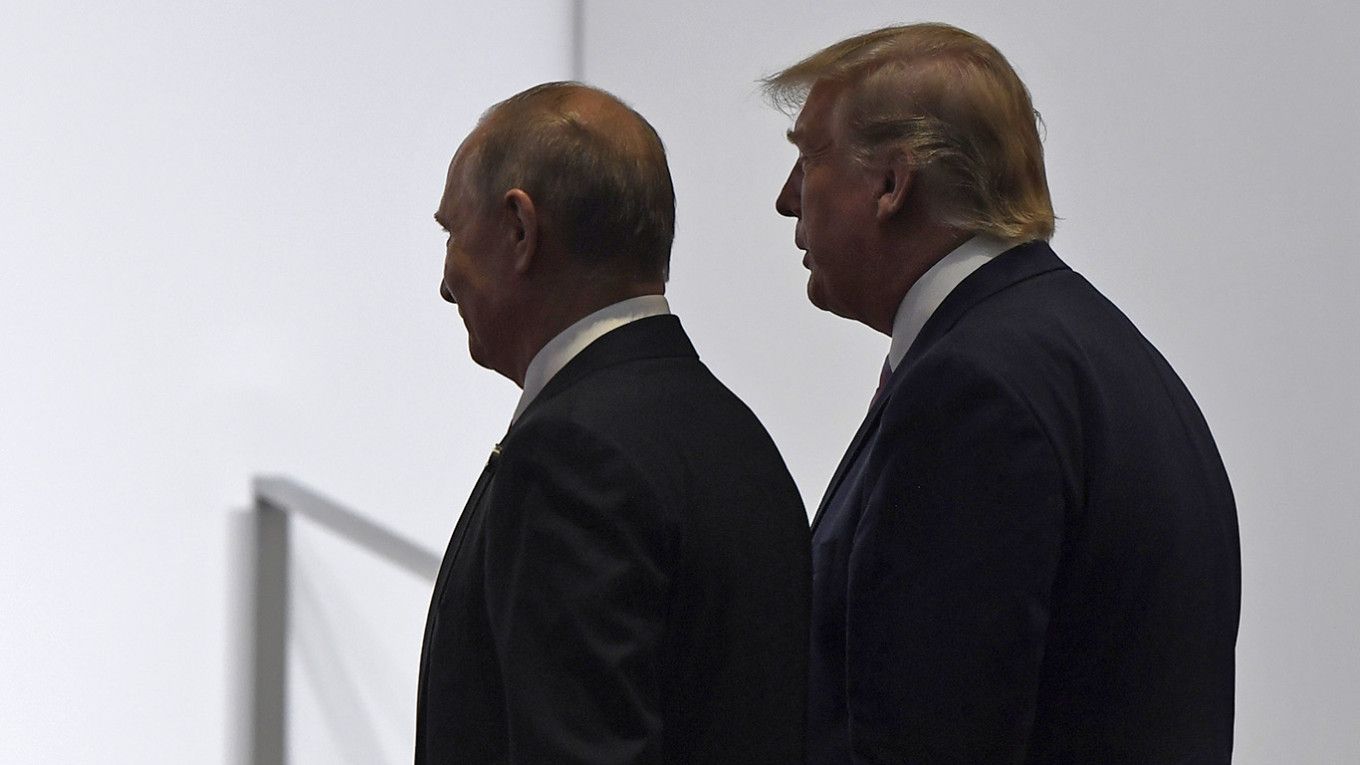
Read morePresident Donald Trump’s decision to ease sanctions on Russian diesel exports reflects political processes driven by energy prices, domestic economic pressure and the November 2026 midterm elections. By opening the door to additional Russian fuel supplies, Trump hopes to ease pressure on American consumers, farmers and transport companies. Diesel is essential to freight transportation and agricultural production, making its price a direct influence on food costs and the wider economy. With geopolitical tensions disrupting energy markets, the White House is seeking an immediate economic benefit. However, the decision also creates an opportunity for Moscow to earn additional revenue while its war against Ukraine continues.
The scale of the proposed supplies raises questions about the agreement’s practical value. Ukrainian President Volodymyr Zelensky has argued that Russian diesel exports of approximately 300,000–500,000 tonnes per month represent around 0.3% of global monthly diesel consumption, estimated at 120 million tonnes. The figures translate into roughly 0.25–0.42%, depending on the export volume. Such deliveries may influence prices at the margin, yet their capacity to transform the global market remains limited. For Moscow, meanwhile, every additional export opportunity brings revenue that can support the state budget and its military campaign. The arrangement therefore presents a striking imbalance between its potential economic impact and its wider strategic significance.
Events surrounding Trump’s subsequent announcement of an energy ceasefire further complicate the picture. On October 11, Trump declared that Russia and Ukraine had agreed to halt attacks on energy infrastructure. Ukrainian officials reported continued Russian strikes, including an attack on an energy facility near Kharkiv. Zelensky indicated that Ukraine was prepared to suspend attacks on Russian energy sites if Moscow reciprocated. The episode illustrates the difficulty of turning diplomatic announcements into practical restraint on the battlefield. Energy infrastructure remains a central instrument of Russia’s campaign, while Ukrainian strikes against Russian refineries provide Kyiv with leverage against Moscow’s energy revenues. (Associated Press)
Against this background, the European Union’s October 12 sanctions decision represents a different strategic approach. The bloc approved its largest-ever round of listings against Russia’s military-industrial complex, targeting 1,569 individuals and entities, including 826 companies and 743 executives. The measures seek to restrict the networks supplying components and equipment for missiles, drones, aircraft and other weapons. Their purpose is to increase production costs, complicate procurement and constrain Russia’s access to advanced technology. While Trump seeks immediate relief in energy markets, Europe is applying sustained pressure to the industrial foundations of Russia’s war effort.
Nevertheless, Russian media present these developments through a different lens, through which their messaging frequently portrays European sanctions as self-inflicted economic damage and suggests that assistance to Ukraine is leaving ordinary Europeans poorer. In addition, student demonstrations in France and protests elsewhere in Europe are used to reinforce a narrative of public exhaustion, with economic grievances presented as evidence that European societies are paying an unbearable price for supporting Kyiv. Such coverage directs attention towards European divisions while emphasising the costs of Western policy. Yet protests are an ordinary feature of democratic political life. Students demonstrate over education funding, workers protest economic reforms, and voters challenge their governments over public spending. These events demonstrate the openness of political debate, while their existence alone offers limited evidence about the future of European support for Ukraine.
Consider the argument promoted by Russian media: Europe will eventually become too weak to continue supporting Ukraine. The available economic and demographic figures offer a different perspective. In 2025, the European Union had approximately 451 million residents and a GDP of $21.24 trillion, compared with Russia’s population of around 144 million and GDP of $2.56 trillion. The EU therefore had roughly 3.1 times Russia’s population and an economy approximately 8.3 times larger. GDP per capita also highlights the difference in economic resources, standing at about $47,089 in the EU against $17,547 in Russia. Military expenditure adds another important dimension: SIPRI estimated Russia’s 2025 spending at $190 billion, equivalent to 7.5% of its GDP, while total military spending across Europe reached $864 billion. These figures represent different economic and political structures, and aggregate spending does not automatically translate into unified military power. However, they demonstrate the scale of Europe’s potential industrial, technological and financial resources.
Even under a scenario in which European military assistance declines, Ukraine today has capabilities that distinguish it from the country that entered the full-scale war in 2022. Its defence industry has expanded domestic missile and drone development, giving its armed forces additional ways to strike military infrastructure and disrupt Russian logistics. The Neptune cruise missile programme, longer-range strike systems, the Flamingo cruise missile and a rapidly evolving drone sector illustrate this progress. On October 1, Zelensky announced the first combat use of the domestically developed FP-7 tactical ballistic missile. Ukrainian reporting describes the system as having a range of up to 250 kilometres and a warhead of approximately 200 kilograms, although its production scale and operational effectiveness will require further evidence.
Ukraine continues to benefit from foreign weapons, intelligence, air defence, financing and ammunition. Its expanding domestic production, however, provides greater flexibility and strengthens its ability to sustain resistance over time. Every successful production programme creates another option for Ukrainian commanders and increases the cost Russia faces in maintaining its campaign.
Trump’s diesel decision, Europe’s sanctions and Ukraine’s industrial development therefore belong to the same strategic contest. Moscow seeks revenue, military endurance and divisions among its opponents. Europe possesses the economic and industrial resources to maintain long-term pressure, while Ukraine is developing an increasingly important domestic defence base. The outcome will depend on political coordination, industrial capacity and battlefield adaptation. Russia’s strategy benefits when its opponents underestimate their own resources; Europe and Ukraine shape the future of this war by turning those resources into sustained action.
Photo credit: Moscow Times
Here we are to serve you with news right now. It does not cost much, but worth your attention.
Choose to support open, independent, quality journalism and subscribe on a monthly basis.
By subscribing to our online newspaper, you can have full digital access to all news, analysis, and much more.
You can also follow AzerNEWS on Twitter @AzerNewsAz or Facebook @AzerNewsNewspaper
Thank you!