
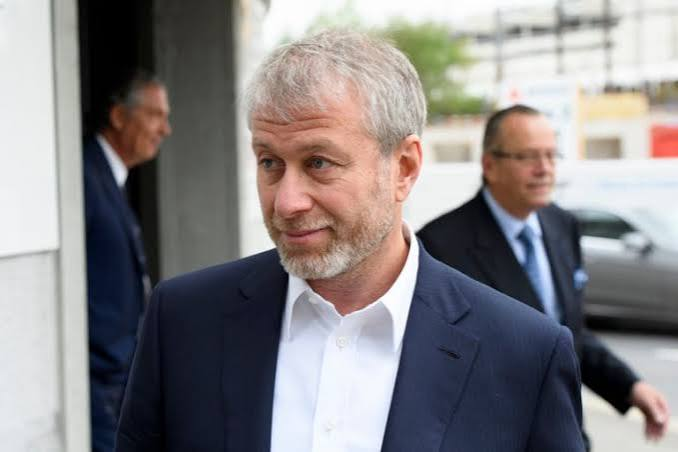
Deloitte implicated in alleged scheme to conceal Abramovich's fortune and evade taxes
Akbar Novruz
Read moreDeloitte's Cyprus operations helped produce financial accounts that concealed hundreds of millions of dollars in assets belonging to Russian billionaire Roman Abramovich and allegedly facilitated a tax evasion scheme involving falsified documents, according to an investigation by BBC Panorama and the Bureau of Investigative Journalism.
The investigation, based on leaked records from a network of offshore companies, found that assets worth approximately $672 million (£508 million), including luxury properties, superyachts and private aircraft, disappeared from the accounts of one of Abramovich's Cypriot companies after documents were backdated to show that the assets had been transferred years earlier.
The findings raise questions about the role of professional accounting and corporate services firms in managing the offshore fortunes of wealthy individuals.
Abramovich's lawyers denied that he concealed his wealth or evaded taxes, maintaining that the investigation had not established that he knew about, authorised or directed the falsification of documents.
Deloitte Cyprus said it “acts in compliance with applicable laws”.
Luxury assets disappear from company accounts
According to the BBC investigation, the arrangements involved Amiscan Investments, a Cyprus-based company linked to Abramovich's business empire.
Draft financial statements prepared by Deloitte Cyprus for 2003 listed approximately $672 million in luxury assets, including a mansion in West Sussex, a London apartment, an estate in southern France, helicopters, private jets and several yachts.
Among the vessels was the Pelorus, valued at approximately $147.5 million.
However, a change in Cypriot legislation requiring company accounts to become publicly accessible threatened to expose the holdings.
The investigation found that Abramovich's associates and MeritServus, a corporate services firm based in Limassol, subsequently arranged for the assets to be transferred on paper to Amiscan's parent company in the British Virgin Islands.
The documents were allegedly backdated by three years to make the transfers appear to have occurred in 2003.
Deloitte Cyprus reviewed the backdated paperwork and concluded that it was “adequate” to justify removing the assets from Amiscan's accounts, according to the leaked correspondence.
When Deloitte signed off the company's 2003 financial statements in 2006, the previously recorded luxury holdings had disappeared, leaving just $75,000 in reported assets.
The BBC reported that internal documents indicated Deloitte was aware of the circumstances surrounding the backdating.
Lord Sikka, a professor of accounting at the University of Sheffield, described the alleged misrepresentation of transaction dates as a “violation of a statutory duty” and “pretty scandalous”.
Alleged tax scheme involving nearly $2 billion
The investigation also uncovered documents concerning Kravin Investments, another Cypriot company associated with Abramovich.
In 2003, Kravin reportedly held almost $2 billion in bank deposits, generating substantial interest income that could have attracted taxation in Cyprus.
According to leaked correspondence, an alternative arrangement was developed following discussions involving Deloitte and MeritServus.
An August 2005 email from MeritServus to Abramovich's associates in Russia outlined the proposed changes.
“If you agree, it will be necessary to change the financial statements and the accounting records accordingly for 2003 and 2004,” the email stated.
The proposal involved changing the financial records to suggest that Kravin did not own the deposited funds but merely held and invested them on behalf of its British Virgin Islands parent company.
Under that arrangement, the interest income would be attributed elsewhere, potentially removing Kravin's liability to pay tax on the earnings in Cyprus.
A Russian associate subsequently responded to the proposal with the words: “I agree”.
MeritServus then prepared backdated documents that purported to establish the revised ownership arrangement.
Andrew Mitchell KC, a barrister specialising in financial services law, told Panorama that the evidence demonstrated “straightforward” tax evasion, adding that “it couldn't be more blatant”.
The BBC's findings concern alleged misconduct documented in leaked records; they do not establish that Abramovich personally instructed the preparation of the disputed paperwork.
Offshore network under scrutiny
The investigation draws on thousands of documents detailing the operation of Abramovich's offshore business network between 1995 and 2022.
Much of the network was administered through MeritServus, a Cyprus-based corporate services provider formerly owned by Deloitte until 2005.
Although the firms subsequently separated, the investigation found that they continued working closely with Abramovich's associates.
The documents form part of the wider Cyprus Confidential investigation, an international reporting collaboration involving the International Consortium of Investigative Journalists and several media organisations.
Abramovich became one of the most prominent Russian businessmen in Britain after acquiring Chelsea Football Club in 2003.
Following Russia's full-scale invasion of Ukraine in 2022, the British government imposed sanctions on him over his alleged links to President Vladimir Putin, and he was subsequently forced to sell the club.
Approximately £5.4 billion of his assets remain frozen in Jersey, where authorities have been conducting a separate criminal investigation.
Abramovich's lawyers have denied allegations connected to that investigation and described it as politically motivated.
The latest revelations add to scrutiny of the accounting and corporate services industry, particularly the extent to which professional advisers should be held accountable when financial structures are allegedly used to obscure beneficial ownership or reduce tax liabilities through misleading documentation.
While the investigation identifies evidence of backdated records and disputed accounting practices, the legal responsibility of the parties involved remains a matter for the relevant authorities and courts.
Here we are to serve you with news right now. It does not cost much, but worth your attention.
Choose to support open, independent, quality journalism and subscribe on a monthly basis.
By subscribing to our online newspaper, you can have full digital access to all news, analysis, and much more.
You can also follow AzerNEWS on Twitter @AzerNewsAz or Facebook @AzerNewsNewspaper
Thank you!