
Azerbaijan’s school uniform debate: religious freedom or an instrument of provocation?
By Farman Aydin | AzerNEWS
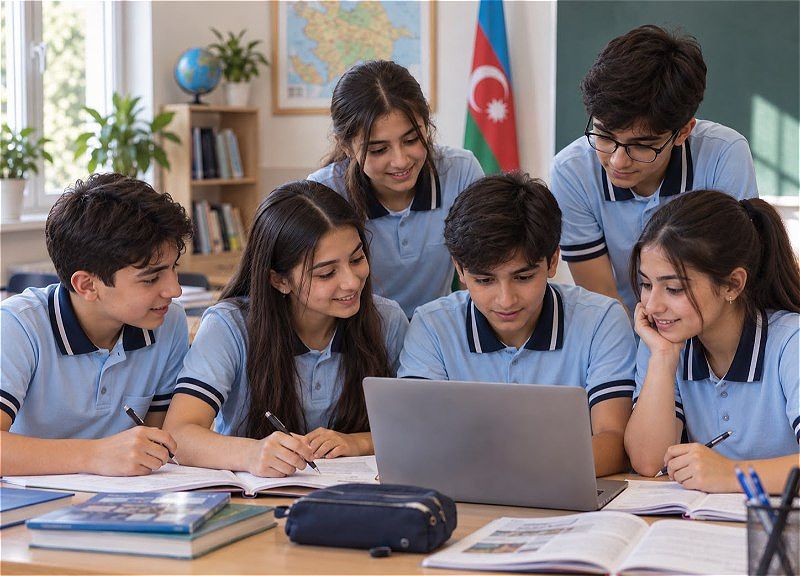
In recent days, the issue of the hijab, or headscarf, in Azerbaijani schools has prompted considerable public debate and attracted international attention. The discussion intensified following a state decision concerning the legal framework for a uniform school dress code. Images and accounts circulating on social media, alleging that girls wearing headscarves had faced pressure at school, added to the controversy. Such claims warrant careful examination, with a clear distinction between verified facts and allegations.
Azerbaijan is situated in a region where questions of religion, identity and secular governance carry considerable social significance. It is therefore unsurprising that discussions about religious expression in educational institutions can generate strong public reactions. However, the debate extends beyond religious freedom, raising broader questions about education policy, institutional responsibilities and the balance between individual expression and common standards in schools.
Internationally, the hijab has become part of wider debates about individual rights, secularism and the role of the state. Religious groups frequently cite Western countries as examples of societies where headscarves are accepted. Yet legal approaches vary considerably across the West. Comparisons with Azerbaijan should therefore take account of the country's own legal framework, educational priorities and social circumstances, rather than assuming that policies adopted elsewhere can be applied universally.
So why is attention being paid to such incidents in Azerbaijan and, in particular, in Central Asian countries? First of all, the law adopted in Azerbaijan is not directed against the general wearing of headscarves or hijabs in the country. As is known, the uniform school dress code in Azerbaijan is regulated by Cabinet of Ministers Decision No. 96 and Decision No. 309 of 21 September 2026 (source: E-Qanun). Under this law, the emphasis is placed on ensuring that pupils attend primary and secondary schools in a uniform or standard school outfit, and that teachers also attend lessons in standard attire, thereby promoting public equality and the establishment of discipline and order. Of course, just as in military units, a uniform plays an important role in getting children accustomed to discipline from an early age and in shaping education and upbringing within society. This decision adopted by the state not only prevents people in the country from legalising things according to their own wishes, but also prevents elements of looking down on one another from emerging among people.
At the beginning of my article, I mentioned that Azerbaijan and its neighbouring regions are located in a geographical area characterised by religious sensitivity. Yes, this sensitivity is the result of a number of so-called religious entities that have been attempting to export themselves to Azerbaijan for many years. For years, such propaganda has been conducted in various regions of Azerbaijan under the name of religion, but in reality it has been directed against the state and statehood. As a result of this propaganda, which has primarily targeted the religious segment of society, a number of people have formed groups and established their own particular religious beliefs, gradually increasing in number and beginning to influence those around them as well.
One parent says that, at a time when pupils wearing hijabs once constituted the majority at a school in one of the provincial areas, their child was isolated and subjected to pressure. The parent notes that wearing the hijab was becoming so widespread that people looked down on their daughter for having her head uncovered and even turned this into a matter of moral depravity. Yet, although religion and the hijab may be regarded as commands from Allah, the Holy Qur'an states that people should embrace them willingly, rather than under compulsion. However, when we look at the overall course of events, those seeking to bring the hijab issue in the country into public debate at both state and global levels are becoming increasingly visible against the backdrop of external influences and provocative actions.
As for Western countries regarded as free, the issue of religious movements and threats has long been settled in that part of the world. This is because the formation of societies sometimes requires decades or even centuries before their free choices can meet certain requirements. By way of comparison, I can say that Azerbaijan is today presented to the world as an example and one of the genuine centres of religious tolerance. There is neither violence nor pressure in the country against Muslims or non-Muslims. This once again demonstrates that the thinking and mentality of both the state and society have long been rooted in pure and healthy traditions. Because Azerbaijan is not only a secular state but also one of the principal centres of Islamic civilisation, and it demonstrates profound solidarity and support for Muslim countries through both bilateral and multilateral platforms.
Azerbaijan has been an active member of the Organisation of Islamic Cooperation since 1991, and over these 35 years of cooperation, it has not lagged in providing political, economic, and humanitarian support to Muslim countries. For example, in accordance with United Nations resolutions, Azerbaijan openly supports the establishment of an independent Palestinian state internationally, in line with the two-state principle. At the same time, material and humanitarian assistance is regularly provided by Baku to ensure that the civilian population in Palestine does not suffer from the humanitarian crisis. In addition, whenever earthquakes, floods and other natural disasters occur in Muslim countries, the Azerbaijani state has always been among the first to respond. The deployment of rescue teams, the establishment of field hospitals and the provision of financial assistance have consistently been important indicators of this policy of brotherhood.
At the same time, Azerbaijan has played a unifying role as a mediator, helping prevent misunderstandings and confrontations that have sometimes arisen between various Muslim countries. President of Azerbaijan Ilham Aliyev has made important statements on global platforms to bring the Muslim world together as one family and prevent attacks on Islam from both within and outside the religion.
“Everyone knows very well how great our efforts are to strengthen Islamic solidarity, and we also play a unifying role in this regard,” President Ilham Aliyev emphasised in his speech at the 8th Congress of the New Azerbaijan Party (YAP).
Thus, the hijab or headscarf issue, which has been turned into an argument in Azerbaijan, once again demonstrates that the real purpose and principle behind it is not religious freedom, but rather provocations directed against the state by distracting public attention. If a schoolchild does not learn order and discipline from an early age, questions arise about what kind of example that child will set for society in the future. It is certainly not a sin for a girl under pubertal age attending primary school not to wear a hijab, but for a parent to deliberately put their child in confrontation with the laws of the state, thereby creating a public uproar, whether knowingly or unknowingly, is a serious mistake.
Here we are to serve you with news right now. It does not cost much, but worth your attention.
Choose to support open, independent, quality journalism and subscribe on a monthly basis.
By subscribing to our online newspaper, you can have full digital access to all news, analysis, and much more.
You can also follow AzerNEWS on Twitter @AzerNewsAz or Facebook @AzerNewsNewspaper
Thank you!