
Azerbaijan’s 3 GW solar plan brings manufacturing into its green energy push

Qabil Ashirov
Read moreThe solar panel manufacturing project launched in Alat, Azerbaijan, is bringing a new dimension to the country’s energy transformation. The construction of three production facilities across a 23-hectare area is creating new manufacturing opportunities for Azerbaijan’s green energy industry. In the initial phase, the project is planned to have an annual solar panel production capacity of 3 GW, or 3,000 MW. This capacity creates significant industrial potential for Azerbaijan to develop into a regional production and export hub for solar energy technologies.
China’s Sichuan Sunsync Photovoltaic Technology is constructing three production facilities in the Alat Free Economic Zone. A 23-hectare site has been allocated for the project, with the facilities scheduled to be commissioned in stages in 2027. The annual production capacity will stand at 3 GW. This figure is equivalent to 3,000 MW. Alongside solar panels, the project also envisages the production of silicon crystals and various components. A significant share of the products is planned for export to global markets.
The scale of the project becomes clearer when the 3 GW production capacity is viewed against Azerbaijan’s energy landscape. The country is steadily implementing solar and wind power projects with capacities reaching hundreds of megawatts. Once the Alat plant reaches its planned annual production capacity of 3,000 MW, it can serve Azerbaijan’s domestic market while creating a major industrial platform for exports.
An even more significant figure is 10 GW. When the project was discussed in June, it was stated that production capacity could be increased to 10 GW in future phases. A capacity of 10 GW is equivalent to 10,000 MW of industrial potential. This scale could provide a strong foundation for Alat to develop into a regional hub for solar energy technologies.
A particularly important aspect of the project for Azerbaijan’s economic strategy is exports. A significant share of the Alat plant’s output is planned for international markets. This gives the project an economic model built around three functions: Azerbaijan as a manufacturing base, a logistics platform and an export hub.
Alat’s geographic position provides an additional advantage. The Free Economic Zone, the Port of Baku, the Middle Corridor across the Caspian Sea and access to European markets converge in this location. This creates a strong logistics base for transforming Chinese technology into manufacturing in Azerbaijan and subsequently exporting the products to various destinations.
Another major advantage of the project is the expansion of the local value chain. When solar panels are imported as finished products, a large share of the economic value is generated in the manufacturing country. Under a manufacturing model in Azerbaijan, industrial facilities, employment, logistics, technical services, component manufacturing, energy supply and export operations become part of the same economic ecosystem.
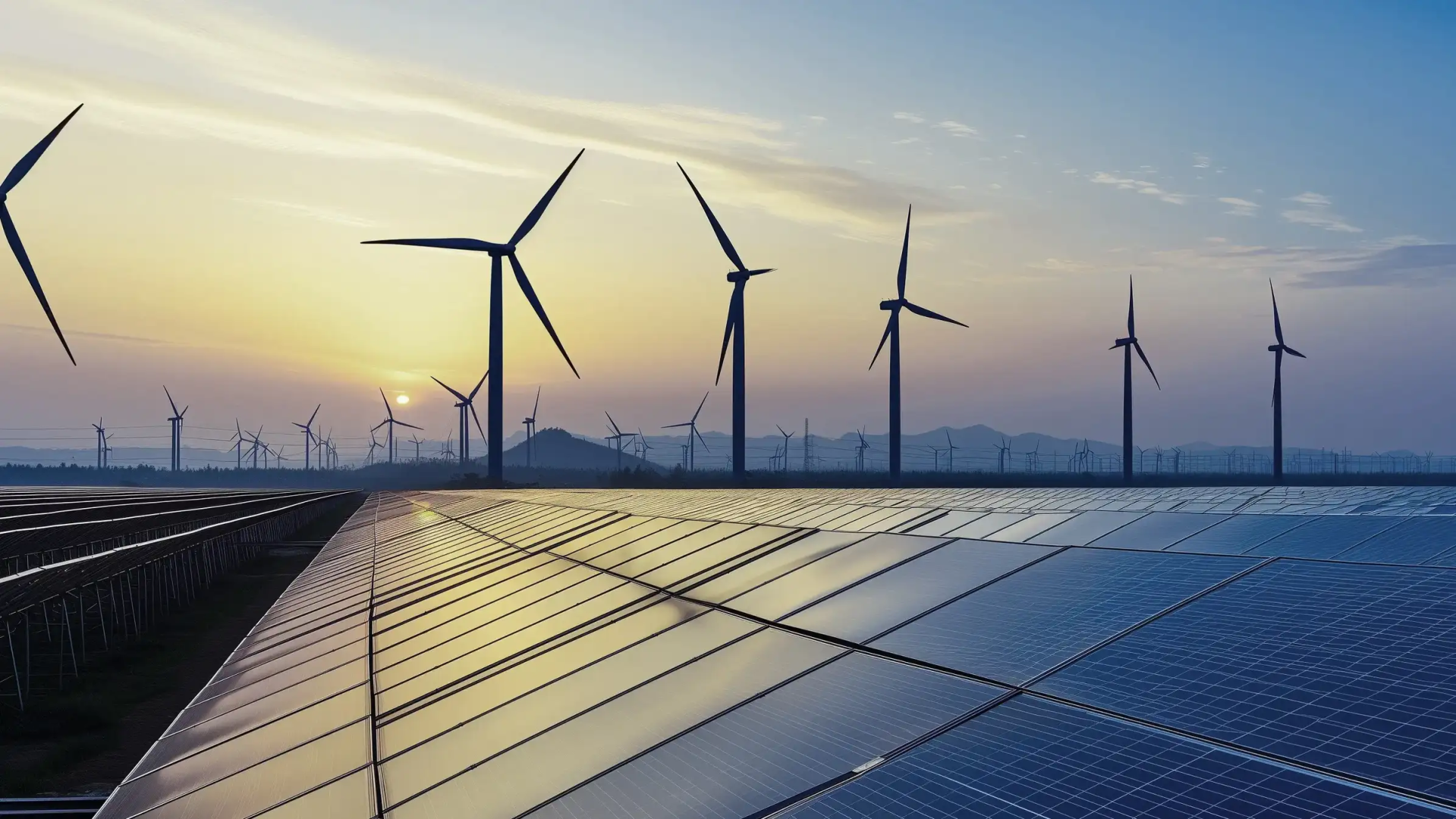
The project’s future direction is also broader. Discussions are underway in the Alat Free Economic Zone on the production of components such as wind turbine blades and towers. Energy storage system manufacturing is also identified as a strategic priority. Solar panels, wind turbine components and energy storage systems together could form an industrial base for green energy in Azerbaijan.
Each of these three areas represents a major market in its own right. Together, they can create a broader industrial ecosystem. Solar panels provide key equipment for electricity generation. Local production of wind turbine components could reduce transportation costs for large-scale equipment. Energy storage systems, meanwhile, can facilitate the more flexible integration of solar and wind power into the electricity grid.
The Sunsync project is also backed by significant Chinese industrial capacity. The company’s assets are reportedly worth around $1.7 billion. Sunsync specializes in the research and manufacturing of high-efficiency crystalline silicon solar cells.
For Azerbaijan, the major strategic outcome is the convergence of energy and industry in one location. Over the years, the country has directed opportunities generated by energy exports toward the development of new industrial sectors. The next stage of this process places the manufacturing of green energy technologies at the forefront.
A 23-hectare site, three production facilities, an initial capacity of 3 GW, a future prospect of 10 GW, a company with $1.7 billion in assets and a global export target. These figures illustrate the scale of the Alat project.
The broader objective extends beyond a 3 GW plant: connecting Azerbaijan’s transition to green energy with a value chain encompassing equipment, technology, manufacturing and exports. If Alat becomes the first major link in this model, a new industrial hub could emerge on Azerbaijan’s energy map.
From this perspective, construction launched in Alat can be viewed as more than an individual plant project. It can represent the 23-hectare starting point of Azerbaijan’s next stage of industrial development.
Here we are to serve you with news right now. It does not cost much, but worth your attention.
Choose to support open, independent, quality journalism and subscribe on a monthly basis.
By subscribing to our online newspaper, you can have full digital access to all news, analysis, and much more.
You can also follow AzerNEWS on Twitter @AzerNewsAz or Facebook @AzerNewsNewspaper
Thank you!