
Tehran slams EU for re-imposition of sanctions
By Sara Rajabova
Tehran has criticized the European Union for putting the country’s biggest tanker firm back on its sanctions list.
An Iranian official assessed the EU’s move as a politically motivated move, noting that the decision runs counter to the ongoing talks over Tehran’s nuclear program.
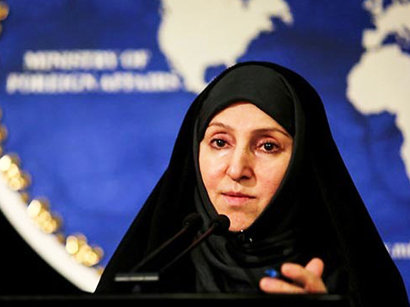
“We consider the EU move to re-impose sanctions on the National Iranian Tanker Company as politically-motivated, non-constructive, against the good will trend and in contravention of the ongoing nuclear talks,” Marzieh Afkham, Foreign Ministry Spokeswoman said on February 18, Press TV reported.
The EU re-imposed sanctions against NITC and Iranian businessman Gholam Hossein Golparvar on February 12. An EU working group decided to add the NITC to the sanctions list again even though an EU high court had ruled last year against blacklisting the company.
Afkham described the EU move as “regrettable,” saying Iran expected the other party to the nuclear talks to refrain from measures that would undermine mutual trust.
The EU move to put back the Iranian company on its sanctions list comes as Iran and the P5+1 group of countries – Russia, China, France, Britain, the U.S. and Germany – are seeking to reach a high-level political agreement by April 1 and to confirm the full technical details of the accord by July 1.
Since an interim deal was sealed in the Swiss city of Geneva in November 2013, the negotiating sides have missed two self-imposed deadlines to ink a final comprehensive agreement over Tehran’s nuclear program.
The EU’s second-highest court ruled in July 2014 that there were no grounds to blacklist the NITC after it contested the designation. The EU General Court had also annulled sanctions against Golparvar and some other Iranian businessmen in December 2013, saying the listings were legally faulty.
NITC - a major transporter of Iran's oil - contested the EU's original blacklisting last year, arguing that the firm is privately owned by Iranian pension funds. It has denied any links with the Iranian government or with the Revolutionary Guards.
At the beginning of 2012, the U.S. and EU imposed sanctions on Iran’s oil and financial sectors with the goal of preventing other countries from purchasing Iranian oil and conducting transactions with the Central Bank of Iran.
In October 2012, EU foreign ministers reached an agreement on another round of sanctions against Iran over its nuclear program.
--
Sara Rajabova is AzerNews’ staff journalist, follow her on
Twitter: @SaraRajabova
Follow us on Twitter @AzerNewsAz
Here we are to serve you with news right now. It does not cost much, but worth your attention.
Choose to support open, independent, quality journalism and subscribe on a monthly basis.
By subscribing to our online newspaper, you can have full digital access to all news, analysis, and much more.
You can also follow AzerNEWS on Twitter @AzerNewsAz or Facebook @AzerNewsNewspaper
Thank you!