
Maestro Niyazi's contribution to country's professional conducting school

Laman Ismayilova
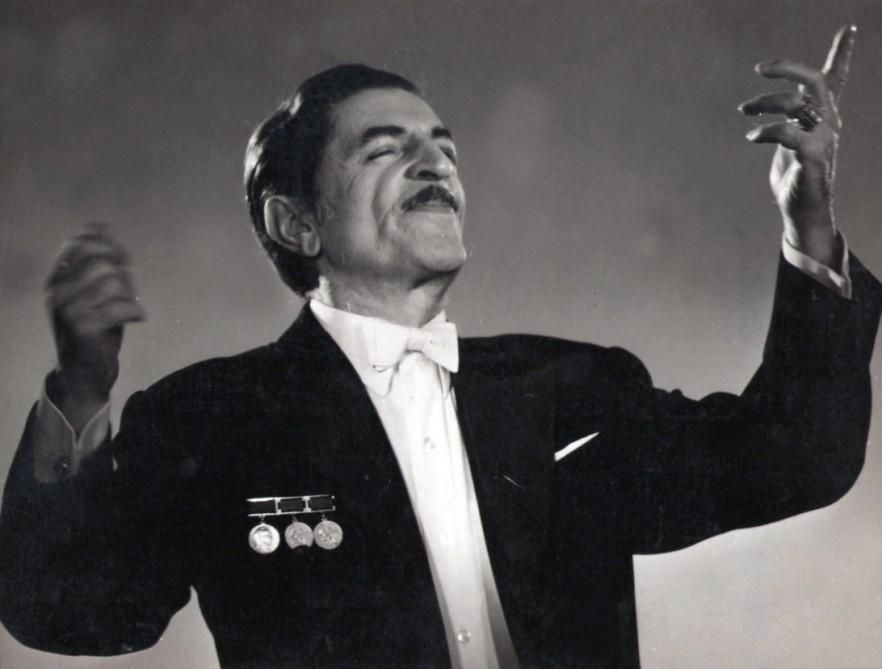
Read moreThis year marks the 114th anniversary of the birth of renowned Azerbaijani conductor and composer Niyazi Taghizade-Hajibayov. His name became inseparable from the development of Azerbaijan's professional conducting school.
Born on August 20, 1912, in Tbilisi, Niyazi grew up in a family where music was part of everyday life. His father, composer Zulfugar Hajibeyov, and his uncle, the great composer Uzeyir Hajibayli, had a profound influence on his early years. Niyazi's childhood was surrounded by melodies, performances and conversations about music, creating the foundation for a career that would later take Azerbaijani music to major stages around the world.
His musical education began in Baku before continuing in Moscow and Leningrad. From an early age, Niyazi showed a particular interest in conducting. He gradually developed a style of his own, combining the traditions of Azerbaijani music with the discipline and scale of the European symphonic tradition.
One of the important moments in his career came in 1938, during the Days of Azerbaijani Art in Moscow. Niyazi conducted Uzeyir Hajibeyli's "Koroghlu" and Muslim Magomayev's "Nargiz", performances that helped establish his reputation as one of the leading conductors of his generation.
For decades, Niyazi was closely connected with the Azerbaijan State Symphony Orchestra. Under his direction, the orchestra performed works by Azerbaijani and international composers and accompanied some of the country's most celebrated singers, including Bulbul, Rashid Behbudov, Muslim Magomayev and Lutfiyar Imanov.
But Niyazi's legacy extends far beyond the conductor's podium. He was also a composer whose works occupy an important place in Azerbaijan's musical heritage. His opera "Khosrov and Shirin," ballet "Chitra", and, above all, the "Rast" symphonic mugham demonstrated his ability to bring together the deep roots of Azerbaijani mugham with the possibilities of the symphony orchestra.
The "Rast" symphonic mugham remains one of Niyazi's most celebrated works. In it, the traditional sound of Azerbaijani mugham takes on a broad orchestral character, creating music that is at once deeply rooted in national culture and accessible to audiences beyond Azerbaijan.
Niyazi also believed that music should reach people beyond concert halls. He took part in organizing concerts and musical events in different parts of Azerbaijan, including Shusha, Khankandi, Agdam, Agjabadi and Barda. Through these activities, he helped bring symphonic music closer to wider audiences and encouraged interest in classical music among younger generations.
His reputation also crossed Azerbaijan's borders. Niyazi conducted orchestras in Prague, Berlin, Budapest, Bucharest, New York, Paris, Istanbul and London, introducing international audiences to Azerbaijani composers and demonstrating the richness of the country's musical tradition.
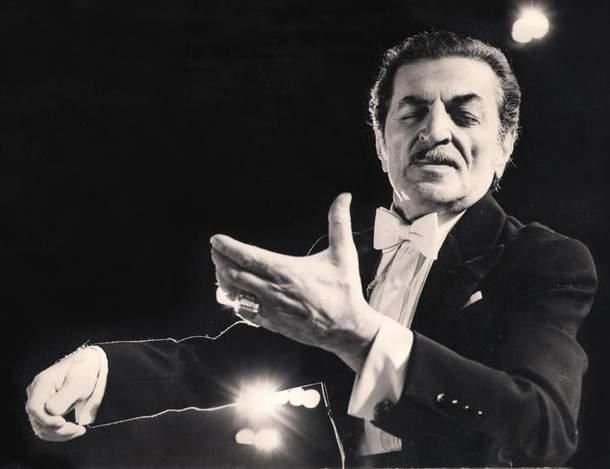
His artistic personality was as distinctive as his music. Niyazi was known for his expressive conducting style and strong presence on stage. His appearance also became memorable: while conductors traditionally appeared in formal tailcoats, Niyazi became known for wearing a white turtleneck beneath his concert attire, a look that became closely associated with the maestro.
Throughout his career, Niyazi received numerous honors for his contribution to music. He was named People's Artist of the USSR and later received the title of Hero of Socialist Labour. His ballet "Chitra" also earned him the Jawaharlal Nehru International Award.
Niyazi passed away in Baku on August 2, 1984, and was buried in the Alley of Honor. Yet his death did not bring an end to his musical journey. His recordings continue to be heard, his compositions remain part of the repertoire, and his interpretation of Azerbaijani music continues to influence musicians and conductors.
His former home in Baku was later turned into the Niyazi House-Museum, where manuscripts, photographs, books, musical scores, recordings and personal belongings preserve memories of the maestro's life.
More than a century after his birth, Niyazi remains a symbol of Azerbaijan's musical identity.
His baton did more than lead an orchestra: it connected mugham with the symphonic tradition, carried Azerbaijani melodies across borders and helped give the country's classical music a distinctive voice on the world stage.
Here we are to serve you with news right now. It does not cost much, but worth your attention.
Choose to support open, independent, quality journalism and subscribe on a monthly basis.
By subscribing to our online newspaper, you can have full digital access to all news, analysis, and much more.
You can also follow AzerNEWS on Twitter @AzerNewsAz or Facebook @AzerNewsNewspaper
Thank you!