
Iran-US talks hang in balance as Hormuz remains Tehran's key leverage [EXCLUSIVE]
![Iran-US talks hang in balance as Hormuz remains Tehran's key leverage [EXCLUSIVE]](https://www.azernews.az/media/2026/09/22/iran-us.png)
Akbar Novruz
Read moreA potential meeting between Iranian President Masoud Pezeshkian and US President Donald Trump at the United Nations General Assembly in New York is emerging as one of the most closely watched diplomatic questions amid renewed tensions between Washington and Tehran.
Pezeshkian has been invited to attend the UN gathering, although Tehran has maintained that a meeting with the United States would be impossible under the current conditions. At the same time, Trump has reportedly expressed willingness to meet his Iranian counterpart. The cancellation of Israeli Prime Minister Benjamin Netanyahu’s invitation to the event has added another layer to the diplomatic backdrop.
Against this backdrop, could talks between Pezeshkian and Trump actually take place, and if they do, what strategic advantages could Washington and Tehran derive from such a meeting?
The question is also closely linked to the future of the Strait of Hormuz, through which an average of around 17.1 million barrels of oil passes each day under normal conditions. Recent reports indicate that daily oil shipments through the strait have fallen by around 6.5 million barrels, underscoring the potential consequences of continued disruption.
At the same time, both sides continue to issue warnings of possible military escalation. Tehran has said it could retaliate against the United States at any moment, while Washington has warned that it would respond accordingly. Yet despite the increasingly harsh rhetoric, the history of US-Iran tensions has generally seen periods of escalation remain within certain limits rather than develop into an uncontrolled direct war.
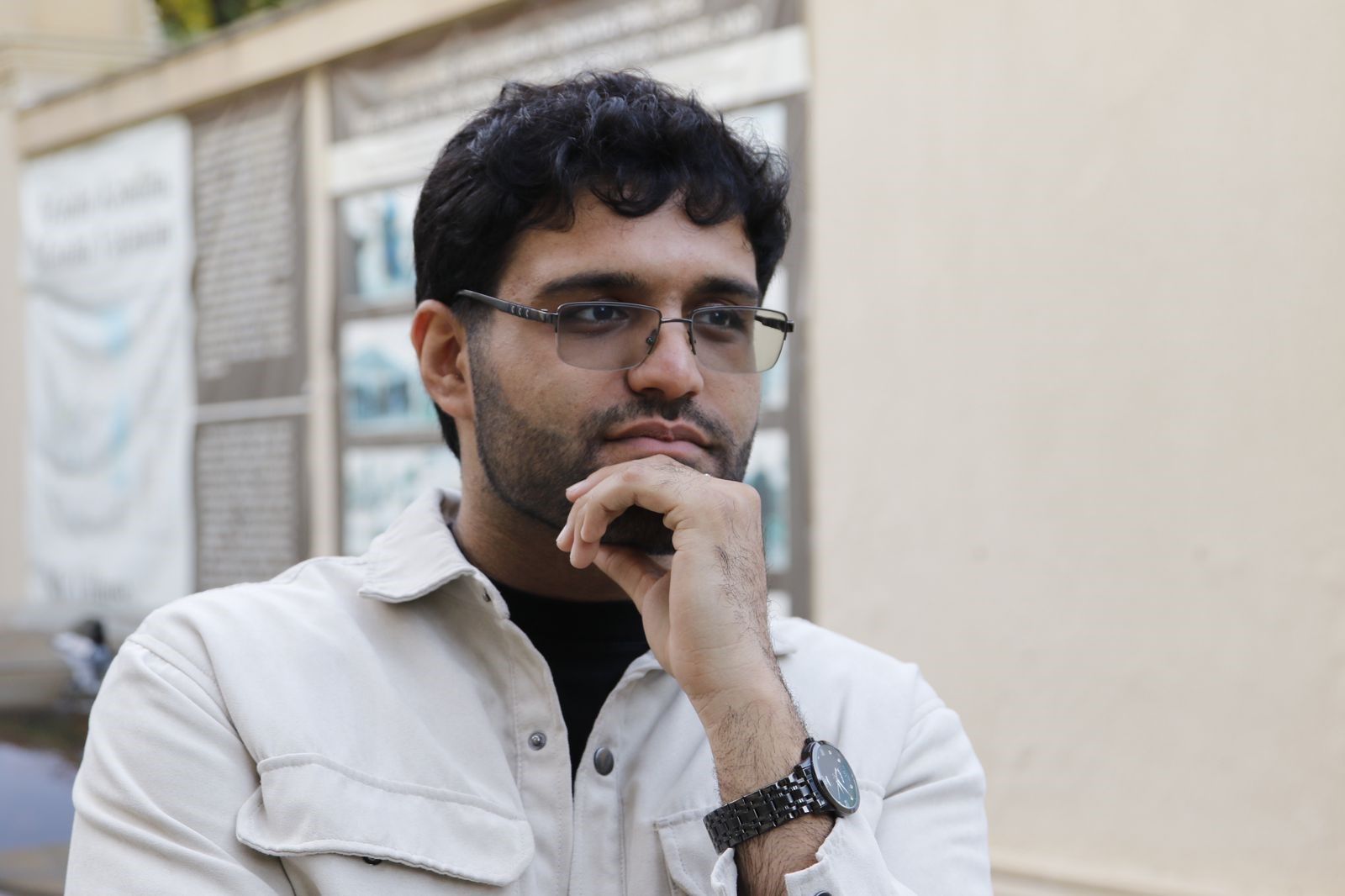
Speaking to AzerNEWS, Iranian political analyst Elyar Kamrani said Pezeshkian’s planned trip to New York could provide an opportunity for diplomacy, despite significant political obstacles inside Iran and between Tehran and Washington.
“As you know, meetings held under the auspices of the United Nations take place at this time every year, and Iranian presidents typically participate. Since Masoud Pezeshkian is now the President of Iran, he received an invitation from the UN and announced his intention to attend the event. He is set to travel to New York tomorrow,” Kamrani said. He noted that the composition of the Iranian delegation has already been affected by the political circumstances surrounding the visit. “A significant issue regarding this trip is that visas were not granted to members of the accompanying media team. Consequently, Masoud Pezeshkian will be forced to travel to New York alone,” he said.
According to Kamrani, the possibility of direct contact with Washington distinguishes Pezeshkian’s upcoming visit from last year’s UN trip.
“A notable aspect distinguishing this trip from last year’s is that US President Donald Trump has announced his readiness to meet with Masoud Pezeshkian. Media outlets aligned with Pezeshkian have also assessed the prospect of such a meeting,” he said. “Yesterday, the ILNA news agency provided details on how such a meeting might take place, indicating that Pezeshkian’s team and those associated with him are prepared for talks and negotiations.”
Kamrani argued that the UN gathering could also reveal the extent to which Pezeshkian has been able to overcome opposition to negotiations within Iran’s political establishment.
“The upcoming visit and discussions at the UN will demonstrate whether Masoud Pezeshkian has succeeded in prevailing over his domestic rivals. Pezeshkian is personally prepared to meet with the United States, or with Donald Trump as its representative, and we are seeing signs of this in the reactions of Iranian media outlets aligned with him,” he said. “Figures within the Iranian state are portraying the cancellation of Netanyahu’s invitation as the result of their own influence and presenting it as a victory. Some also argue that Netanyahu’s presence could have derailed these negotiations. This suggests that, following the cancellation of the invitation for Israel and Benjamin Netanyahu, Pezeshkian might be open to meeting with the United States.”
However, the expert stressed that Tehran would approach any negotiations with a series of pre-existing demands.
“There are certain pre-existing conditions. Iran has a number of demands. If the war, whether within Iran itself or in Palestine, Lebanon, Yemen and elsewhere, is halted by the United States and its ally Israel, we will proceed with negotiations,” he said. “Furthermore, if Iran’s frozen assets are released and political sanctions and boycotts are lifted, we would view the prospect of negotiations more favourably. If support for the Iranian opposition is withdrawn and they cease backing them, we are ready to negotiate, and we would also open the Strait of Hormuz.”
Kamrani described the strait as Tehran’s most important source of leverage in the current confrontation.
“As you know, the opening of the Strait of Hormuz represents the single greatest leverage Iran holds in this conflict. Against this backdrop, Iran is attempting to exert pressure on the world, and particularly on the United States, by having the IRGC intercept ships in the Strait of Hormuz, block oil shipments and drive up prices in the global energy and oil markets,” he said. “These actions serve as a message to the United States and other nations: unless you engage in negotiations with us and accept the legitimacy of the Islamic Republic of Iran, our forces will continue to intercept vessels in the Strait of Hormuz.” He argued that while the US response has helped contain some of the immediate economic consequences, the initial disruption created by Iran has already had a major impact on global markets. “Although the US response, including organising maritime security, taking various measures and ensuring the safe passage of ships in order to ease market tensions and lower prices, has mitigated the situation, Iran’s initial move to block the Strait delivered a massive shock to the market. That shock can only be fully dispelled by the complete reopening of the Strait.”
On the possibility of another military confrontation, Kamrani said several developments indicate that the risk cannot be dismissed.
“As for whether there is a risk of a new war breaking out, the redeployment of regular US military forces to the region, ongoing coordination with other nations and the recall of citizens from Middle Eastern countries all indicate that a renewed conflict is a possibility. In fact, a statement issued yesterday by an IRGC-linked headquarters and reported in the Iranian media declared: ‘We are ready for war, and a new, long-term war is highly likely to break out.’ Based on these factors, the outbreak of a new war is a distinct possibility.”
At the same time, Kamrani believes that the possibility of diplomacy remains open, particularly as regional and international actors continue to push for negotiations.
“Is it possible for negotiations to take place between Iran and the United States? Yes, it is possible. Countries and entities such as Qatar, Oman and the United Nations are keen to see these talks materialise, and both the American and Iranian sides have responded positively. However, it is primarily economic pressure that has compelled Iran to come to the negotiating table. In short, we may well witness both negotiations and war in the future.”
Here we are to serve you with news right now. It does not cost much, but worth your attention.
Choose to support open, independent, quality journalism and subscribe on a monthly basis.
By subscribing to our online newspaper, you can have full digital access to all news, analysis, and much more.
You can also follow AzerNEWS on Twitter @AzerNewsAz or Facebook @AzerNewsNewspaper
Thank you!