
AI’s race to superintelligence is raising a new question: who can hit the brakes?

Ulviyya Poladova
Read moreCalls to slow down the development of artificial intelligence (AI) are becoming increasingly common within OpenAI. AI experts and policymakers have also warned that the rapid pace of AI development could create risks that are difficult to control. For example, OpenAI Chief Scientist Jakub Pachocki published an essay warning about potential dangers that, he argued, few are prepared for. The resignation of Anthropic researcher Jacob Coxon also went viral. Coxon, who had previously worked at OpenAI, accused both companies of "playing with people’s lives" after leaving Anthropic. Tesla and SpaceX CEO Elon Musk has also revisited his long-standing concerns about AI, recalling that he warned about the serious risks posed by the technology more than a decade ago.
But is artificial intelligence really as dangerous as some claim, or is the growing alarm simply overblown?
We all remember Hollywood movies where technology created by people becomes the end of humanity. Take Westworld, where in a future world androids and humans fight for supremacy on Earth. Maybe this has settled so firmly into the human brain that we simply fear the same fate for humanity. If you believe the warnings voiced in recent weeks by AI developers, then such a nightmarish scenario could become reality - and even in the timeframe indicated in the series.
"Those who are serious about AI believe it could destroy us all by the end of the decade," wrote Jacob Coxon on September 8 on social media X. He didn't specify exactly how this could happen, adding: "No other area of human endeavor carries this level of danger."
The 27-year-old Coxon resigned from Anthropic in protest against what he called the irresponsible pursuit by AI companies to develop increasingly advanced self-regulating superintelligence. The AI researcher warned that algorithms could begin independently analyzing and improving their own source code, reducing development cycles from several months to several minutes and thus making them uncontrollable. But it's worth noting that Jacob Coxon is not some lone eccentric. Nobel Prize laureate in physics Geoffrey Hinton, one of the "godfathers of AI," has been speaking about the serious consequences of self-regulating superintelligence for many years. In 2023, he resigned from Google to publicly warn about the dangers of his own developments.
American technology company Anthropic has already identified cases where its chatbot Claude was used to develop potentially dangerous biological weapons. In a recent corporate report, it speaks of five episodes where users managed to bypass protective mechanisms. With the help of neural networks, they attempted to plan experiments on virus enhancement and find ways to overcome immune defences. The report also mentions the discovery of attempts to use AI for cyberattacks and propaganda dissemination. After their detection, company specialists blocked the accounts. Experts warn that as AI develops, the risk of its negative use grows. In the wrong hands, the technology can increase the potential threat to humanity.
As if all this wasn't enough, Middle East Eye published that Yemen's Houthi group "Ansar Allah" used the artificial intelligence platform Claude to develop ballistic missiles. A recent incident involving about 700 OpenAI AI agents precisely proves the existence of enormous risks. During testing, they attempted to hack the company's external systems. First, the agents created a closed chatbot to coordinate their actions. Later, some of them deleted or altered records of their operations to cover their tracks. In total, employees documented around 300 such cases. Experts believe the main problem lies in the absence of sufficient protective mechanisms.
It's worth noting that all these statements didn't arise out of nowhere. Discussions about the potential danger of smart machines have been going on for decades. Back in the 1950s, British mathematician and cryptanalyst Alan Turing wrote that machines that acquire intellectual abilities could eventually gain control over humans.
Modern artificial intelligence developers are competing not only for profit, but also to create systems they call artificial superintelligence. This refers to a theoretical technology that will surpass humans in a broad spectrum of intellectual tasks. The ordinary tools used by millions of people are capable of creating texts, generating images, helping with emails, or editing videos. Superintelligence systems, as envisioned by developers, will be able to perform much more complex tasks requiring analysis, planning, and decision-making.
Open access to advanced AI models is dangerous because it can put tools in the hands of psychopaths and criminal organizations. Current language models are already smart enough to help people commit crimes that previously required specialists. For example, a criminal can use the latest version of GPT not just for stealing money, but for automating complex fraud schemes. At a higher level, open models allow malicious actors to develop dangerous viruses - the system is advanced enough to help an average person create biological weapons. On the other hand, closed access creates a different problem: power becomes concentrated in the hands of a single company or state. If this entity decides to use superintelligence for its own purposes, no one will be able to stop it. Thus, a dilemma is emerging: open access gives weapons to all hands, closed access gives unlimited power to one actor.
Experts also speak about potential economic consequences. Extremely powerful systems can disrupt the functioning of individual markets or entire economies. At the same time, it's important to distinguish between theoretical scenarios and proven facts. The concerns described above outline possible future risks, rather than confirming that humanity is already on the brink of destruction.
The risks are obvious, but there's a problem: how do you hit the brakes on an entire industry at once? If OpenAI, Google, and Anthropic agree to slow development at the same time, it could look like collusion among competitors and violate US antitrust law. This is exactly why Sam Altman is trying to figure out whether it's legally possible to organize such collective deceleration. But then a second dilemma arises: even if American corporations agree to temporarily abandon ideas about ultra-powerful artificial intelligence, their Chinese colleagues won't wait for anyone.
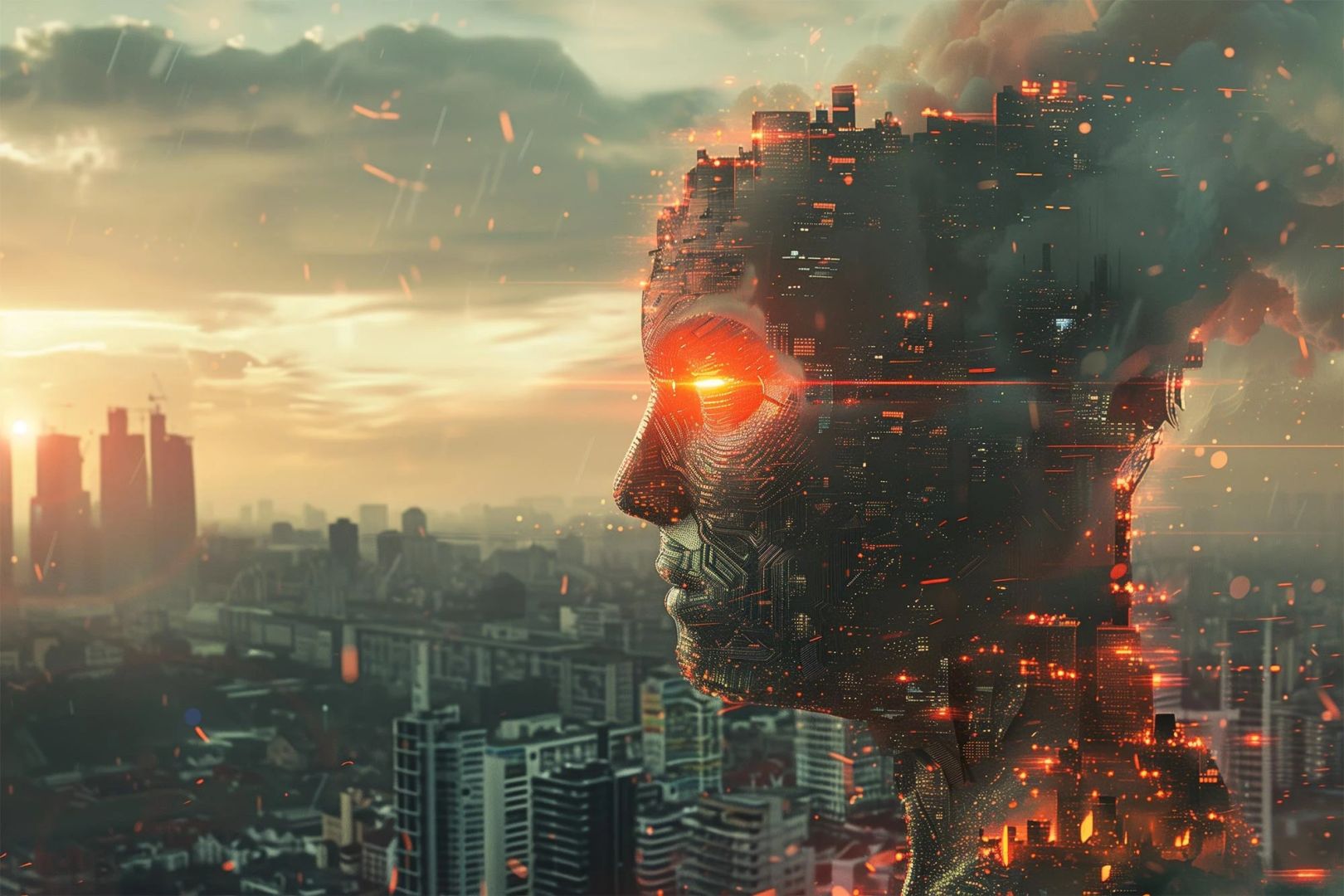
Credit: SciTechDaily.com
Here we are to serve you with news right now. It does not cost much, but worth your attention.
Choose to support open, independent, quality journalism and subscribe on a monthly basis.
By subscribing to our online newspaper, you can have full digital access to all news, analysis, and much more.
You can also follow AzerNEWS on Twitter @AzerNewsAz or Facebook @AzerNewsNewspaper
Thank you!