
Expert: Saudi Arabia is Mecca Alliance’s strategic weak link
Akbar Novruz
Read moreThe Middle East appears to be becoming increasingly volatile again, as the Houthi advances in the region may have reignited Iran’s influence.
The crisis in Yemen involving Saudi Arabia is taking a significant diplomatic turn. After Pakistan reportedly declined to engage the Houthis on foreign soil, Riyadh has allegedly sought Israeli intelligence assistance through the U.S. Central Command. With the Houthi forces applying pressure on Bab el-Mandeb and jeopardizing vital oil export routes, the conflict is reshaping alliances across West Asia and highlighting the region's fragile security balance. Following the Houthis' seizure of Yemen's Red Sea coast and the Bab el-Mandeb Strait, Saudi Arabia has sought Israeli intelligence support via U.S. Central Command.
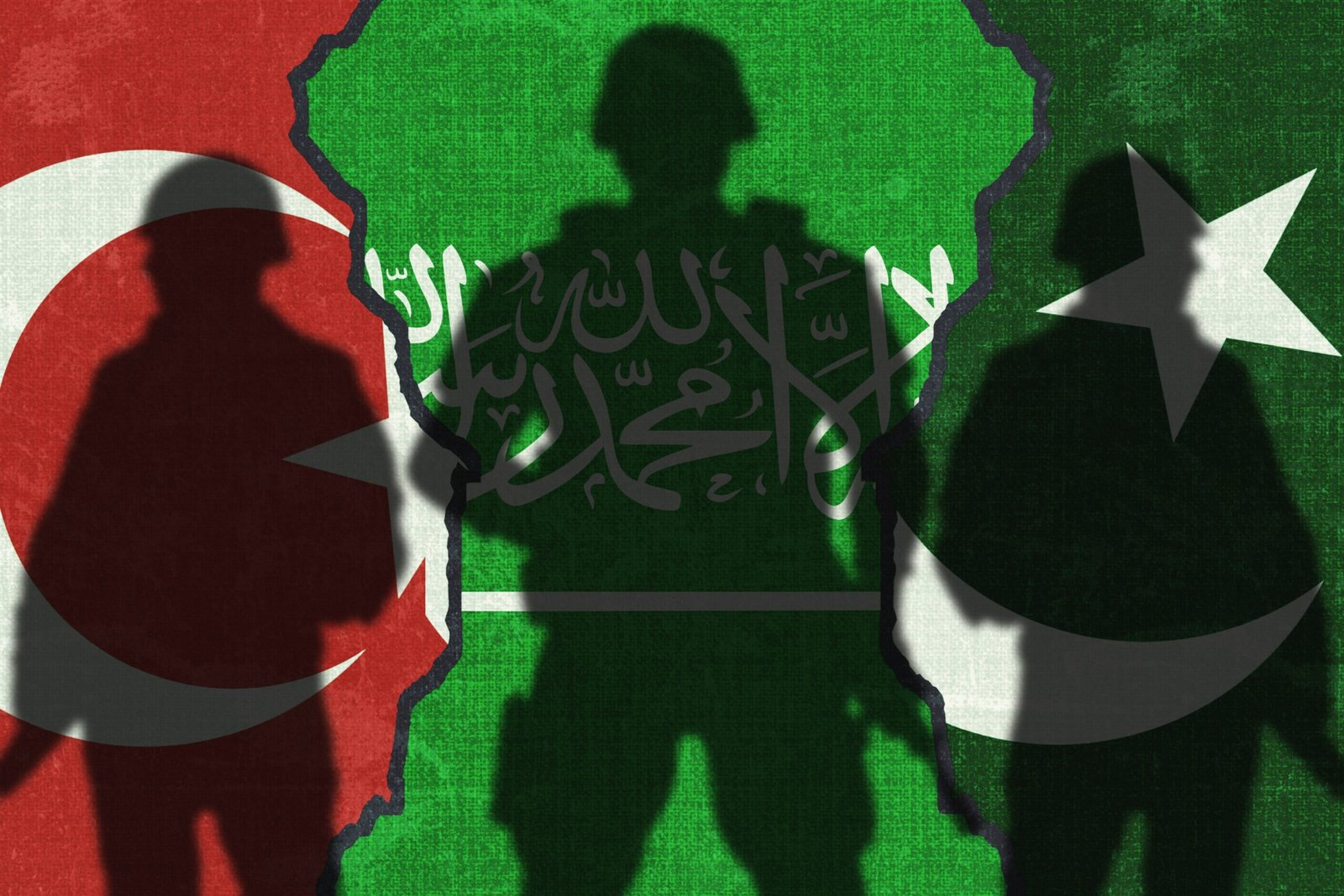
Despite being part of the Mecca Defense Alliance with Saudi Arabia and Türkiye, Pakistan has reportedly refused to deploy forces for combat operations in Yemen. The U.S. and U.K. have ruled out direct military strikes, opting instead to provide intelligence and advisory support.
Meanwhile, Türkiye has expressed its support for Saudi Arabia’s security amid the escalating Houthi attacks. “We see there are very serious attacks on Saudi Arabia’s territorial integrity, sovereignty. We have an alliance agreement in our pact. We are in serious solidarity on this point … They may have some military needs, especially on some technical issues. We would have no issues in meeting these,” Fidan told broadcaster NTV.
He added that proposals had been conveyed to all sides in an effort to end the fighting, without elaborating on what they are. “There are many initiatives, but the sides need to accept these,” he said.
Now, with increasing tensions in the region, including Houthi threats to close Saudi airports, warnings issued by the U.S. mission in Kuwait and Saudi Arabia to travelers, and Iran’s claim that the U.S. plans to resume its "actions" against Tehran, questions arise about the future of the region.
Lebanon-based analyst Hazem Al-Tawil told AzerNEWS that the Mecca Defence Agreement between Saudi Arabia, Türkiye and Pakistan could face its first serious test amid the renewed Houthi threat and growing tensions across the Middle East:
"Indeed, the Middle East appears to be entering another dangerous phase. Renewed Houthi pressure, attacks threatening Saudi territory and infrastructure, mounting concerns over the Bab el-Mandeb and the possibility of a wider US-Iran confrontation are testing the region's emerging security arrangements.
At the centre of that test is the Mecca Joint Defence Agreement between Saudi Arabia, Türkiye and Pakistan. The pact commits the three countries to treating an armed attack against one member as an attack against all, while expanding military and defence cooperation. On paper, this gives Riyadh something it has long sought: a broader regional security framework that is not entirely dependent on the United States. In practice, however, the current crisis is exposing an important question: what exactly can each member contribute when one of them comes under sustained attack".
Saudi Arabia is not a fledgling state, says the analyst, adding that it is a wealthy and increasingly capable regional middle power:
"Equipped with advanced Western-supplied weapons, a large air force, and notable missile defense capabilities, its strategic vulnerability extends beyond mere military weakness. The kingdom's most important assets are concentrated around energy infrastructure, airports, population centres and maritime routes. A prolonged campaign involving ballistic missiles, drones and attacks on shipping can therefore impose costs that cannot simply be solved by acquiring additional conventional weaponry. The Houthi threat illustrates the problem. Saudi Arabia may possess considerable military resources, but defending a vast territory and critical infrastructure against repeated low-cost attacks can become an expensive war of attrition. This makes the Mecca pact significant, but it also exposes its central contradiction."
But if Saudi Arabia is already a substantial military and economic power, why does it need this alliance? In response, the expert adds that the answer may lie in its partners' complementary capabilities.
"Türkiye possesses something Saudi Arabia cannot build overnight, and that is a large indigenous defence-industrial base, extensive conventional military capacity and growing expertise in drones, missiles, electronic warfare and other systems suited to contemporary regional conflicts. Pakistan offers a different strategic asset. Its conventional forces provide additional military depth, while its nuclear capability gives the alliance a latent strategic-deterrence dimension that neither Riyadh nor Ankara possesses. But there is an important qualification. The Mecca agreement does not publicly establish an automatic Turkish military intervention or a formal Pakistani nuclear umbrella. Its collective-defence language creates a political commitment, but the precise military response to a particular attack remains a matter for the governments involved."
According to al-Tawil, Saudi Arabia may be the alliance's most powerful member economically, but it could also become its strategic weak link.
That is not because Riyadh lacks money, weapons or military personnel. It is because Saudi Arabia remains dependent on outside partners for several layers of its security architecture. Its conventional military capabilities have been built heavily around foreign technology and procurement. Its air-defence requirements are enormous. And its strategic geography leaves it exposed to threats that can be launched relatively cheaply by non-state actors. In this sense, the relationship with Türkiye is particularly important. Ankara can provide conventional military capabilities that complement Saudi resources, but Türkiye will also have its own calculations about how much risk it is willing to assume for Riyadh. A defence alliance becomes credible not simply when its members sign a document, but when each member has sufficient strategic interests in the security of the others to make intervention worthwhile. This is where economic integration could become just as important as military cooperation. A deeper Turkish economic, industrial and infrastructure presence in Saudi Arabia would create precisely the kind of mutual dependence that can transform a political security agreement into a durable strategic relationship. One possible long-term vehicle could be a modern revival of the Hejaz Railway concept. This would not mean simply rebuilding the historic Ottoman railway. Rather, a contemporary Saudi-Turkish transport and logistics corridor could connect the Arabian Peninsula with Türkiye and wider regional trade networks. Such a project would give Ankara something that a defence agreement alone cannot provide: strategic sunk costs."
The current Houthi crisis could therefore become an important test of whether the Mecca agreement can evolve from a political declaration into a functioning security architecture, assumes the Lebanese expert:
“If the conflict remains limited, Türkiye can provide technical and military assistance while Pakistan maintains its distance from direct combat. But if Saudi infrastructure, airports and energy routes come under sustained attack, the alliance will have to demonstrate what its collective-defence commitments actually mean. The real test is not simply whether the Houthis can strike Saudi Arabia. It is whether such attacks expose differences between Riyadh and its partners over how much they are prepared to pay for collective security,” he said.
Here we are to serve you with news right now. It does not cost much, but worth your attention.
Choose to support open, independent, quality journalism and subscribe on a monthly basis.
By subscribing to our online newspaper, you can have full digital access to all news, analysis, and much more.
You can also follow AzerNEWS on Twitter @AzerNewsAz or Facebook @AzerNewsNewspaper
Thank you!