
SOFAZ's $72 billion to deploy as AI rewrites infrastructure market

Qabil Ashirov
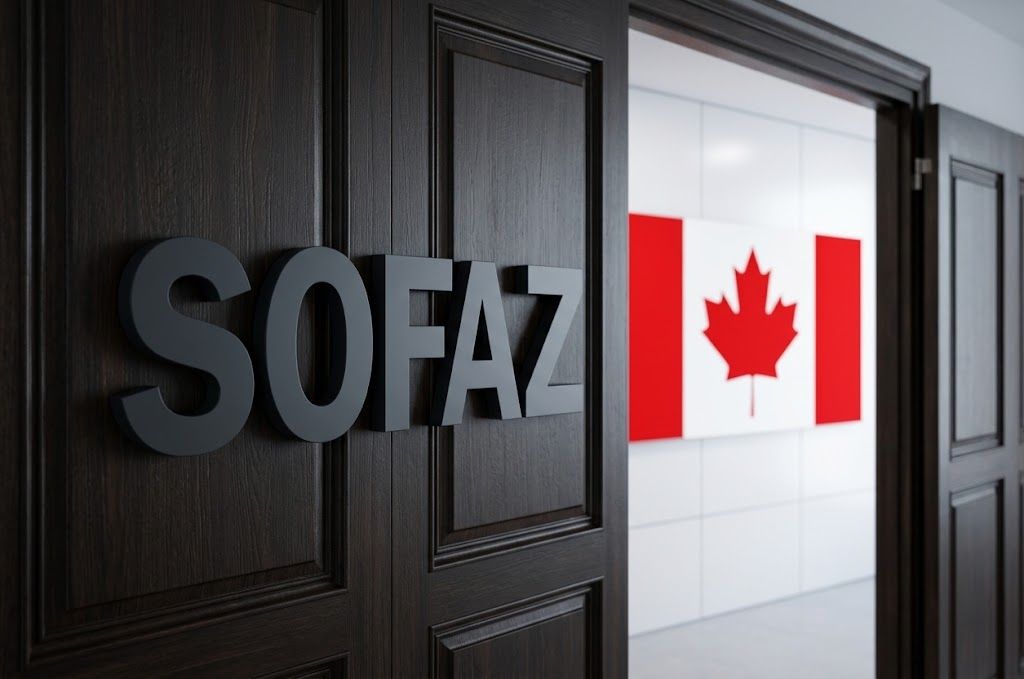
Read moreAmid fluctuating interest rates in global financial markets and rising geoeconomic risks, sovereign wealth funds are taking more aggressive and strategic diversification steps to preserve the profitability of their portfolios. Israfil Mammadov, Executive Director of the State Oil Fund of the Republic of Azerbaijan (SOFAZ), visited Toronto in September as part of the “Canada Investment Summit 2026.” The visit signals a new stage in the management of the Fund’s more than $72 billion in assets, with a particular focus on joint investments with global companies in real assets, alternative energy and digital infrastructure.
The most notable aspect of the visit was the meeting with the management of “Brookfield Asset Management,” which has more than $1 trillion in assets under management. Partnering with such institutional players, which have more than 100 years of experience in global private markets, provides SOFAZ with an opportunity for proper risk allocation. Looking at existing statistics, more than 55% of SOFAZ’s investment portfolio consists of fixed-income securities, more than 20% of equities, around 10% of real estate, and 10%-12% of gold assets. However, the fact that global inflation has remained in the 3%-5% range over the past three years and uncertainties in the monetary policies of central banks show that traditional directions may not fully ensure the expected real returns. In this regard, directing SOFAZ capital toward real infrastructure projects protected against inflation and with a target annual return of around 8%-12% is a strategic move.
It is true that the traditional understanding of infrastructure from the last century has now changed fundamentally. Today, when we talk about “infrastructure,” digital centers and green energy generators are primarily meant. As a result of the rapid development of artificial intelligence (AI) technologies, the energy consumption of data centers has increased sharply. According to estimates, global data centers’ demand for electricity will at least double by 2030, reaching 1,000 terawatt-hours (TWh). This requires hundreds of billions of dollars in investment in the digitalization and renewable energy sectors over the next 5-10 years. This trend is also at the center of the discussions with “Brookfield”: becoming a partner in infrastructure capable of meeting the enormous energy demand created by digitalization.
The growing demand for electricity from data centers also creates a direct link between two investment themes that were previously considered separate: digital infrastructure and energy infrastructure. As computing capacity expands, investors increasingly need to consider the availability, reliability and long-term cost of electricity alongside the physical infrastructure required for data storage and processing. This makes renewable energy generation, power transmission networks and other supporting infrastructure increasingly relevant to long-term institutional investment strategies.
On the other hand, Canada’s pension and investment fund management model is considered the gold standard in the global market. The Canada Pension Plan Investment Board (CPPIB) alone manages more than $600 billion in assets. The meetings held by SOFAZ management with institutions such as CPPIB, PSP Investments and the Canada Development Fund, as well as with Japan’s GPIF fund, whose assets exceed $1.5 trillion, are critical in terms of institutional exchange of experience. Establishing co-investment mechanisms on such platforms creates an opportunity for SOFAZ to enter large projects with a 5%-15% stake, where entering alone would be risky, and to minimize risks.
For a sovereign wealth fund, such cooperation also provides access to investment structures, management expertise and international networks that would be more difficult to develop independently. Co-investment allows large institutional investors to share the capital requirements and risks associated with major infrastructure projects while retaining exposure to long-term assets. This model can therefore complement SOFAZ’s existing portfolio structure without requiring a fundamental shift away from its established investment principles.
In conclusion, SOFAZ’s contacts in Toronto show that the Fund is rapidly transforming from a passive capital accumulator during the oil boom era into an active investor model that anticipates global trends. Diversifying even 5%-8% of the $58 billion portfolio into the high-return energy transition and digital infrastructure projects of the future will guarantee that the value of the massive capital accumulated for future generations will continue to grow at a rate exceeding inflation over the coming decades.
Here we are to serve you with news right now. It does not cost much, but worth your attention.
Choose to support open, independent, quality journalism and subscribe on a monthly basis.
By subscribing to our online newspaper, you can have full digital access to all news, analysis, and much more.
You can also follow AzerNEWS on Twitter @AzerNewsAz or Facebook @AzerNewsNewspaper
Thank you!