
Azerbaijan’s fuel exports give Armenia taste of peace dividend

Qabil Ashirov
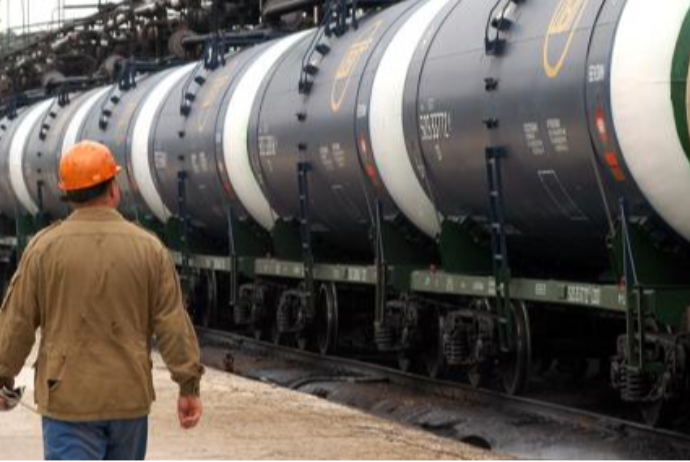
Read moreArmenia’s Economy Minister Gevorg Papoyan’s recent statement to journalists vividly demonstrates the net benefits that freeing societies from the economic burden of regional conflicts and establishing trade relations in conditions of peace can bring. According to the minister, as a result of the start of fuel imports from Azerbaijan to Armenia, fuel prices in the country have been kept at a level below the sharp pace of increases in global markets. In economic terms, Azerbaijan has prevented a supply-side inflation shock in Armenia through its energy resources.
Of course, assessing the outcome of this process merely as a reduction in citizens’ daily transportation and commuting costs would be to see only the superficial side of the issue. When viewed from a deeper macroeconomic perspective, the picture becomes clearer.
As is known, following the Second Karabakh War (2020) and Azerbaijan’s full restoration of its sovereignty in September 2023, the geopolitical stagnation that had persisted in the South Caucasus for decades was disrupted. The phase of conflict that began in 1988—before the collapse of the Soviet Union—with Yerevan’s territorial claims against Karabakh and inflicted heavy socioeconomic losses on both sides came to an end. Armenia being compelled toward peace and the post-conflict realities opened the door to limited but strategically significant trade contacts between the sides.
The first fruits of these contacts became visible at a time when a global inflationary wave was raging. After the COVID-19 pandemic, disruptions in supply chains around the world, followed by geopolitical crises, fueled mass inflation. As a rule, the economies of developing countries are more vulnerable to macroeconomic factors and external shocks than those of developed countries. The world has still not fully recovered from the negative effects of the inflationary wave that began with COVID-19.
In economics, inflation is often referred to as an “unfair” or “regressive tax.” This is because it is a mechanism that is not officially regulated but ruthlessly erodes the purchasing power of the population, particularly low- and middle-income groups. In developing countries, food products constitute a large share of the inflation basket. Food inflation, in turn, directly intersects with fuel prices. Every stage, from planting and harvesting a product in the field to its processing, delivery to supermarket shelves, and arrival on the consumer’s table, is linked to transportation and energy costs.
Therefore, although Armenian officials may refrain from openly acknowledging it, fuel imported from Azerbaijan has significantly curbed overall inflationary pressures in Armenia and prevented a sharp jump in food prices. Every specialist familiar with the fundamental laws of economics can confirm that securing fuel from a cheaper and logistically advantageous source reduces production and delivery costs in a country, thereby directly supporting macroeconomic stability.
Now, let us imagine the bigger picture for a moment: If a final peace agreement is signed between the two countries, communications are opened, and trade relations are fully restored, how much could the regional economy benefit from this?
For years, Armenia, having become a hostage to its irredentist and occupation policies, allocated more than 5% of its GDP to military expenditures and, by this measure, became one of the most militarized countries in Europe. The elimination of the risk of war allows Armenia to reduce the burden of unproductive military spending and direct these resources toward education, healthcare, and socioeconomic infrastructure projects.
At the same time, taking advantage of the opportunities offered by Azerbaijan as a regional logistics hub and energy center could help Armenia move away from its status as an isolated “economic island.” Peace is not simply about disarmament; peace means the opening of transit routes, a sharp reduction in logistics costs, diversification of markets, and the inflow of foreign direct investment into the region.
If a peace agreement is concluded and all communications are opened, this will directly contribute to increased production volumes in both countries, the creation of new jobs, and economic growth. Establishing direct trade relations between neighboring countries primarily creates high profitability and a competitive advantage by minimizing logistical distances and transportation costs.
It is no coincidence that when we look at the geographical distribution of Azerbaijan’s foreign trade in the non-oil sector, we see that geographically close neighboring countries account for a significant share. Regional partners such as Russia, Georgia, and Kazakhstan are among the top ten destinations in our export portfolio. With the restoration of communications and the liberalization of the trade regime, it is entirely realistic for Armenia to join this list as well. This would mean not only capital flows, but also increased business activity in border regions and the creation of thousands of new jobs on both sides.
We hope that Yerevan will free itself from the illusions of supporters of external policies, draw the right lessons from its history, and permanently abandon its irredentist claims. With the realization of Azerbaijan’s proposed peace agenda, the period of conflict that for decades led to the loss of human resources and the destruction of national wealth will be left behind, and the South Caucasus will enter a new development trajectory based on mutual economic benefit.
Here we are to serve you with news right now. It does not cost much, but worth your attention.
Choose to support open, independent, quality journalism and subscribe on a monthly basis.
By subscribing to our online newspaper, you can have full digital access to all news, analysis, and much more.
You can also follow AzerNEWS on Twitter @AzerNewsAz or Facebook @AzerNewsNewspaper
Thank you!